(Originally published in June, 2024.)
No American golf resort boasts more individual courses than Pinehurst Resort. And while quality and quantity are seldom correlated, the now-131-year-old bastion of Southern hospitality and sand-based golf offers tremendous variety with several first-rate golf courses, headlined by one of the finest collections of 18 holes in the world.
Pinehurst is far from a one-hit wonder, thoguh. It has invested aggressively in bringing several of its existing courses into the 21st century and shrinking the gulf between its best and the rest. The next chapter in that story officially begins in the spring of 2027 with the official unveiling of Pinehurst No. 11, a brand-new Bill Coore & Ben Crenshaw design.
I had a chance to play all 18 holes at No. 11 on a preview basis and have incorporated it into the latest version of my ranking of all 11 Pinehurst Resort golf courses, from best to “worst.”
1. Pinehurst No. 2 is Pinehurst Resort’s best golf course
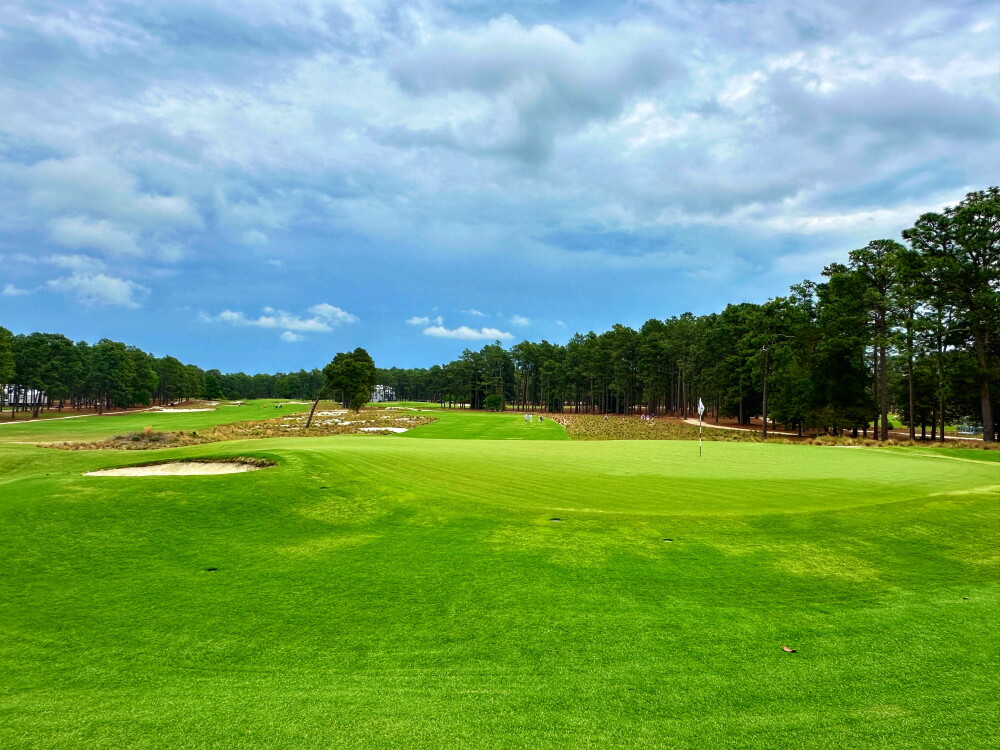
The constant movement of Pinehurst No.2’s routing is part of what makes the golf course so brilliant. Tim Gavrich/GolfPass
The least controversial pick of this list is one of the world’s most complete tests of golf. Refined over decades by Donald Ross and restored in 2010 by Bill Coore & Ben Crenshaw, Pinehurst No. 2 is an exemplary golf course that asks stern questions of everyone who steps on its broad, genteel first tee.
The course embodies the advice to “play the hole backwards,” contemplating the route by starting from the green and working back to the tee. Raised, tilted and angled putting surfaces exhort players to calibrate tee shots correctly in order to set up the friendliest possible approach angle. Especially greenside, errant golfers have choices of recovery shots, and can often elect to play to their strengths (e.g. 2014 U.S. Open champion Martin Kaymer putting from off the greens en route to his dominant victory). Ross wrung everything out of a mild but graceful piece of land, sending the course through pleasant rooms lined by pines. Fingers of the routing stick out: 4 & 5 and 13 & 14 are highlight stretches where the openness of the restored course brings all the joys of golf as a social experience.
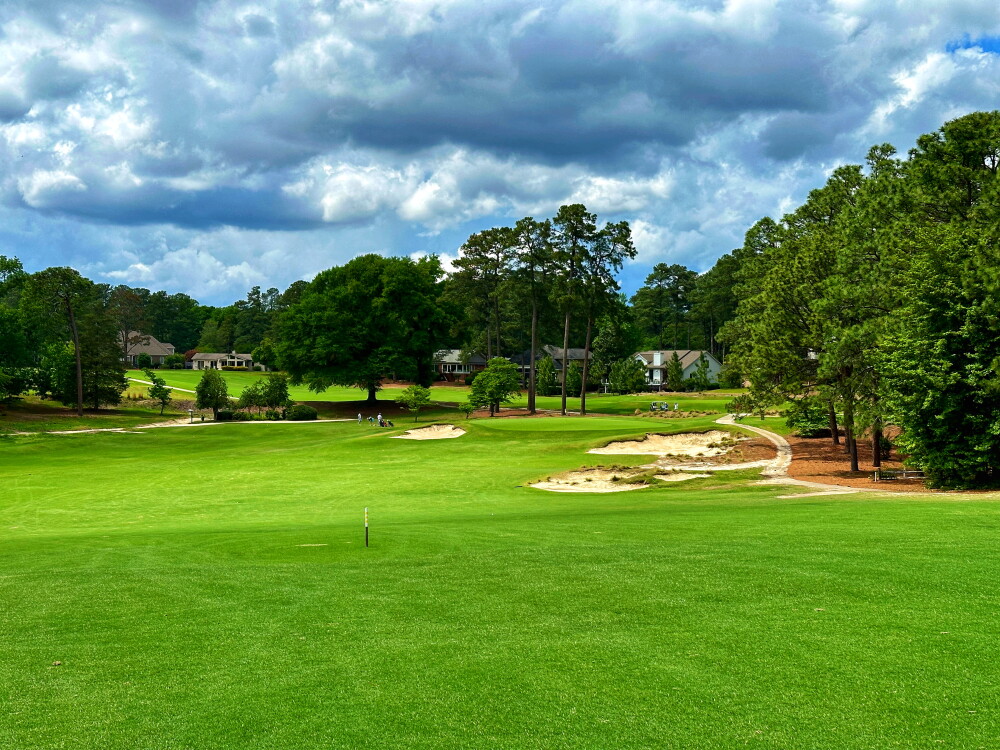
Renovations in 2018 took Pinehurst No.3 to another level. It packs tremendous intrigue into a modest footprint. Tim Gavrich/GolfPass
I was blown away by the elegance of this 5,200-yard par-68 dynamo. Everything you want in a full-on golf course is here; it just loads more of the challenge towards short iron and wedge play. The smallish, often turtlebacked greens do remind of No. 2, but calling it No. 2’s little brother actually shortchanges it, because it tackles significantly more hilly terrain than Pinehurst’s championship masterpiece. Pinehurst No. 3’s soulful brevity makes the walk manageable and reduces rounds by an hour or more relative to the “big” courses. Despite the short length, there is tremendous variety of holes and individual shots, including two of the toughest long par 3s on property. In my round, every club but one got dirty.
Pinehurst No.3 poses the strongest challenge to the notion of the par-72, 7,000-yard standard of any golf course I have encountered. In an age where land and time are at a premium, I think the world could benefit from a thousand more courses like it.
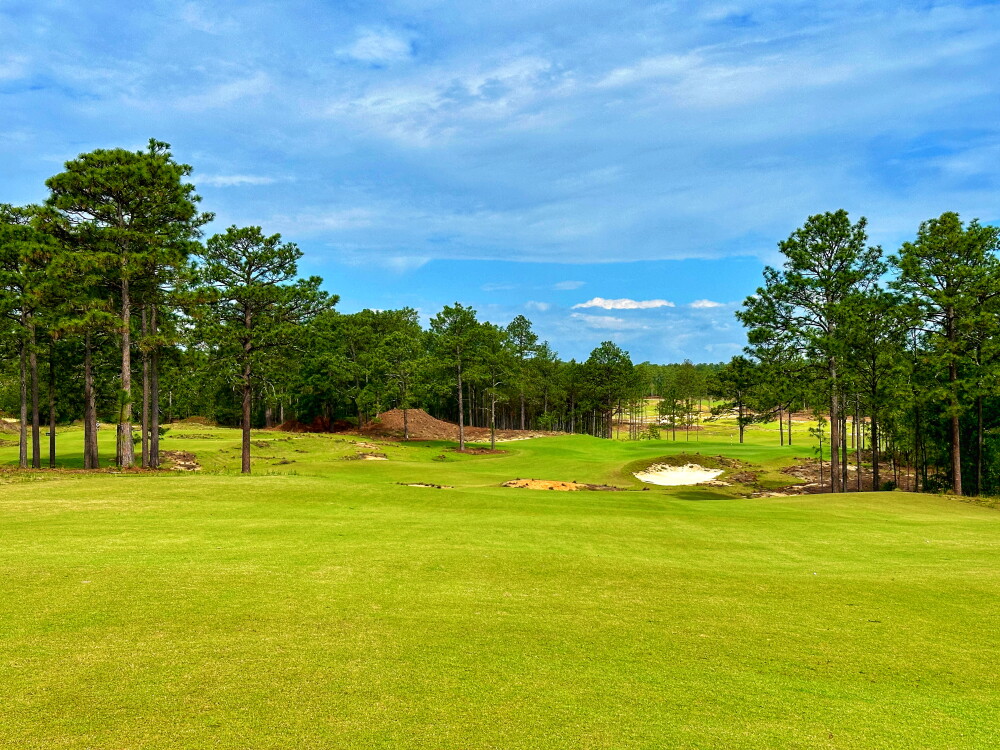
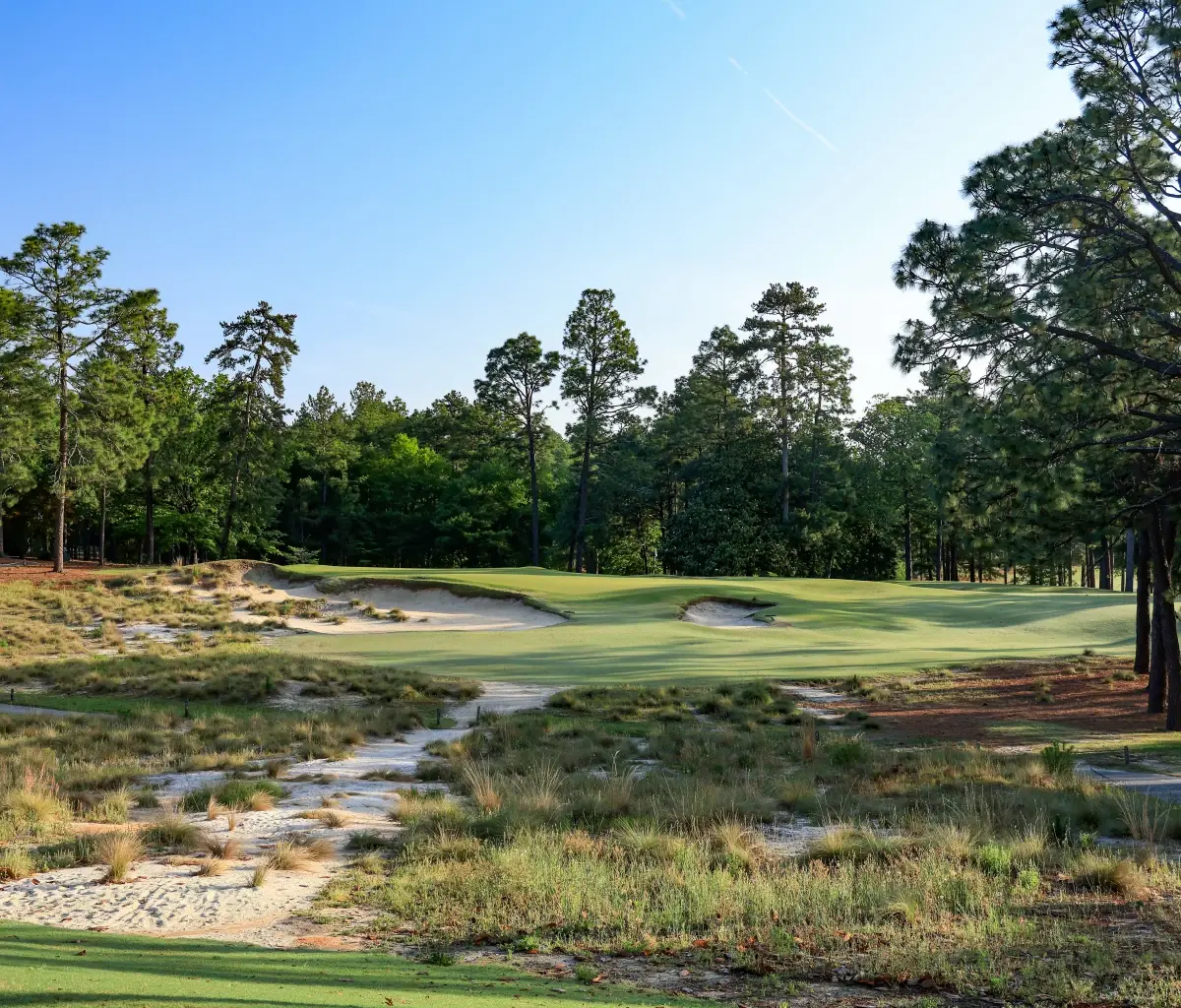
Pinehurst No. 10’s huge sense of scale sets it apart from the courses that came before it. Tim Gavrich/GolfPass
You can read my longer-form thoughts on Tom Doak’s original here, but in short, No. 10 is a just-big-enough step outside of Pinehurst’s typical lane to signal an exciting future for the resort. No. 10 is far grander in scale than any of its predecessors. It’s intense but not overwhelming, fun but rigorous and comfortably Pinehurst but also something new. It will only get better as it matures.
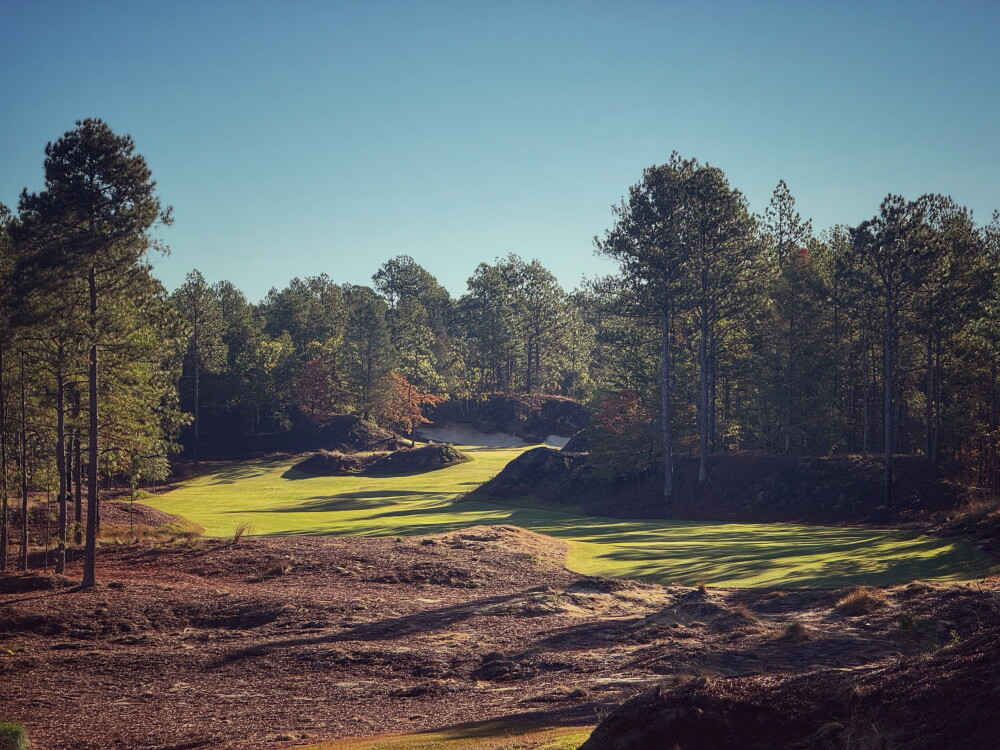
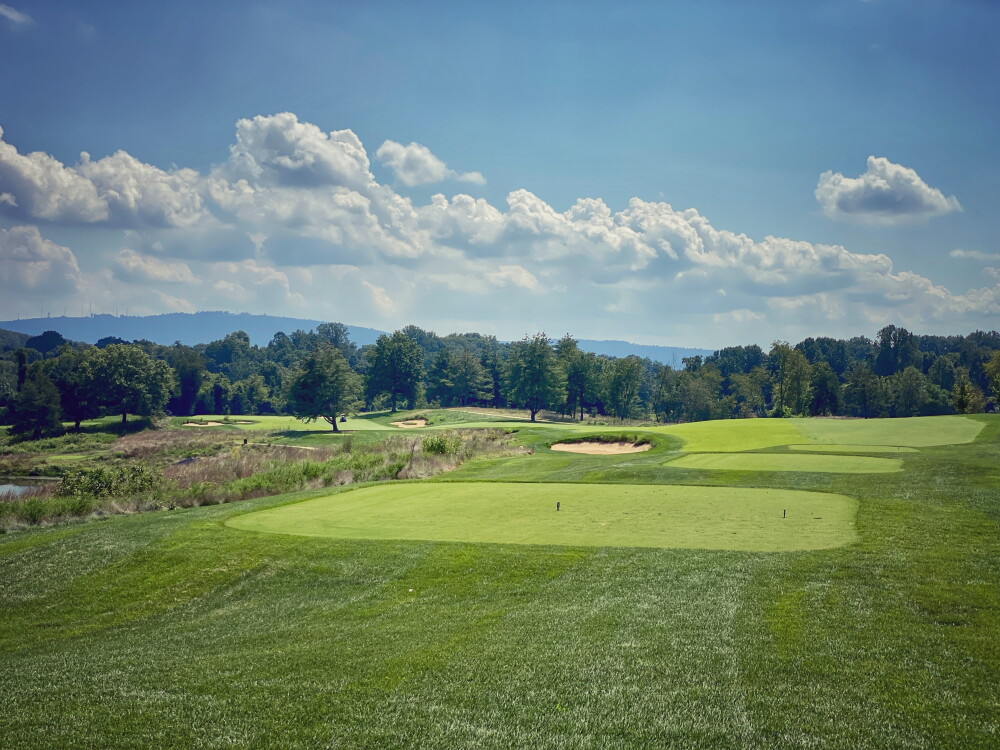
Pinehurst No. 11 wastes little time introducing golfers to its startlingly unique landscape of leftover mining spoils. The par-4 2nd is destined to be one of the most photographed holes across Pinehurst Resort. Tim Gavrich/GolfPass
That I would seed Pinehurst’s newest golf course fourth in the batting order might make it seem that it is somehow underwhelming, but that is not the case. The fact is that, behind No. 2, the competition for “best of the rest” honors at Pinehurst is titanically fierce. No. 11 is an extremely strong golf course in its own right, and enjoys an utterly unique inland setting thanks to the way it interacts with hundreds of sharp spoil-pile mounds left over from the site’s mining days. I decided to place it just a smidge behind its neighbor, No. 10, in this ranking because I was left wondering whether a few landing areas might do with a modest but valuable two to four yards of extra width in certain spots. No. 11 seems destined to see more lost balls than virtually any other course in the resort’s domain. Some golfers will bristle at that. But the dynamite aesthetics of the course and Bill Coore & Ben Crenshaw’s keen eye for variety and strategy, executed by rising-star associate Ryan Farrow, make this bold course a wonderful new addition.
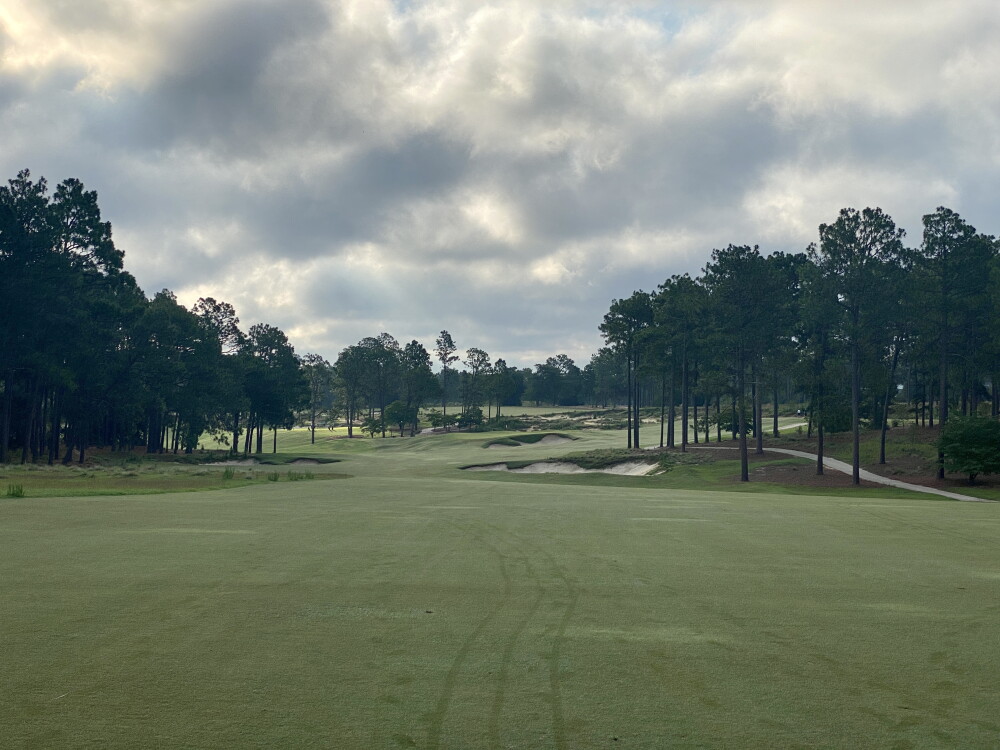
Gil Hanse totally transformed Pinehurst No. 4 in 2020. Tim Gavrich/GolfPass
No. 4 walked so No. 10 and No. 11 could run. Gil Hanse and Jim Wagner’s total redesign here added some broad-shouldered bravado to a tree-lined, pot-bunkered Tom Fazio redo of the original Donald Ross course that sat on the property. As such, it feels slightly disjointed at times, but its best holes – the long par-3 6th, the snug par-5 17th – are among the resort’s best. Some golfers swear No. 4 is as good or better than No. 2. I cannot get on board with this take. No. 4 is a very, very good golf course, but No. 2 is one of the GOATs, and an all-time top-10 in my book.
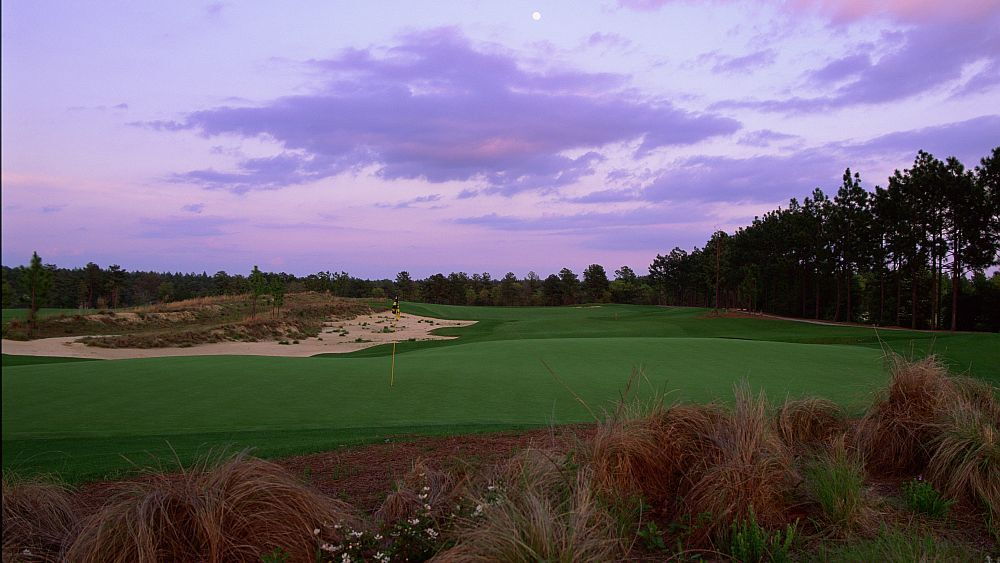
A view of hole #9 at No. 8 at Pinehurst Resort. Pinehurst Resort
Tom Fazio’s golf courses have always placed high value on aesthetics, with varying degrees of strategic intrigue along the way. Pinehurst No. 8 represents some of his better work and, having opened in 1997, serves as a window into a time when different design values prevailed. That alone makes it worth playing. A recent renovation sought to bridge some of the taste gap by cleaning up corridors and rethinking some of the bunkering. The result is an enjoyable test on a rolling, secluded property unto itself.
What about The Cradle and Thistle Dhu?
When it debuted in 2017, Gil Hanse’s par-3 loop practically in the front yard of the resort’s main golf complex added a casual, quick way for golfers to get their kicks. In turn, it helped shift public perception of the resort as a whole, challenging the narrative that Pinehurst was somewhat fusty and behind the times. Sitting towards the beginning of the recent trend in short-course development, its influence extends well beyond its 10-acre footprint.
Likewise, Thistle Dhu, Pinehurst’s rollicking putting course inspired by the Himalayas at St. Andrews, has shown countless golfers how much fun can be had with just a putter (plus optional cocktail) in hand.
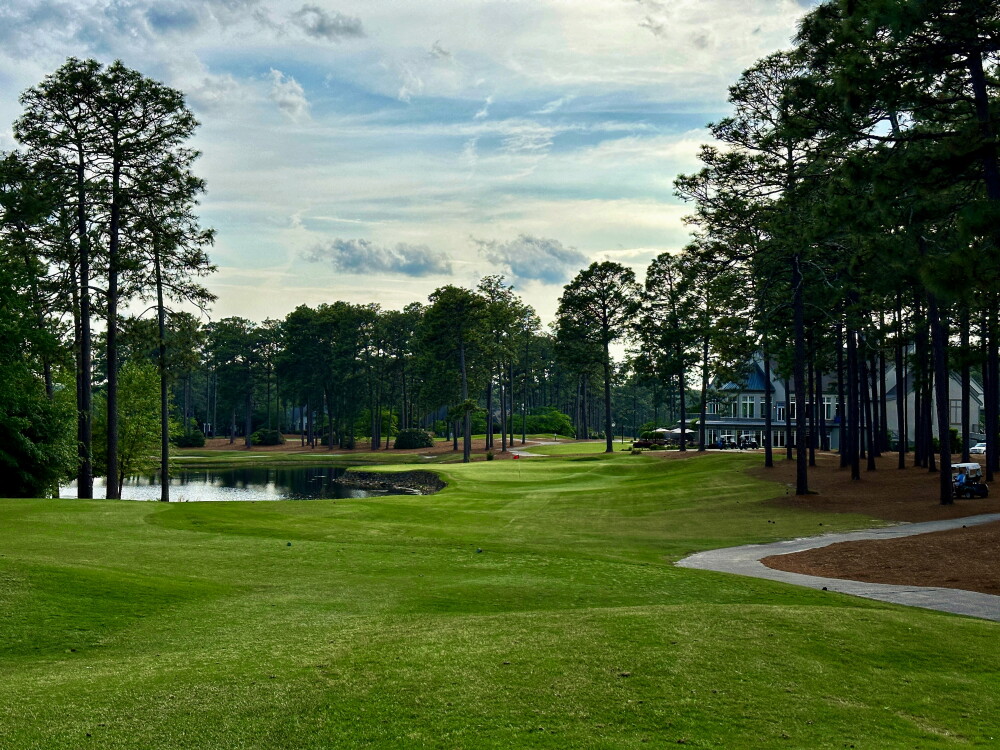
Pinehurst No. 9’s modern looks make it stand out from most of the resort’s other courses. Tim Gavrich/GolfPass
If Tom Fazio golf courses are out of fashion, Jack Nicklaus’ 1980s courses are way out of fashion. The routing through a housing development is what it is; originally called The National Golf Club of Pinehurst, it didn’t become Pinehurst No. 9 until 2012. The greens, some of Nicklaus’ most adventurous creations, border on the bizarre at times, but that adds a level of tightrope-walking excitement to the course that improves the experience. Of Pinehurst’s three modern real estate courses, it is my favorite by a comfortable margin. A refresh of the grass on those aforementioned wild greens happened in the summer of 2026.
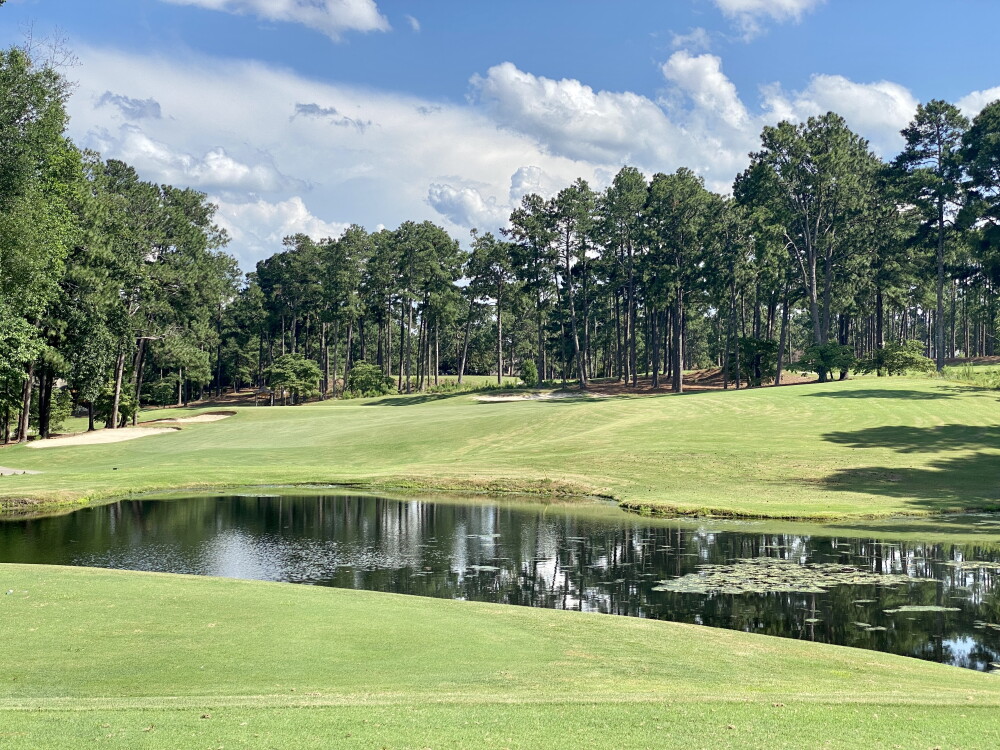
The 11th hole at Pinehurst No. 1 is a fantastic long par 3. Tim Gavrich/GolfPass
The original course, which dates to pre-1900, is a pleasant arrival- or departure-day option. It is a sporty 6,000-yarder with some interesting greens like that of the par-3 7th hole, which slopes steeply away from the player and requires some shotmaking to hold from the elevated tee. The long par-3 11th is the resort’s most underrated single hole. With some imaginative renovation work that honors the course’s Victorian-era beginnings, Pinehurst No. 1 could gain multiple spots in this ranking.
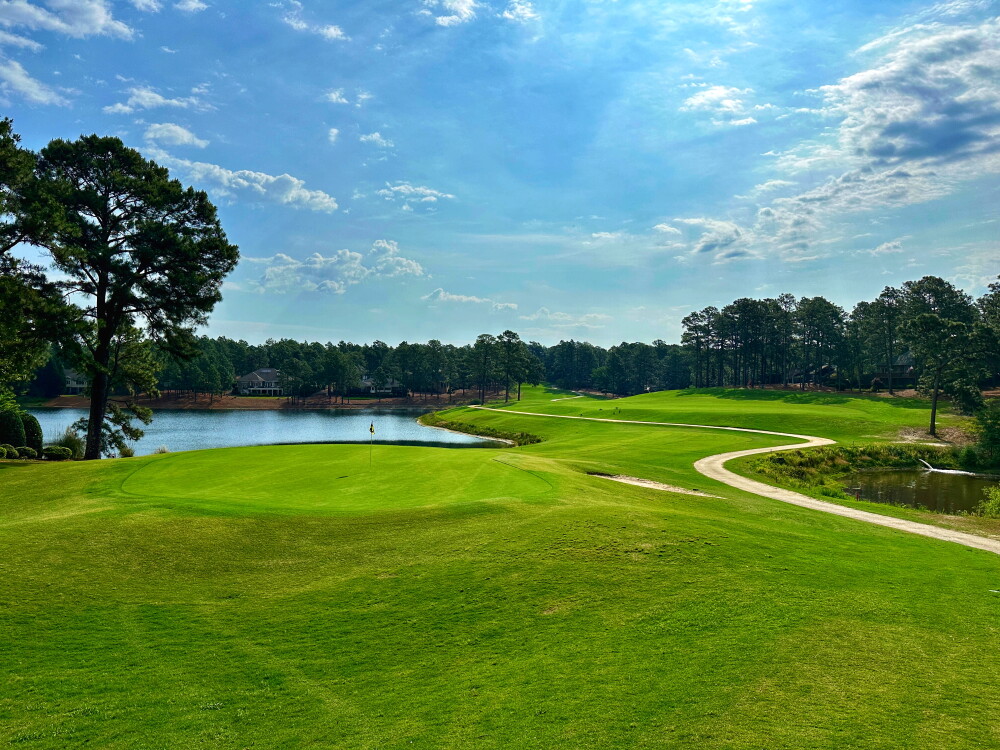
Pinehurst No. 6 benefits from pleasant topography and a scenic second nine. Tim Gavrich/GolfPass
My favorite aspect of No. 6 is that its setting manages to be almost bucolic despite the course winding through a housing development. Homes sit well back from play, thankfully, with decades of tree maturation hiding them well. The George and Tom Fazio design is mild-mannered, to the point where it is tough to remember more than a handful of holes in the time after playing the course. Some work has been done to infuse Pinehurst’s sand and wire grass aesthetic around the periphery of some holes here. Continuing that work will add some welcome visual stimulation. As the birthplace of the U.S. Adaptive Open, it holds an honored place at Pinehurst no matter what.
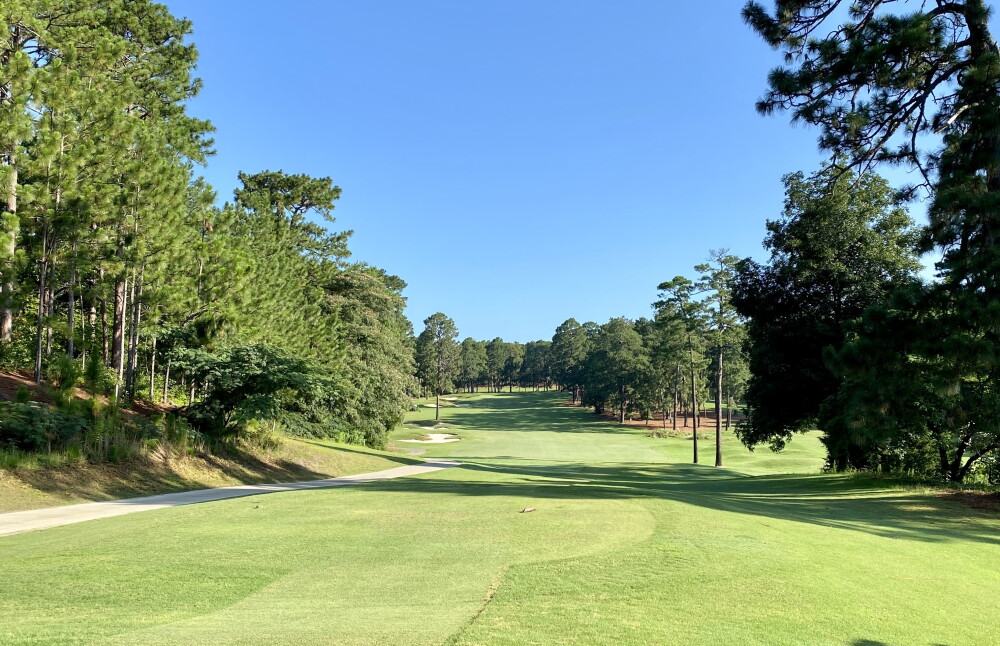
Opened in the 1980s, Pinehurst No. 7 is one of Rees Jones’ more judiciously bunkered courses. Tim Gavrich/GolfPass
Of the handful of Rees Jones courses I’ve played, I tend to like his less bombastic earlier designs better than the more intensively sculpted 1990s and 2000s work. No. 7 opened in 1986 and is at its best when it is a bit more restrained. The two par 5s on the front – 1 and 8 – are fun holes and the closing stretch, culminating in another cracking three-shotter, sends golfers off on a strong note. The course suffers somewhat because of the piece of land that it’s on; several steep uphill approaches tax higher handicappers and shorter hitters considerably. Still, it can be an interesting counterpoint to the resort’s classic fare.
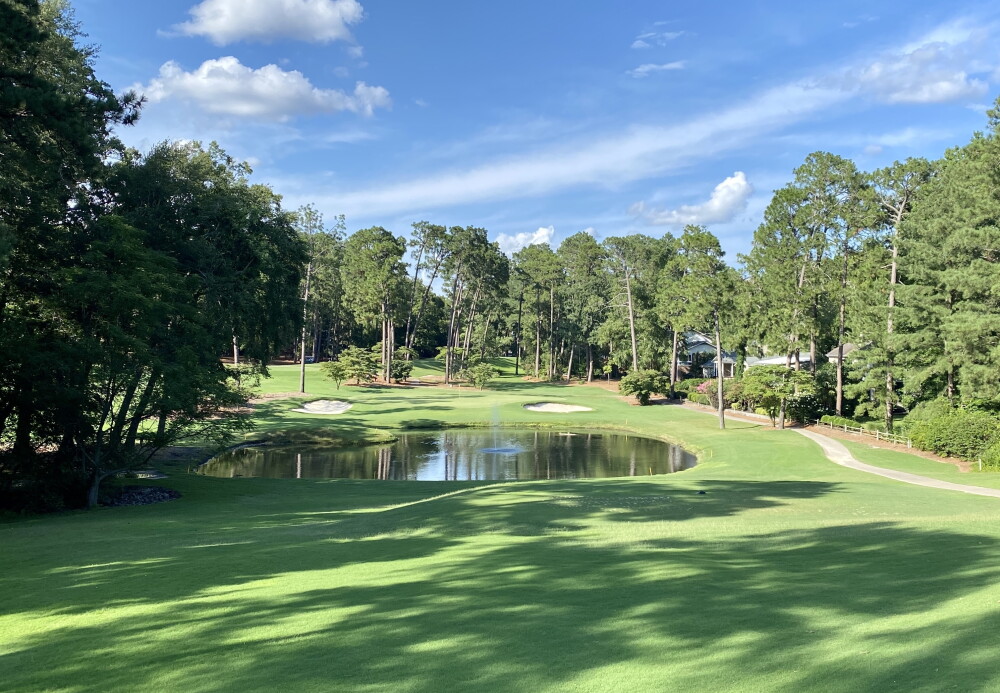
Pinehurst No. 5’s modest length and moderate challenge make it a nice arrival-day course. Tim Gavrich/GolfPass
Like No. 1, No. 5 could be considerably better with some creative renovations. The mostly Ellis Maples design is competent, especially the holes that grace tilted terrain, but has a few pedestrian pockets where I think there could be a bit more strategic interest. Calling No. 5 Pinehurst’s “worst” course feels somewhat unfair because it is still enjoyable; the routing is very well executed. More fully realized, it could easily leapfrog No. 7 and No. 6 in this list.
How would you rank the golf courses of Pinehurst Resort?
Get the latest golf course news and commentary, product reviews and recommendations and instruction articles via email each Tuesday and Friday, for free.