
An excerpt from The Gazette’s On Quebec Politics newsletter
Quebecers who heard some nationalist politicians’ reactions to Alberta’s referendum could be forgiven for thinking the province had delivered a resounding call for greater provincial autonomy.
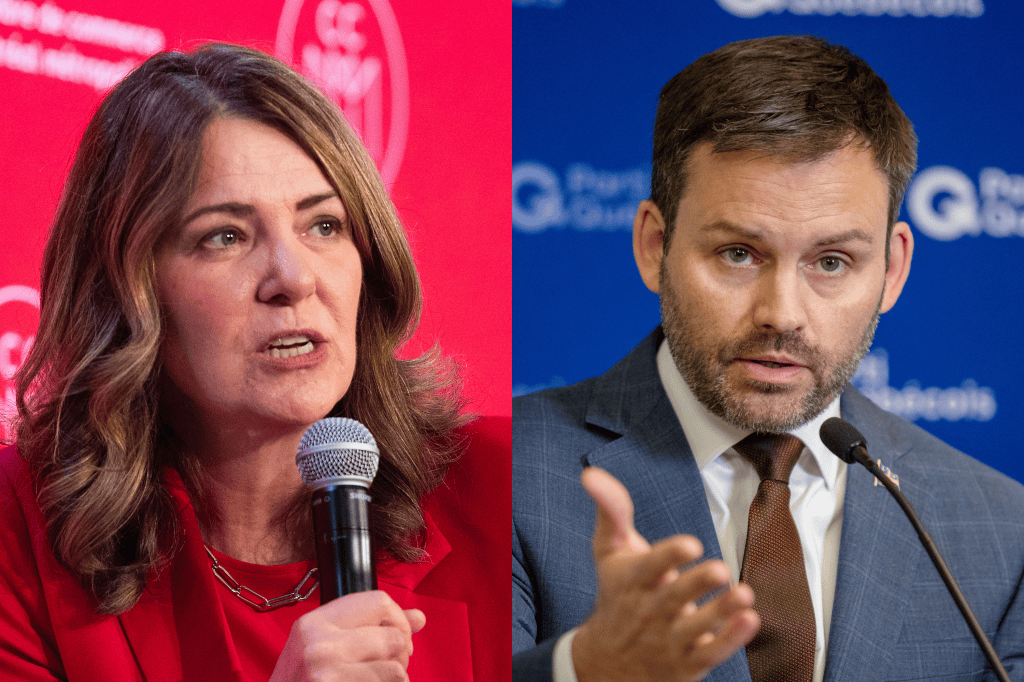
Premier Paul St-Pierre Plamondon argued the results showed Albertans now share Quebec’s view that the federation is a “straitjacket.” Conservative Leader Éric Duhaime declared that Alberta had chosen “yes to autonomy.”
But the final results tell a different story.
Albertans overwhelmingly rejected the proposal to begin the process required to hold a future binding referendum on separation from Canada, with 75 per cent voting against it.
While they approved some proposals aimed at giving their province greater control, they rejected several of Premier Danielle Smith’s most ambitious plans to shift power away from Ottawa.
They voted against abolishing the Senate, against giving provinces the power to appoint certain judges and against allowing provinces to opt out of federal programs while keeping federal funding.
In a widely reported social media post published while votes were still being counted, St-Pierre Plamondon declared that “the message sent to Ottawa could not be clearer: Canada as we know it does not work and the status quo is no longer acceptable.”
The Parti Québécois leader, widely known as PSPP, pointed to preliminary results showing support for abolishing the Senate and giving provinces a role in appointing certain judges. He also cited a tight result on allowing provinces to opt out of federal programs without losing funding.
However, as more votes were counted, the Senate and judicial measures failed, while the margin against the federal opt-out plan widened significantly.
Albertans did say Yes to some measures on the ballot.
They supported Alberta gaining more control over immigration and restricting access to some provincially funded health, education and social services for people with non-permanent immigration status.
A ‘historic opportunity’ for Quebec?
The results complicate Duhaime’s claim that Alberta’s referendum creates a “historic opportunity” for Quebec to work with autonomist premiers to increase provincial powers.
“There is momentum right now, not only in Quebec, but elsewhere in Canada, of conservative governments wanting more autonomy for their province and less interference from Ottawa,” Duhaime said at his party’s swearing-in ceremony last week.
The final results suggest a more modest conclusion.
Albertans supported some policy changes, particularly on immigration, but rejected several of the referendum’s most significant constitutional proposals.
Smith, an autonomist who previously courted Alberta separatists, was not declaring victory after the votes were tallied.
“What I heard from the results is people want us to proceed, but they want us to proceed with caution,” she said.
Prime Minister Mark Carney has not closed the door to offering Alberta a deal similar to one given to Quebec.
Since 1991, Quebec has had special powers over immigration, including the ability to select most of its economic immigrants and influence over how many immigrants it receives.
Quebecers shun referendum
PSPP also used his post to emphasize that Alberta’s vote proves that such exercises aren’t the end of the world.
The Alberta referendum “did not cause the cataclysm predicted whenever the word ‘referendum’ is mentioned in Quebec,” he noted.
It may not have been cataclysmic, but the referendum could still carry political consequences for Smith. Critics argue the process was divisive, costly and failed to produce a clear consensus.
Alberta’s United Conservative Party finds itself divided, with separatists threatening to oust Smith as leader and Smith inviting those who want to turn the UCP into an independence party to leave.
While PSPP cites Alberta as evidence that referendums are nothing to fear, the issue remains a political liability in Quebec.
The PQ has promised to hold a referendum after Donald Trump leaves the White House in 2029, but it faces a challenge: Quebec voters don’t want to hear the word “referendum.”
Support for Quebec sovereignty remains at 29 per cent. Only 20 per cent of voters said they want a PQ government to hold a referendum during its mandate, according to a Léger poll released last week.
The PQ won a minority mandate with just 28 per cent of the vote. Quebecers’ favourite politician at the moment is Carney, a federalist.
The poll found that the PQ would have won 35 per cent of the vote and a majority if PSPP had dropped his referendum pledge.
Editor’s Picks

The Gazette’s On Quebec Politics newsletter by Andy Riga breaks down key election issues, from polling shifts to legislative manoeuvring to ideas circulating in francophone commentary that don’t make it into English-language coverage.
To sign up, visit this page and check the box labelled “On Quebec Politics” before providing your email address.

A Montreal native, Andy Riga has been with The Gazette since 1991. He covers politics, language and other Quebec issues, and writes the On Quebec Politics newsletter. Montréalais d’origine, Andy Riga travaille au Montreal Gazette depuis 1991. Il couvre la politique, les enjeux linguistiques et d’autres sujets, et est responsable de l’infolettre On Quebec Politics.
ariga@postmedia.com