
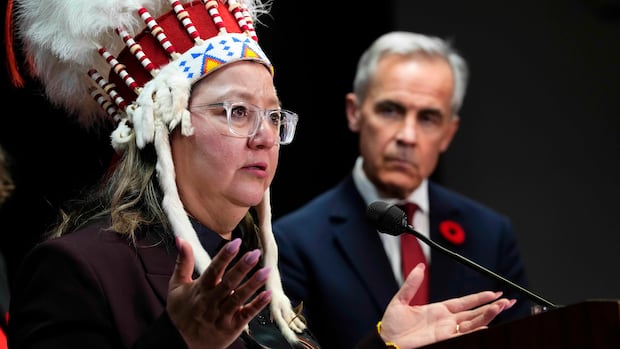
Métis leaders across Canada say remarks made by the Assembly of First Nations national chief to reporters Monday following First Nations-First Ministers meetings showed disrespect to Métis people and their identity.
Cindy Woodhouse Nepinak made the remarks at a news conference with Prime Minister Mark Carney and again later during a media scrum.
At the news conference, in response to a question about proposed abolishment of the Indian Act, she referenced Bill S-2 and said the federal government has been telling First Nations people who they are and aren’t for a long time.
“It’s creating a group in this country, I’m just going to be open about it, pretendians, that don’t know who they are because the government ends up saying you don’t belong to that band, when in fact many of them do,” said Woodhouse Nepinak.
“And you’re creating this big group of Métis people across this country that probably have First Nations roots and are not some new group that are being created in this country. I know that they’re uncomfortable conversations but they’re the truth. I mean First Nations were the only group, along with the Inuit, in this country to begin with.”
Then at a media scrum, she said regarding Bill S-2, “There’s a lot of confused people out there who are claiming to be Indigenous, a lot of pretendians, and then a whole group of everybody else who says, you know, ‘I’m Métis.'”
“And yet a lot of them like, you know, well can you trace yourself back to a First Nation? And those are hard discussions to have, but they’re necessary because they’re creating these issues of the depletion of fish because all these people are just using cards to fish and hunt, and it’s really sad. I come from a place where we don’t even have much moose anymore because of it. And they’re uncomfortable, but they’re absolutely necessary.”
Woodhouse Nepinak did not respond to a request for clarity about her remarks by time of publishing.
In a statement Tuesday, Manitoba Métis Federation President David Chartrand said his government had viewed the meeting positively and wished First Nations success.
“Instead of appreciating our support and well wishes, National Chief Woodhouse Nepinak chose to waste her public platform in creating false narratives about the Red River Métis, instead of advancing the First Nations agenda,” said Chartrand in the statement.
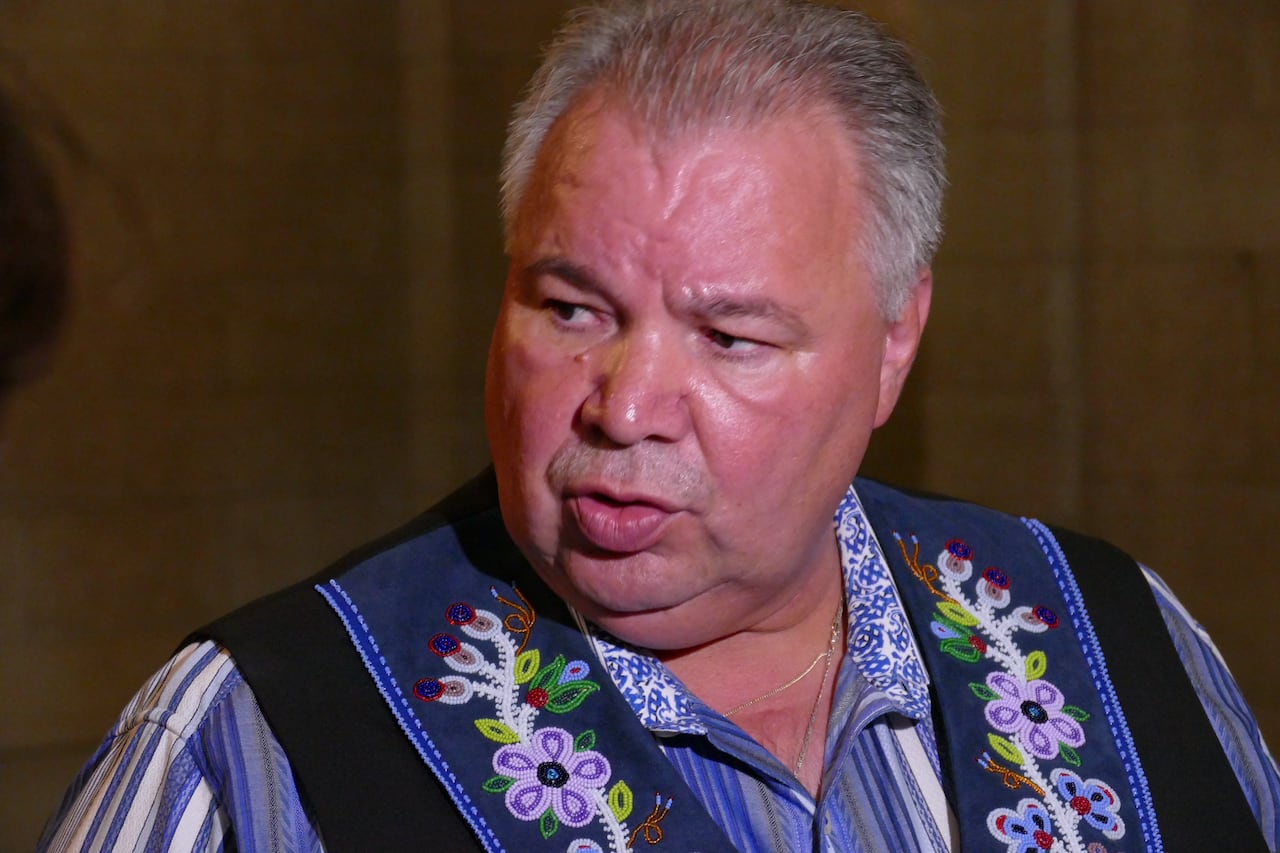
Manitoba Métis Federation President David Chartrand says the Assembly of First Nations national chief chose to ‘waste her public platform’ on Monday to create false narratives about Métis people. (Jeff Stapleton/CBC)
Chartrand said in the statement that the identity, existence and history of Red River Métis are “not up for debate nor are they up for dismissal by any other Indigenous group in this country, especially a non-rights holding organization.”
“We are saddened by National Chief Woodhouse Nepinak’s uninformed views, but there can be no doubt that I will not stand by and let anyone abuse the Red River Métis or dismiss our existence.”
In a statement Tuesday, Andrea Sandmaier, president of Otipemisiwak Métis Government which represents 78,000 Métis in Alberta, said she recognized injustices First Nations endured and she stood with First Nations in efforts to reclaim rights and determine their own citizenship.
“But the recognition of First Nations rights must never come at the expense of Métis rights,” the statement said.
“Our histories are intertwined, but our identities are distinct. We are not ‘some new group’ and we most certainly are not confused about who we are.”
Métis Nation-Saskatchewan President Glen McCallum, in a statement Tuesday, said he respected First Nations’ rights to pursue their own path forward, and Métis people will look to do the same.
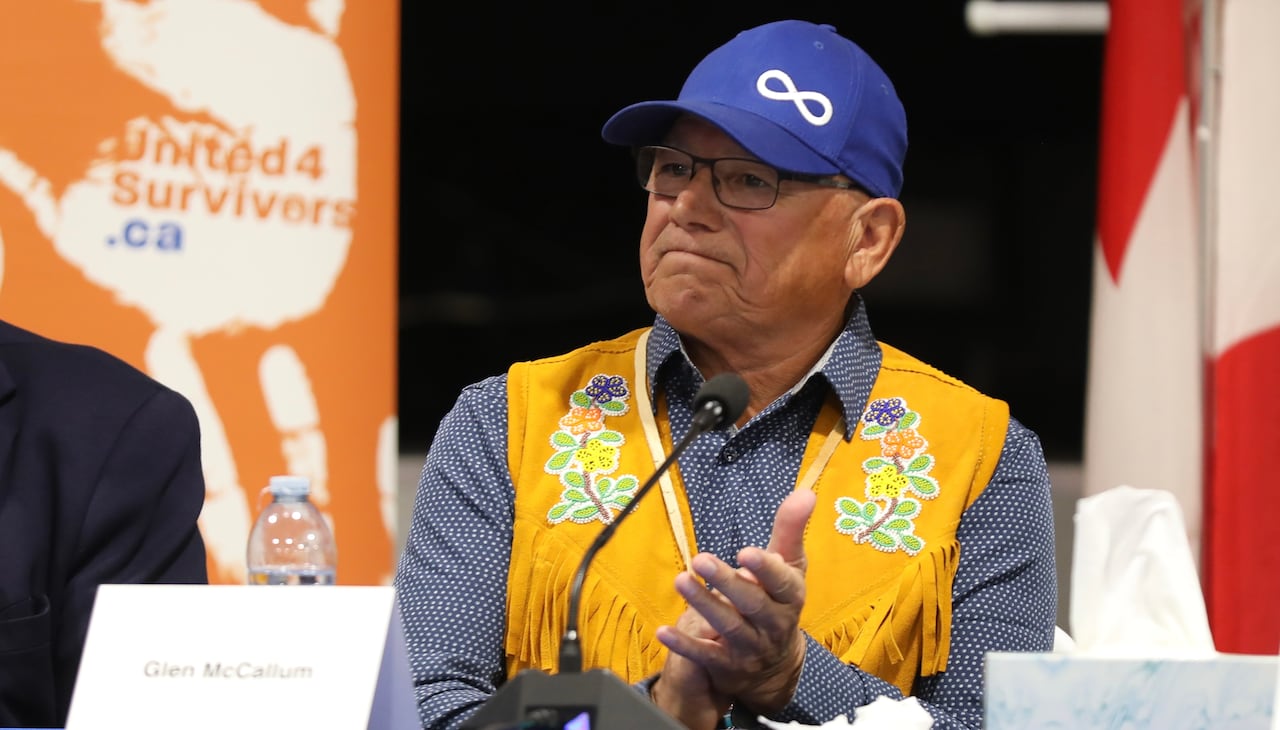
Glen McCallum is president of the Métis Nation-Saskatchewan. (Alexander Quon/CBC News)
“Métis people are rights holders under Section 35 of the Constitution, alongside First Nations and Inuit. No government or national organization defines who we are,” McCallum’s statement said.
“Our identity is rooted in our own history, culture, values, language and nationhood, and our self-government work builds a Métis government by Métis people, for Métis people.”
The Métis Nation of British Columbia, which represents roughly 113,000 Métis people in British Columbia, also called on the national chief to retract her statement and to “engage in dialogue with Métis leadership to encourage mutual respect and understanding.”
“We have a shared story with First Nations and Inuit peoples, together we have suffered greatly. Let us not demean each other but rather hold each other up and hold Canada to account to make life better for all our peoples,” the statement said.
The Métis Nation of Ontario said in a statement that in 2003, the Assembly of First Nations national chief at the time applauded the Powley decision, which affirmed Métis rights under Section 35 of the Constitution.
“These are just some examples of the shared history between Métis and First Nations that National Chief Woodhouse chose to ignore and disrespect,” the statement said.
Assembly of Manitoba Chiefs weighs in
The Assembly of Manitoba Chiefs, which represents 63 chiefs in Manitoba, issued a statement on Wednesday supporting Woodhouse Nepinak.
“She is speaking about something fundamental: First Nations were here first, and Canada has no authority to decide who we are or who belongs to our Nations,” Grand Chief Kyra Wilson said in the statement.
“We will not be silenced for defending that truth.”
The Statement said the Assembly of Manitoba Chiefs said Chiefs-in-Assembly did not support Bill C-21, which would implement a new treaty with the Manitoba Métis Federation, in its current form due to concerns about overlapping rights, jurisdiction and lands.