

Listen to this article
Estimated 4 minutes
The audio version of this article is generated by AI-based technology. Mispronunciations can occur. We are working with our partners to continually review and improve the results.
Ottawa is pouring half a billion dollars into Winnipeg’s North End sewage treatment plant megaproject, a crucial piece of funding the city has been looking for to finance the final phase of needed wastewater upgrades.
Federal ministers and local members of Parliament joined city and provincial officials on Friday to announce $500 million for Winnipeg’s largest and oldest wastewater treatment facility.
“The stakes could not be higher: without expanded wastewater treatment Winnipeg would run out of capacity to build new homes and accommodate new industries within six years,” Liberal MP Terry Duguid (Winnipeg South) said during a Friday announcement at the north Winnipeg facility.
“Without this investment we would be putting the brakes on our city’s growth, limiting our ability to attract new businesses and realize the full potential of new developments.”
The news comes almost three months after the Manitoba government announced $500 million for the third and final phase of the wastewater project — roughly a third of the expected $1.5-billion cost of completing the nutrient-removal plant.
The city has already set aside its one-third share for the Phase 3 upgrades.
“This is a massive and expensive project,” Winnipeg Mayor Scott Gillingham said Friday, in his first announcement since being re-elected on Wednesday.
“Without federal and provincial support, the cost would have fallen much more heavily on Winnipeg families and businesses through their water and sewer bills. Today’s announcement changes that.”
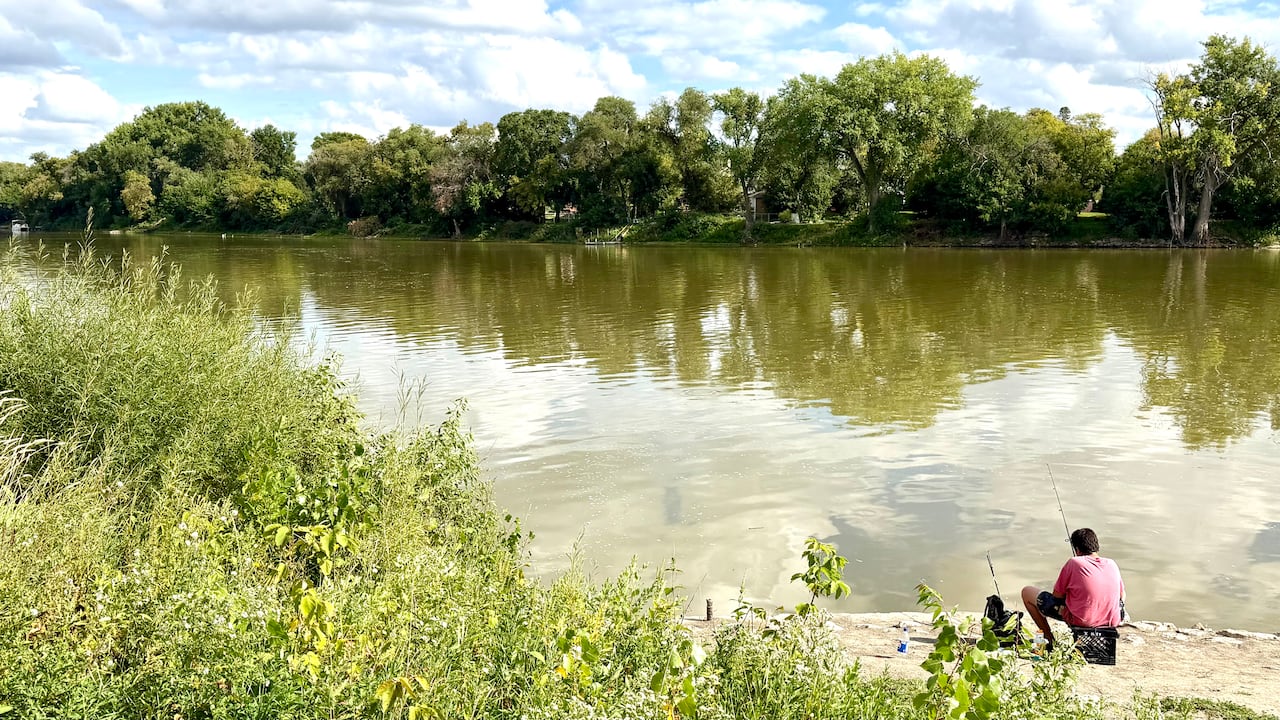
An angler fishes the Red River in Winnipeg’s North End in September. (Travis Golby/CBC)
Gillingham said confirmation of $500 million from the feds ensures the city can continue on with a planned freeze on water and sewer rates next year. He said without the federal and provincial funding, Winnipeggers would’ve had to absorb $600 more on average annually in taxes.
Federal Minister of Northern Affairs Rebecca Chartrand, the MP for the northern Manitoba riding of Churchill-Keewatinook Aski, said the $500 million announced Friday for the treatment plant is part of a broader federal funding package that also includes money for housing, post-secondary education and health infrastructure.
Curbing nutrient flow into Lake Winnipeg
The megaproject dates back to 2003, when the province ordered the City of Winnipeg to upgrade the North End treatment plant in order to reduce the outflow of nutrients into Lake Winnipeg.
The project was repeatedly delayed, but the first phase of the $3.2-billion upgrade was completed earlier this year.
Treated effluent being discharged from the city’s current sewage treatment facility still sends nitrogen, phosphorus and other nutrients into Winnipeg waterways.
That contributes to toxic cyanobacteria algal blooms, which can shut down shoreside beaches on Lake Winnipeg that are swimming and recreation hot spots.
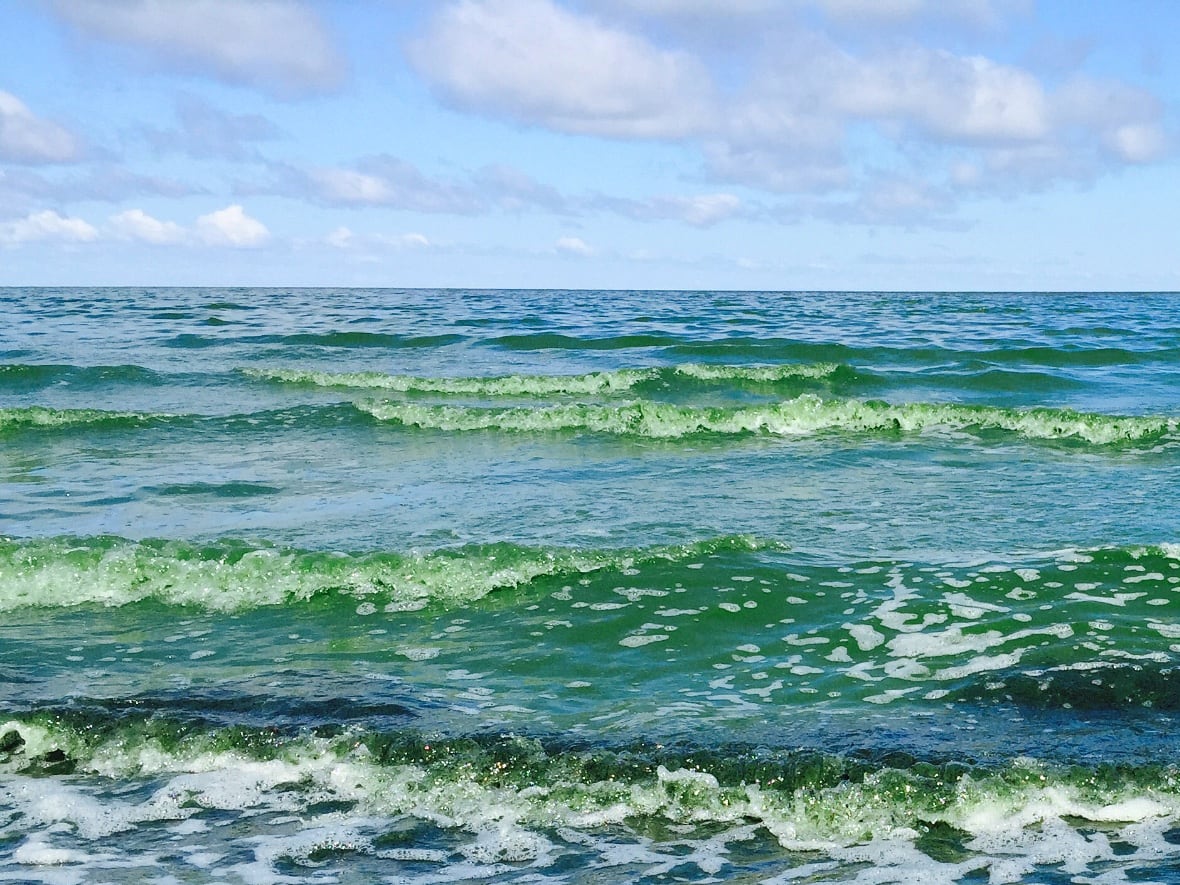
Hillside Beach transformed into a sludgy mess in summer 2015 as green waves wash ashore amid an algal bloom. (Bert Savard/CBC)
Excess nutrients from Winnipeg, combined with those blooms, can also throw off the balance of tiny aquatic invertebrates, the minnows that prey upon them, and the bigger fish that prey on those minnows, in an already vulnerable ecosystem that supports an economically and recreationally significant fish population.
The upgrades are expected to better filter out some nutrients, minimizing some of the negative environmental impacts downstream, while also expanding the city’s sewage treatment capacity to support growing communities.
“This is more than a wastewater treatment project,” said Duguid.
“It’s about protecting Lake Winnipeg and the health of our rivers. It’s about building thousands of new homes and keeping our city affordable. It’s about attracting investment, creating jobs and expanding our industrial footprint.”
Duguid served as chair of Manitoba’s clean environment commission in 2003, when commissioners called for advanced wastewater treatment upgrades to reduce nutrient loads entering Winnipeg rivers and Lake Winnipeg.
Three levels of government have been unable to reach an agreement until now.
“The best time to have made those announcements was over 20 years ago,” Duguid said. “The next best time is today.”
The North End sewage plant project is expected to be finished by 2032.