

Listen to this article
Estimated 3 minutes
The audio version of this article is generated by AI-based technology. Mispronunciations can occur. We are working with our partners to continually review and improve the results.
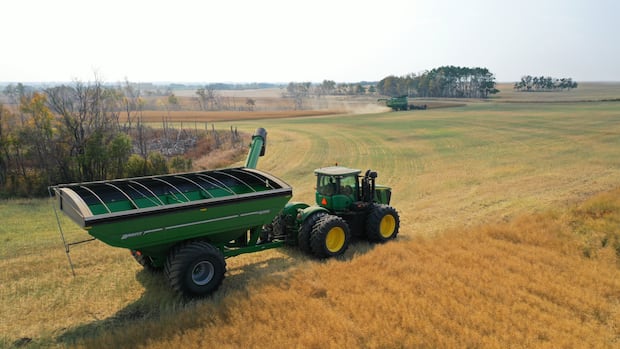
Saskatchewan farmers have 95 per cent of their canola in the bin and ready to go, but the deal that lowered China’s canola tariffs this year expires in just over two months.
Bill Prybylski of the Agricultural Producers Association of Saskatchewan (APAS) was in Ottawa meeting with MPs, senators and Chinese Embassy officials last week. He said the lowered tariff for Canadian canola entering China is set to expire Dec. 31.
“While there was no commitment that that extension … will carry on, there was, I would say, positive messaging from the officials,” Prybylski said in an interview.
He said Prime Minister Mark Carney is expected in China next month, and officials signalled there could be “positives coming forward” from those meetings.
Short-term solution
Stuart Smyth, a professor of agricultural and resource economics at the University of Saskatchewan, said the deal gave producers confidence that they would be able to sell whatever canola they had seeded, but it only covered the 2026 year.
He said provincial and federal governments should be pressing for an extension of a year or more, ideally three to five years.
Smyth said a formal trade agreement with China would help remove some of the politics, noting that the canola tariff was a response to Canada’s tariff on Chinese electric vehicles.
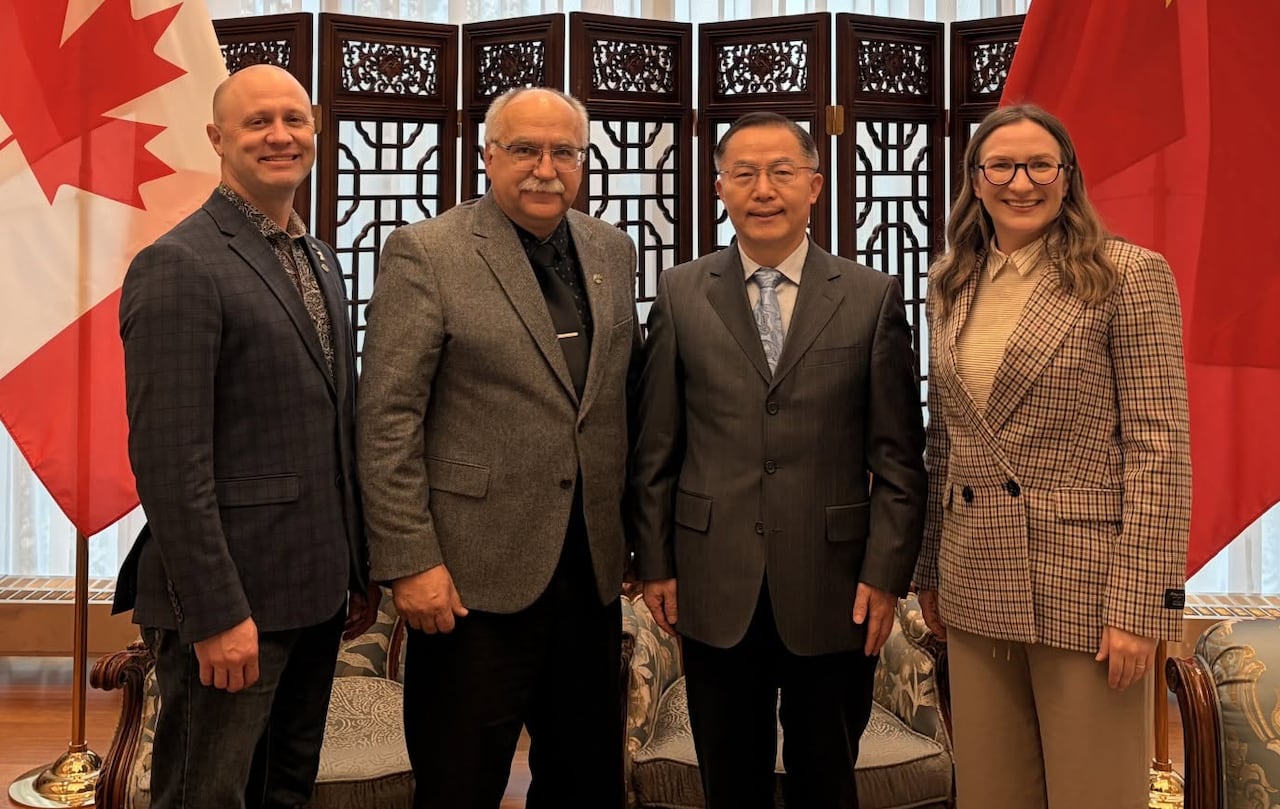
Bill Prybylski (second from the left) of the Agricultural Producers Association of Saskatchewan (APAS) was in Ottawa meeting with MPs, senators and Chinese Embassy officials last week. (APAS Facebook)
The bigger issue
Smyth said even if Canada can diversify and find new customers, getting the product to them is a challenge.
Congestion at the Port of Vancouver is “a logistical nightmare,” he said.
“We might have 10 new trade agreements, but the fact that we can’t efficiently move products through Vancouver isn’t going to benefit us in any way.”
Prybylski agrees that infrastructure is key.
“We know that we can grow it,” he said. “We just have to have the infrastructure and the political will in place to make sure that there are no hiccups in the supply chain.”
U.S. can’t be replaced
Both Smyth and Prybylski said it’s not realistic to expect Canada to be able to replace the U.S. market. Smyth said 70 to 75 per cent of Canada’s exports go south, and years of effort might lower that to 60 or 65 per cent.
Prybylski said Saskatchewan’s bulk commodity exports are still entering the U.S. tariff-free, but farmers are feeling the pinch through higher costs for equipment, fertilizer and fuel.
CBC News reached out to the provincial government for comment on the impending expiry of the Chinese tariff exemption, but didn’t receive it in time for publication.