
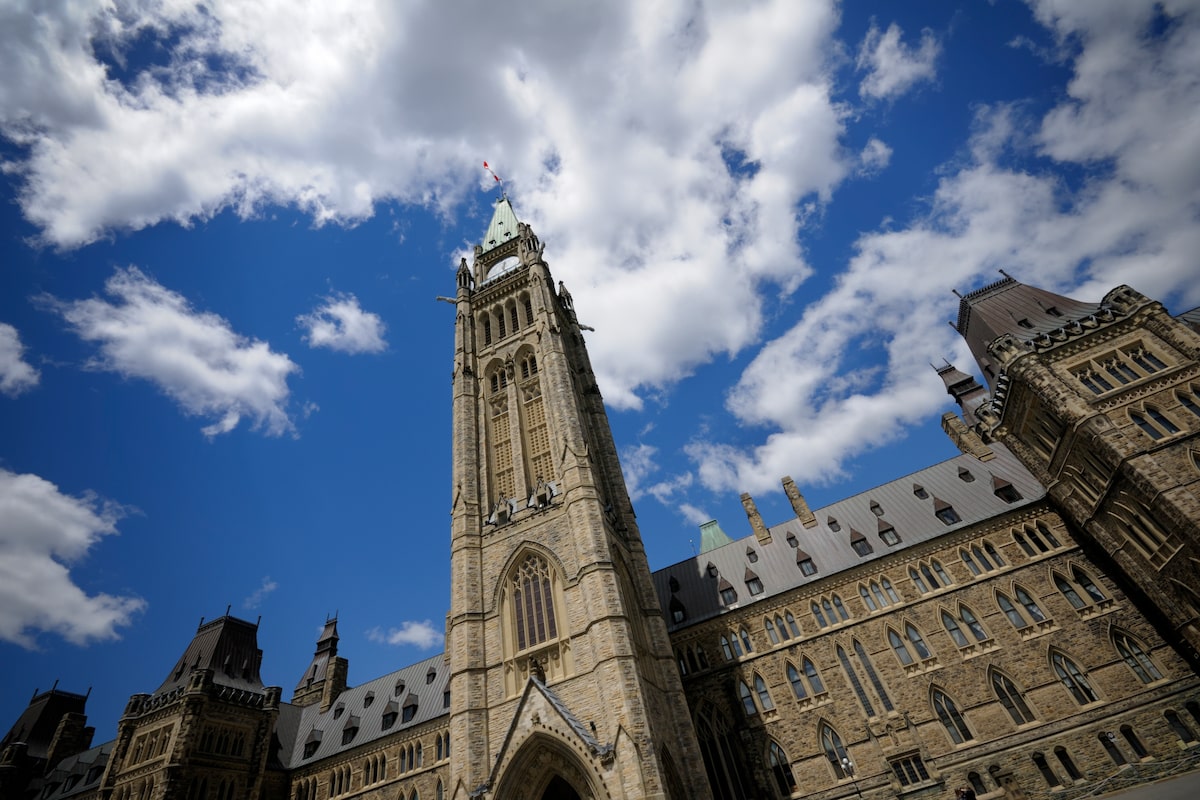
Ottawa’s new national security strategy pledged to increase ‘the speed and depth of intelligence assessment.’KeithBinns/AFP/Getty Images
Ottawa is facing calls to boost the government’s intelligence assessment capabilities, warning that Canada can no longer rely on U.S. analysis of international security threats and must also build capacity to understand U.S. intentions.
As the government prepares for its federal budget on Nov. 5, former senior intelligence assessors are calling for more investment in Canada’s sovereign capabilities, with some urging Prime Minister Mark Carney to set up an independent agency.
Ottawa’s national security strategy, published this week, pledged to increase “the speed and depth of intelligence assessment, particularly all-source intelligence.”
Authorities on intelligence analysis say Ottawa has failed to invest sufficiently in “policy neutral” assessments, and this must be urgently addressed.
“In an increasingly dangerous and unpredictable world, where even our closest allies can no longer be trusted, Canada needs to strengthen its intelligence capabilities across the board, both on the collection and assessment side, to support government decision making,” said Vincent Rigby, national security and intelligence adviser to former prime minister Justin Trudeau from 2020 to 2021.
“The best raw intelligence is useless as a tool if it cannot be properly collated and analyzed,” he added in an e-mail.
Ottawa expands military space ambitions with launch, satellite funding
Mr. Rigby, a professor at the Max Bell School of Public Policy at McGill University, said intelligence assessment tends to focus on traditional state threats, for example from China, Russia, and Iran, as well as transnational concerns such as terrorism and organized crime.
But he said “it must also address the elephant in the room – the U.S.”
“Given the U.S.’s hostile and unpredictable behaviour under Trump, we can no longer rely on their intelligence assessments of the international security environment, and we need to conduct our own analysis of their approaches towards us and the rest of the world,” he added in an e-mail.
“This does not mean ‘spying’ on the U.S. per se through clandestine means, but simply the ability to understand U.S. intentions and actions and support government responses, including through open sources. In short, we need a strengthened independent, sovereign assessment capability.”
Mr. Rigby said should Canada’s relationship with the U.S. “ever return to some semblance of normalcy,” its increased assessment capacity would be valued by members of the Five Eyes, the intelligence alliance that includes Canada, Australia, New Zealand, the United Kingdom and the U.S.
He said the government has reduced its assessment capacity – especially in the Privy Council Office – which is regrettable.
Cyber intelligence agency planning large data centre in Ottawa area
There are a number of intelligence assessment units across government, including the Privy Council Office’s Intelligence Assessment Secretariat, which conducts domestic and global security assessments.
Global Affairs also has an intelligence and threat assessment division whose work includes assessments of foreign developments and potential threats to Canadian interests overseas, including to our diplomats.
Canadian Forces Intelligence Command is the largest intelligence analysis group looking at military issues and other threats to national security. Other departments, including the Canada Border Services Agency, also conduct intelligence analyses.
Wesley Wark, a fellow with the Waterloo, Ont.-based Balsillie School of International Affairs who served for two terms on the PM’s Advisory Council on National Security, said intelligence assessment in Ottawa “is in sorry disarray.” It needs to be enhanced with a clear pathway for getting timely and relevant intelligence to the Prime Minister, senior advisers and senior officials, he said.
Alan Barnes, former director of the Privy Council Office’s Intelligence Assessment Secretariat’s Middle East and Africa division, said in recent years intelligence assessment has taken a back seat to intelligence collection.
But he said he is encouraged that the national security strategy has pledged to increase Canada’s capacity to produce strategic, all-source intelligence assessments to support government decision-makers.
“One way to do this – which I strongly endorse – would be to create a Canadian intelligence assessment agency,” he said in an e-mail.
MPs, senators on intelligence committee review Canada’s foreign spying capabilities
“Canada needs a robust capability to produce independent intelligence assessments prepared from a Canadian point of view and with Canadian interests in mind,” said Mr. Barnes, senior fellow at Carleton University’s Norman Paterson School of International Affairs.
He said Canada’s close intelligence relations with its Five Eyes partners have been of immense benefit to the country.
“But Canada also needs the ability to make sound independent judgments about the credibility and significance of all the intelligence that we receive, from our own sources and from our allies.”
Canada’s intelligence assessments have not always chimed with the U.S. view. For example, in 2002 when tension was increasing over whether then president of Iraq Saddam Hussein had weapons of mass destruction, Ottawa’s assessment questioned the Bush administration’s claims, which contributed to Canada’s decision not to join the U.S. invasion of Iraq.
Greg Fyffe, a former executive director of the International Assessment Secretariat at the Privy Council Office, said at a time of “extreme geopolitical danger” as well as disinformation campaigns, convincing fakes and shifting alliances, “all on top of the traditional challenge of reaching actionable decisions with available intelligence, Canada has to ensure it has a correspondingly strong and independent assessment capability.”
Privy Council Office spokesperson Mélany Gauvin said, “Canada’s capacity to analyse and assess information collected from our own capabilities or coming from partners is critical to ensuring a sovereign Canadian perspective is applied to the decisions the government makes about Canadian interests.
“Because of this, the government continuously examines the effectiveness of Canada’s capabilities for intelligence collection and assessment to ensure that Canadian capabilities match the challenges we face.”