
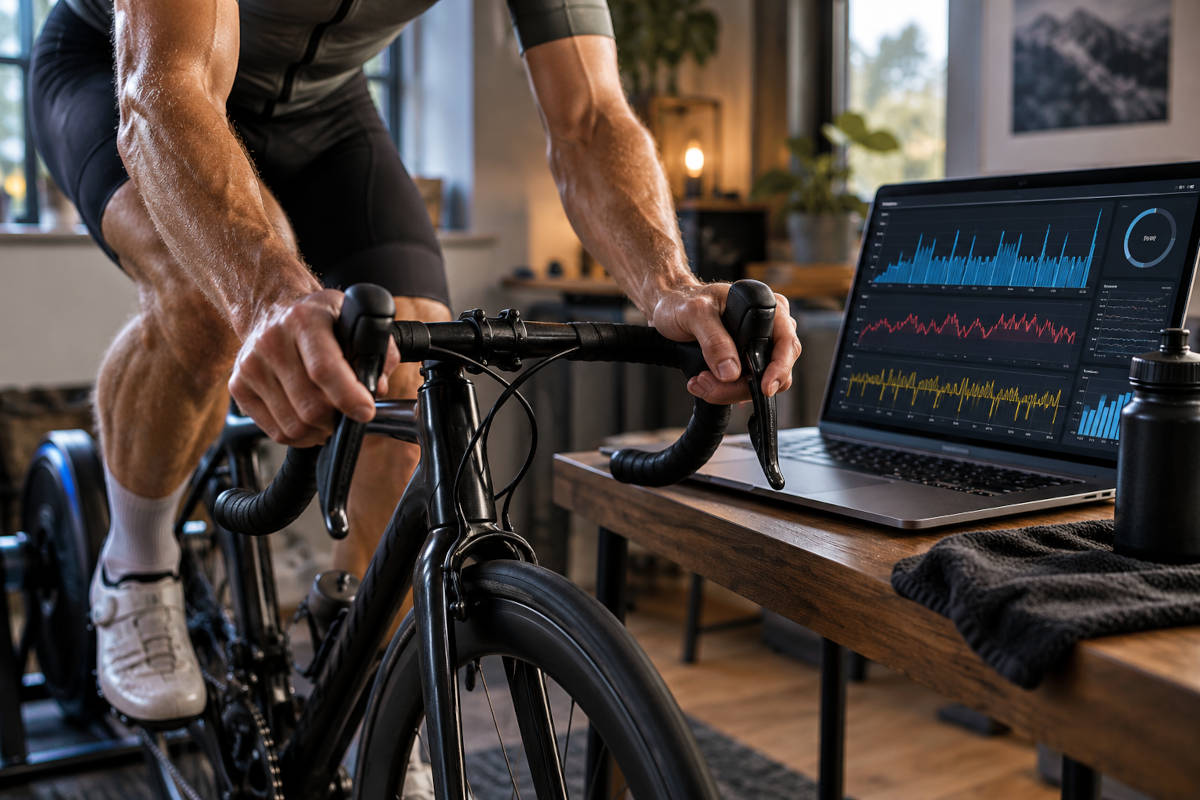
A cyclist is approaching the final minutes of a demanding indoor time trial when their power output begins to fade. Instead of receiving encouragement at a predetermined interval, they hear a motivational message selected by an artificial intelligence system monitoring their performance. Researchers at the University of Miami are investigating whether this type of real-time intervention can help cyclists sustain higher power during intense exercise, potentially opening a new direction for AI-assisted training.
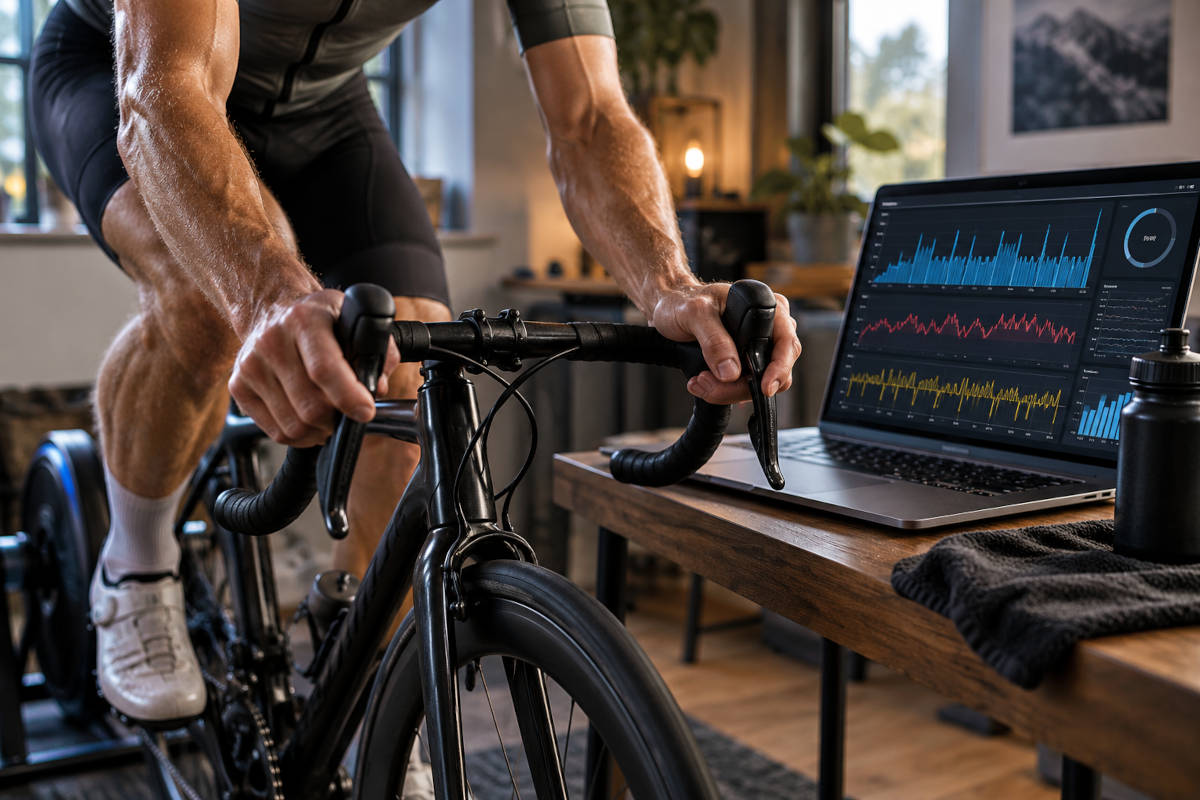 Cyclist training on a smart indoor trainer while monitoring power output on a laptop. Image: TodoMountainBikeAn AI Coach That Decides Every Five Seconds When to Intervene
The clinical trial, registered under identifier NCT07318233, began on May 15, 2026, and aims to enroll 120 participants between the ages of 18 and 40. Its primary objective is to determine whether AI-powered cycling coaching based on real-time physiological and performance data can improve average power output during a 20-minute indoor cycling time trial.
Unlike conventional motivational systems that deliver encouragement at fixed intervals, the experimental coach uses a machine learning algorithm called Thompson Sampling. Every five seconds, the system evaluates whether sending a motivational message could help the cyclist maintain their effort. Its decisions are informed by continuously updated measurements rather than a predetermined schedule.
The algorithm considers current power output relative to rolling averages over 30 seconds, two minutes, and five minutes. It also monitors short-term power fluctuations, heart rate trends, cardiac drift, cadence stability, and expected fatigue progression based on the rider’s power-duration relationship. These measurements help the system identify changes in performance that might justify an intervention.
The researchers have designed the algorithm to favor consistent power delivery and efficient pacing. Rather than simply encouraging riders to push harder whenever their output declines, the system evaluates several performance indicators before deciding whether to intervene. This makes the experimental approach fundamentally different from the scheduled motivational prompts commonly associated with digital workout programs.
The technology represents a potential application of real-time adaptive coaching for indoor cycling. Instead of focusing exclusively on workout selection, training intensity, or recovery recommendations, the system attempts to influence how a cyclist manages an effort while it is happening. Whether that intervention produces a measurable performance benefit remains the central question of the study.
Three Groups Will Test Whether Personalized Motivation Produces More Watts
The University of Miami trial uses a randomized, parallel-group design with three experimental conditions. Participants assigned to the adaptive coaching group receive motivational messages selected by the AI system. A second group receives conventional encouragement at fixed intervals, while a control group completes the exercise without motivational messages.
The conventional coaching group receives prompts at minutes 3, 6, 9, 12, 15, and 18 of the time trial. These messages follow a predetermined progression, beginning with encouragement to establish a steady rhythm and becoming more focused on maintaining effort as the finish approaches. Their timing does not change in response to the cyclist’s physiological condition or power output.
The control group receives no motivational encouragement, although participants are informed of elapsed time at minutes 5, 10, 15, and 19 to support pacing awareness. The protocol also specifies that participants use the same monitoring equipment to help control for potential effects associated with being observed.
One important feature of the experimental design is that the adaptive algorithm uses information collected during an initial session to guide its decisions. During the subsequent test, it evaluates the cyclist’s performance continuously and selects whether to deliver encouragement based on the available data.
The primary outcome is average cycling power during a 20-minute time trial, measured in watts through a cycling ergometer. Researchers will compare this measurement across the three groups to determine whether personalized encouragement produces different results from conventional motivational prompts or exercising without encouragement.
The distinction matters because maintaining a high average power output depends on more than a cyclist’s physiological capabilities. Pacing decisions, perceived exertion, concentration, and willingness to sustain discomfort can all influence performance during a demanding effort. The researchers are investigating whether adapting encouragement to the rider’s changing condition can influence that process.
Could the Technology Eventually Reach Indoor Cycling Platforms?
The study is led by Anna Queiroz, Ph.D., at the University of Miami in Coral Gables, Florida. According to the clinical trial registration, recruitment is underway, with primary completion currently estimated for December 23, 2028. No results have been published demonstrating that the adaptive AI system improves cycling performance.
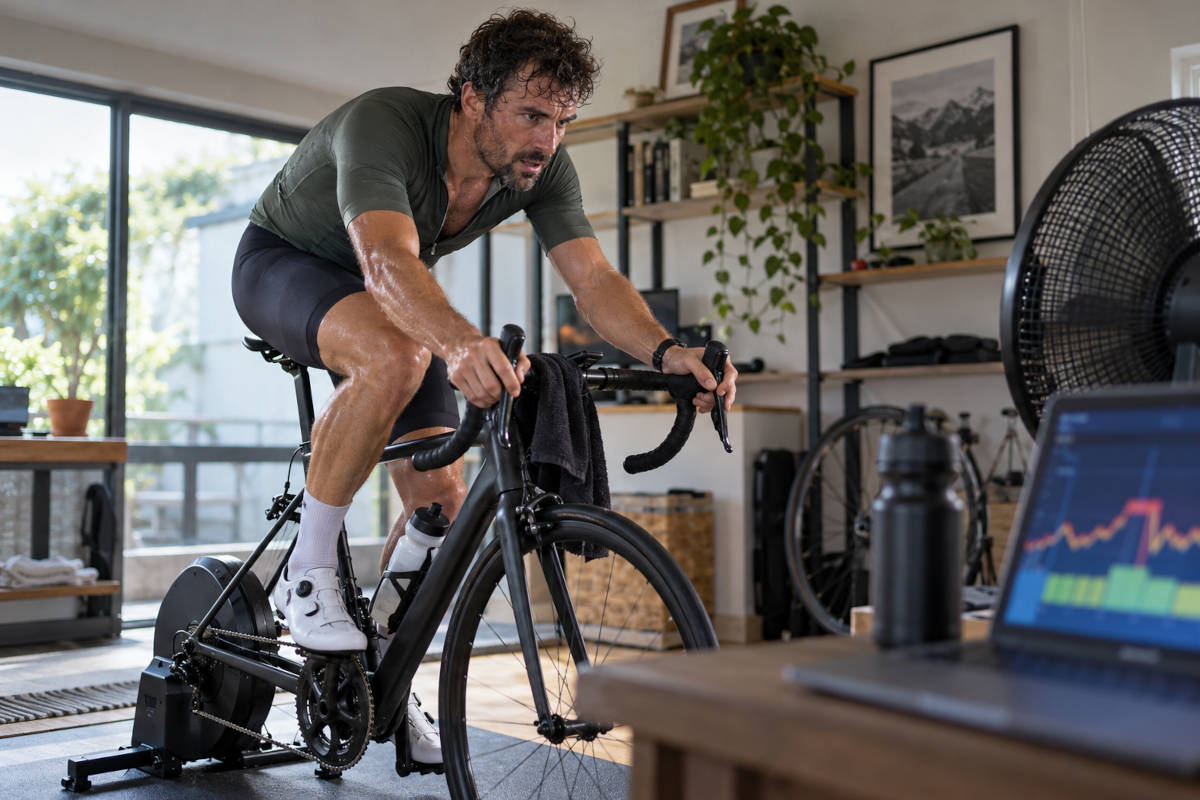 Indoor cyclist riding a smart trainer beside a laptop displaying power and performance data. Image: TodoMountainBike
The research also has eligibility restrictions that will influence how its findings should be interpreted. Participants must be recreationally active, familiar with stationary cycling, and capable of completing 20 minutes of vigorous exercise. Competitive cyclists training more than ten hours per week are specifically excluded, along with individuals meeting certain medical exclusion criteria.
Consequently, even if the researchers identify statistically significant improvements, the results will not necessarily apply to professional cyclists or highly trained endurance athletes. Experienced competitors may respond differently to motivational feedback, particularly when they already have established pacing strategies and substantial experience managing sustained efforts.
Another consideration is the potential influence of participant expectations. Although the trial includes participant masking, the experience of receiving individualized encouragement could affect motivation independently of the algorithm’s ability to identify useful intervention opportunities. Comparing adaptive messages with conventional encouragement should help researchers investigate this issue, but the results will require careful interpretation.
For the broader cycling industry, the experiment raises questions about the possible evolution of AI coaching in virtual cycling platforms. Indoor training applications already have access to substantial amounts of physiological and performance data through smart trainers, power meters, and connected heart rate monitors. Similar information could theoretically support coaching systems capable of adapting their feedback during workouts.
Such technology could eventually complement existing training platforms by adjusting encouragement according to power stability, fatigue indicators, or changes in pacing. However, the University of Miami study is an experimental investigation, not an announcement of a commercially available coaching feature. No integration with a specific indoor cycling platform has been established.
The trial also highlights a distinction between two approaches to artificial intelligence in cycling training. Many existing AI-based tools concentrate on planning workouts, adjusting training loads, and recommending recovery periods. This experiment examines whether machine learning can influence performance within a single session by selecting the timing of motivational feedback.
For now, the study remains an open test of that hypothesis. Its results will determine whether an algorithm responding to a cyclist’s physiological state offers an advantage over conventional encouragement, and whether that advantage is large enough to matter when measured in watts.