
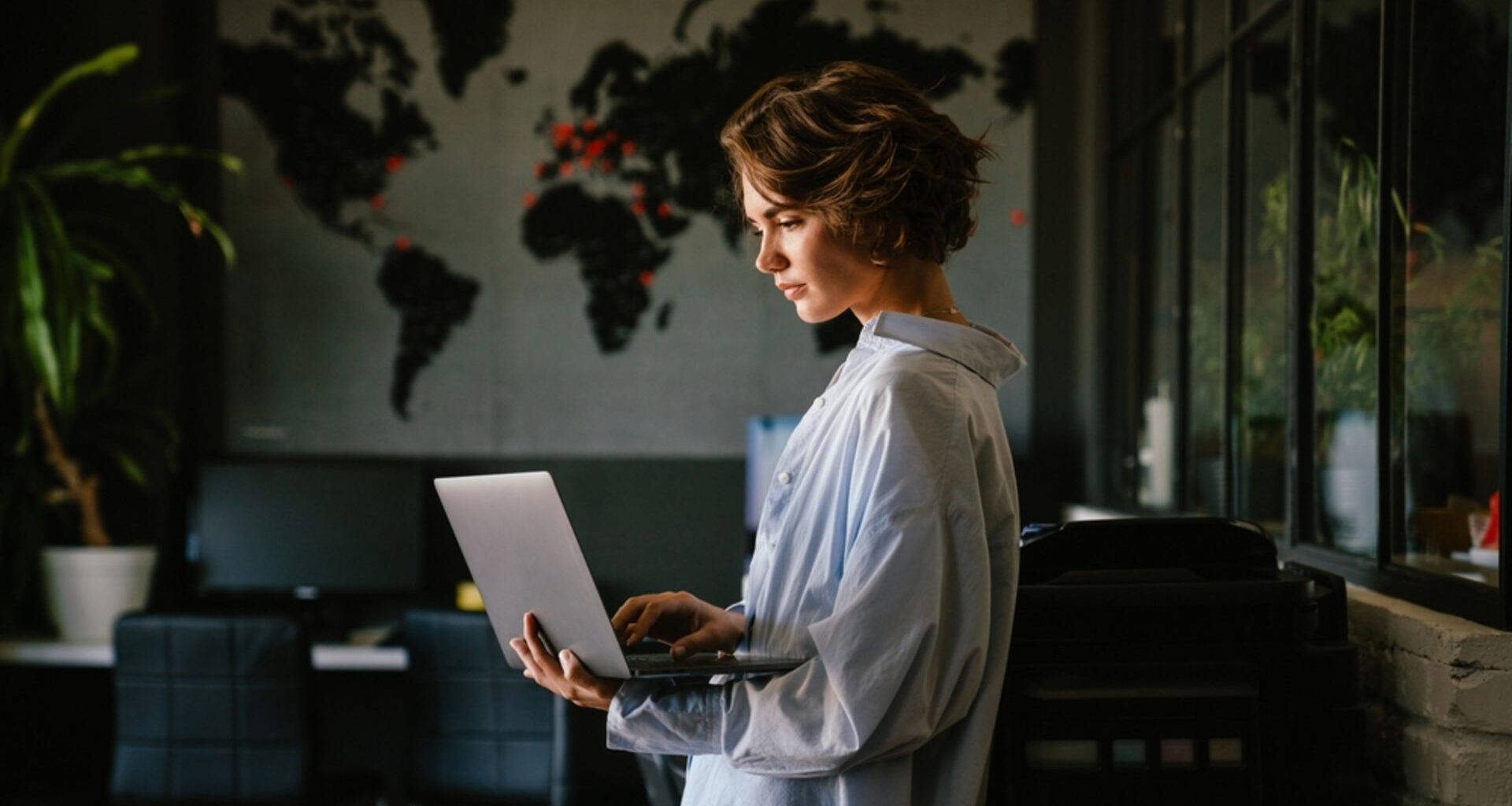
Typed work messages lose their tone more often than senders realize, and employees that are expected to check work messages at home experience increased anxiety.
Office messages used to move on paper.
People used to type, copy, and file them by hand, but now they arrive in seconds via email, Slack, Microsoft Teams, text, and more. Trading these messages can feel like a conversation, but that feeling misleads people because the writer hears a tone of voice the reader often does not.
Nicholas Epley, a behavioral scientist at the University of Chicago, described the problem when email was a new, fast tool.
“But what’s different in this medium is…the ease with which we can fire things back and forth. It makes text-based communication seem more informal and more like face-to-face communication than it really is,” said Epley.
Researchers in psychology, management, and communication at universities in the United States have since tested the changes new tools bring to work.
Most of their studies are small. Together, they cover how well tone comes through on a screen, how stressed workers feel, and how teams come up with ideas when they aren’t in the same room.
Memos were built for filing
JoAnne Yates, a management professor emerita at MIT Sloan School of Management, studied how American companies built their first internal communication systems.
Her book Control Through Communication follows typewriters, carbon copies, and filing systems as they changed business writing in the late 1800s and early 1900s.
Cabinets that sorted papers by subject worked best for documents covering one subject each. The internal memo grew up alongside them, a one-topic document a company could copy, file, and find again.
Speed came much later. Yates worked with Wanda Orlikowski of MIT and Melissa Mazmanian of the University of California, Irvine, on a study of professionals who carried mobile email devices. At first, the devices gave those workers flexibility and peace of mind.
Mobile email also raised everyone’s expectations for how quickly someone should respond. The team wrote that professionals chose to work “anywhere, anytime,” but in practice they ended up working “everywhere, all the time.”
Tone gets lost in text
Epley and psychologist Justin Kruger tested how well tone travels in an experiment with 30 pairs of college students. Each student received a list of 20 short statements and gave each one a sarcastic or a serious tone.
One student in each pair read the statements into a tape recorder, and the other emailed them. Both groups expected their partners to read the tone right about 78% of the time.
Listeners got it right about 75% of the time. Email readers managed 56%, not much better than a coin flip.
The voice messages came close to what the senders hoped, and the emails fell well short. Still, readers and listeners alike guessed they judged the tone correctly 90% of the time.
Kruger and Epley blamed egocentrism, the difficulty people have seeing things from someone else’s point of view. A writer hears the intended tone, but the reader sees only words.
“E-mail is fine if you just want to communicate content, but not any emotional material,” said Epley.
Short replies now carry signals of their own. In a Binghamton University study led by psychologist Celia Klin, 126 undergraduates rated one-word replies such as “Okay” and “Sure.” A period made those replies seem less sincere in a text message, but not in a handwritten note.
Email turned into a stress signal
Stephen Barley and Debra Meyerson of Stanford University and Stine Grodal of Boston University studied workers at high-tech companies.
Engineers, technical writers and marketers logged every phone call, email and face-to-face conversation over a series of workdays. The team reported in Organization Science that people who spent more time handling email felt more overloaded.
In later interviews, Grodal noted that participants spent about 90% of their discussion on email. Questions about phone calls and meetings drew little emotional response.
“You can actually see it on the screen; it has material properties. And so email becomes your to-do list of the day,” said Grodal.
Gloria Mark, an informatics professor at the University of California, Irvine, tested the opposite. Her team cut off email for 13 civilian employees at an Army research center outside Boston for five workdays. Heart rate monitors and computer software tracked the workers the whole time.
With email, the workers switched computer windows about 37 times an hour. Without it, they switched about 18 times, and Mark’s team used that switching to measure multitasking. Their heart rates also varied more during the email break, which the researchers read as a sign of lower stress.
Video narrows people’s focus
As more people started working from home, many meetings moved onto video. Melanie Brucks of Columbia Business School and Jonathan Levav of Stanford University tested what that does to brainstorming.
The researchers split 602 people into pairs and gave each pair five minutes to list creative uses for a Frisbee or bubble wrap. Some pairs sat together in a rooms, and others worked over video. The video pairs came up with fewer ideas, and fewer creative ones.
Eye tracking pointed to a reason. People on video spent more time looking at their partner and less time looking around the room. They also remembered fewer of the props the researchers had set out, such as a large houseplant.
The same pattern appeared among 1,490 engineers at company sites in five countries, although video didn’t hurt the next step: picking the best idea.
“When you’re visually narrowing yourself… you’re putting blinders on, basically,” said Brucks.
Video can also wear people out. In a Stanford survey of more than 10,000 people, about 13.8% of women and 5.5% of men said video calls left them very to extremely tired. The team found that the subjects seeing their own faces on screen for hours helped explain that gap.
Off-hours email raises anxiety
The pressure doesn’t end when the workday ends. William Becker of Virginia Tech, Liuba Belkin of Lehigh University and Samantha Conroy of Colorado State University surveyed full-time employees and their partners about checking email outside work hours.
Workers felt more anxious when employers expected them to monitor email at night, even if the workers spent little time actually working, and their partners reported worse health and less relationship satisfaction. After-hours email is a source of job stress that permeates the whole household.
“If the nature of a job requires email availability, such expectations should be stated formally as a part of job responsibilities,” said Becker.
Most of this research predates Slack and Teams becoming everyday tools. The tone experiment used email between college students, and the punctuation study used text messages, so these studies didn’t test workplace chat apps directly.
Grodal has said her team needs to return to workplaces and test changes such as letting workers skip after-hours replies. For now, those changes remain untested in the field.
The full study was published in the Journal of Personality and Social Psychology.
How to get involved
Read the Center for Plain Language’s free guides if you write messages to coworkers. After the General Services Administration redirected the government’s plain language website in 2025, the nonprofit reposted the Federal Plain Language Guidelines
Explore the NIOSH Total Worker Health program if you help shape workplace policy. The federal program works to make jobs safe and to support workers’ health and well-being.
Follow the Society for Industrial and Organizational Psychology for research behind workplace practices. Its members study how people work, and the society shares that research with policymakers.
Try the National Day of Unplugging each March. This day calls for a 24-hour break from phones and computers that runs from sundown to sundown.
—–
Like what you read? Subscribe to our newsletter for engaging articles, exclusive content, and the latest updates.
Check us out on EarthSnap, a free app brought to you by Eric Ralls and Earth.com.
—–