

Listen to this article
Estimated 5 minutes
The audio version of this article is generated by AI-based technology. Mispronunciations can occur. We are working with our partners to continually review and improve the results.
Alberta’s justice minister says Elections Alberta needs to be ready to run the next provincial election, denying a request to either maintain current electoral boundaries or to postpone the day Albertans will go to the polls.
In a letter posted on social media Sunday afternoon, Justice Minister Mickey Amery rejected concerns raised by Elections Alberta chief electoral officer Gordon McClure about expected changes to Alberta’s electoral boundaries ahead of the 2027 provincial election.
Amery was responding to a letter McClure penned to all Alberta MLAs that was shared publicly by the Alberta NDP on Oct. 30. In the letter, McClure asked that the government consider “several operational realities” that he said need to be addressed in order to have a successful election, which is currently scheduled for Oct. 18, 2027.
The main sticking point is an advisory panel report about electoral boundaries set to be tabled in the legislature Monday.
This is not the first time lines have been drawn due to that forthcoming report.
It was the subject of a heated back-and-forth between Premier Danielle Smith and Opposition NDP Leader Naheed Nenshi in the legislature this past week.
In McClure’s letter, he said establishing new electoral boundaries is only part of what contributes to the time pressures the organization is facing.
“The delivery of a provincial general election with new maps requires establishing the electoral geography, developing and validating electoral maps, updating electoral information systems, preparing the infrastructure required to administer the election, and co-ordinating the operational activities necessary to deliver a province-wide vote,” he wrote.
In his response, Amery said that he anticipates the final boundaries will be complete before the end of the fall sitting, which he said would give Elections Alberta nearly 11 months to get ready for the next election.
“It should also be noted that Alberta law does not guarantee Elections Alberta lengthy advance notice of a general election, and election readiness is a core part of Elections Alberta’s statutory mandate,” he wrote.
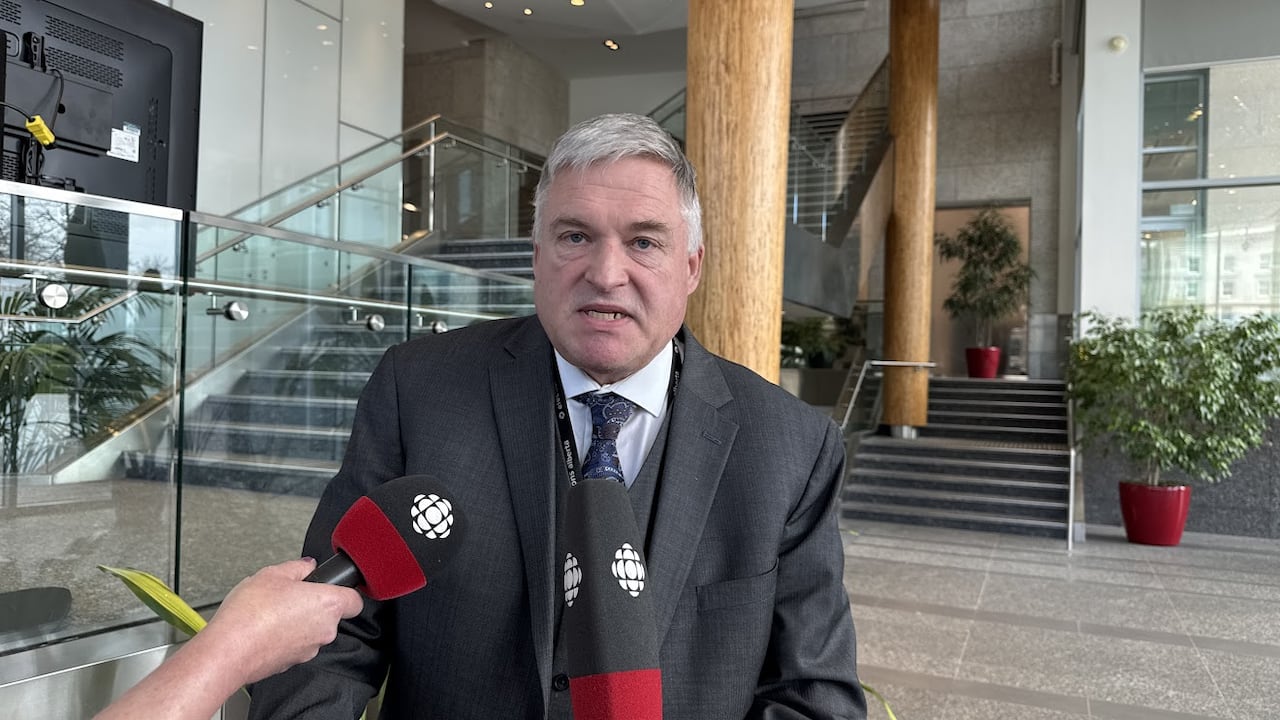
Alberta’s chief electoral officer, Gordon McClure, said in his letter than the organization is stretched thin after the referendum. (Emmanuel Prince-Thauvette/Radio-Canada)
McClure said a typical provincial vote requires up to 18 months of preparations, and the agency has been stretched thin in recent months, for reasons including the referendum on separation last month.
Amery remained firm in his response.
“While Elections Alberta operates independently of government, that independence carries significant responsibilities and corresponding expectations of accountability,” Amery wrote.
“Independence does not diminish the duty to administer elections in accordance with the law, nor does it relieve the chief electoral officer of responsibility for the effective management and performance of the organization entrusted to his leadership.”
CBC News reached out to Elections Alberta and the premier’s office on Friday, but did not hear back over the weekend.
Smith denies gerrymandering accusations
Nenshi said, after being briefed on it, that the report gerrymanders ridings in two cities in southern Alberta — Lethbridge and Calgary.
Gerrymandering is a tactic that sees voting districts designed not to reflect geography or population patterns but to concentrate or fragment voters to benefit a particular political party. Two members on the all-party legislative committee behind the report said the suggested ridings draw a line between rural and urban voters.
Recent provincial elections have seen the UCP dominate in rural areas and smaller cities, while the NDP has controlled Edmonton. The two have battled for advantage in Calgary.
Nenshi said if those boundaries are redrawn after passing a legislative vote, NDP support would dilute in favour of the UCP. He said his party would challenge the ridings in court on constitutional grounds.
The Constitution protects voters’ rights to effective representation. In the legislature last week, Smith denied accusations from the NDP that her government is pulling strings to manipulate the vote in her favour.
Winding road to current boundary committee
The report from the independent advisory panel comes months after the UCP declined to accept recommendations from the electoral boundaries commission.
The commission submitted a report in March with a majority opinion and a minority opinion. The UCP-appointed minority members deviated from the unanimity in the interim report and submitted a new set of maps and recommendations.
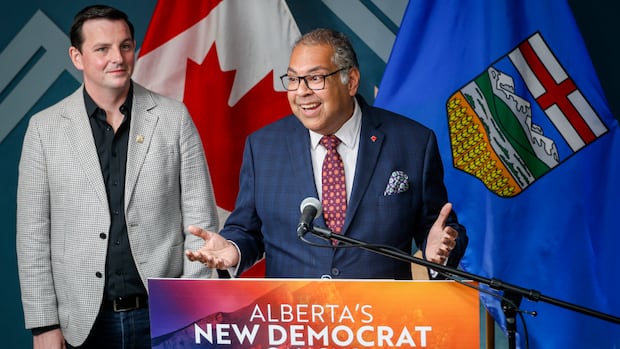
How Alberta’s new boundary maps could impact election outcomes
The Calgary-Shaw byelection surprised many when the NDP took the conservative stronghold. But riding maps could look very different come next year’s provincial election. The CBC’s Andrew Jeffrey breaks down how boundary redrawing could impact results depending on how the riding is altered.
The commission’s mandate for the initial boundaries report was to increase the number of seats in the house from 87 to 89.
But the government decided to start over, using an independent advisory panel to examine an assembly with 91 seats.
The government based its decision to create the MLA committee on an addendum to the electoral boundaries report written by Dallas Miller, the retired judge who led the commission.
Miller cited his concern about the constitutionality of the maps submitted by the minority members.
He recommended the legislature increase the number of electoral divisions to 91 to take the province’s 20 per cent population increase into account.