
Manitoba has asked the federal government to reconsider immigration policies affecting international students coming to Canada.
The province needs international students because of the province’s labour-market demands and the contribution newcomers make to communities, Advanced Education Minister Renee Cable said.
“I am hopeful that the new Carney government will reconsider a number of the decisions that they’ve made around immigration,” Cable said during Assiniboine College’s fall graduation ceremony in Brandon.
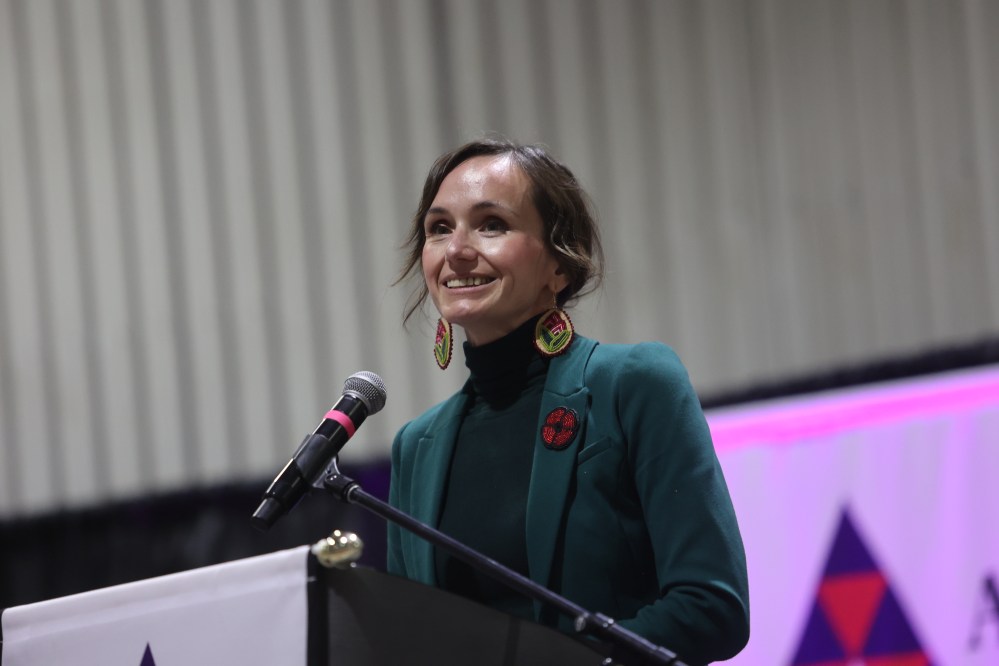
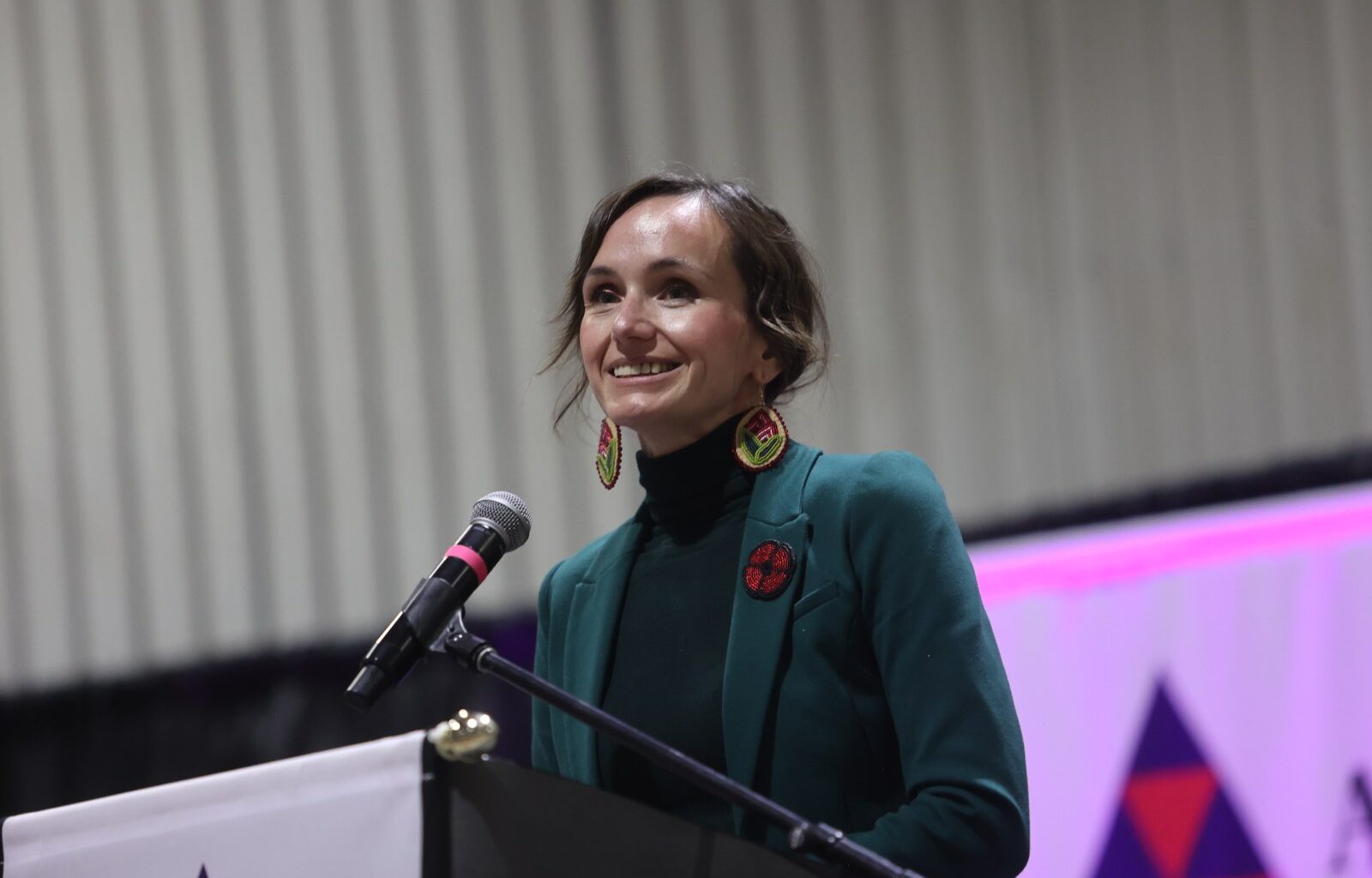
Advanced Education Minister Renee Cable speaks during Assiniboine College’s fall graduation ceremony on Friday. (Abiola Odutola/The Brandon Sun)
“Specifically in the post-secondary space for folks who are coming here for skilled trades graduate programs, we know that our labour market needs them. We know that our communities need them, and we know that our communities are richer when we have a more diverse community of folks in them.”
The decline in international students has become increasingly visible at colleges and universities across the country as institutions adjust to changes in federal immigration policies.
The impact is already being reflected in the number of students graduating from the institution, Assiniboine College president Mark Frison said.
“We would have had a couple years ago over 3,000 graduates a year, and now we’re going to be getting down closer towards 2,000,” Frison said.
The decline represents a significant change for the college, with fewer international students contributing to overall enrolment and, consequently, the number of graduates, he said.
Frison said federal immigration policies have become a challenge for post-secondary institutions, which have traditionally relied on international enrolment as one component of their student population.
Cable acknowledged that the decline is also creating financial challenges for colleges and universities.
“Absolutely,” Cable said when asked whether the reduction in international students was affecting the finances of post-secondary institutions.
She said the provincial government has been working closely with Manitoba’s post-secondary institutions to help them remain financially stable amid the changing environment.
“One of the things I’m most proud of as Minister of Advanced Education is the positive working relationships that we have with the post-secondary space,” Cable said.
“We work very closely with all of our colleges and universities to ensure that they are in a financially stable place, consistent, reliable, predictable funding since we came into office, increases every year, and providing record amounts of funding to institutions.”
Cable said the province intends to continue working with colleges and universities as they navigate the impact of changing enrolment patterns.
The minister also linked the strength of Manitoba’s post-secondary system to the broader health of the province, arguing that education plays a role beyond employment and economic growth.
“We know that an educated population not only means a more productive population, but it means that the things that we rely on, like a strong democratic system, are protected,” she said.
Cable said the province’s approach will include continuing discussions with the federal government, particularly around international students who can help address labour shortages.
For institutions such as Assiniboine, the effects are already becoming apparent.
For Manitoba, Cable said, the goal is to ensure that immigration and post-secondary education policies recognize the province’s need for skilled workers while maintaining the financial health of its colleges and universities.
» aodutola@brandonsun.com
» X: @AbiolaOdutola