

Listen to this article
Estimated 4 minutes
The audio version of this article is generated by AI-based technology. Mispronunciations can occur. We are working with our partners to continually review and improve the results.
The City of Edmonton’s administration is recommending property tax increases between 3.9 and 4.9 per cent in each of the next four years.
The city released its proposed four-year capital and operating budgets on Monday. The capital budget revolves around projects the city builds, like roads, bridges, LRT and rec centres. The operating budget is used for programs and services, like maintaining roads and running police and fire rescue services.
The recommended operating budget for 2027-2030 would require property tax levy increases of 4.9 per cent in 2027, 4.7 per cent in 2028, 4.5 per cent in 2029 and 3.9 per cent in 2030.
For residential property owners, this works out to $68.10 per month per $100,000 of assessed value next year, compared to $64.52 this year.
If approved, owners of an Edmonton property assessed at the median value of $492,500 could expect to pay about $18 more in property taxes each month next year.
City Manager Eddie Robar said next year’s increase is less than projected and the budget addresses Edmontonians’ desire for better snow-clearing and grass-cutting.
“It’s a bit of back to basics — I call it a ‘not sexy’ budget,” he said at a news conference on Monday.
The city says multiple factors are driving the increases, including rising costs with delivering services, running new city assets like LRT and fire stations, more robust snow- and ice-clearing services and economic development initiatives like industrial development incentives.
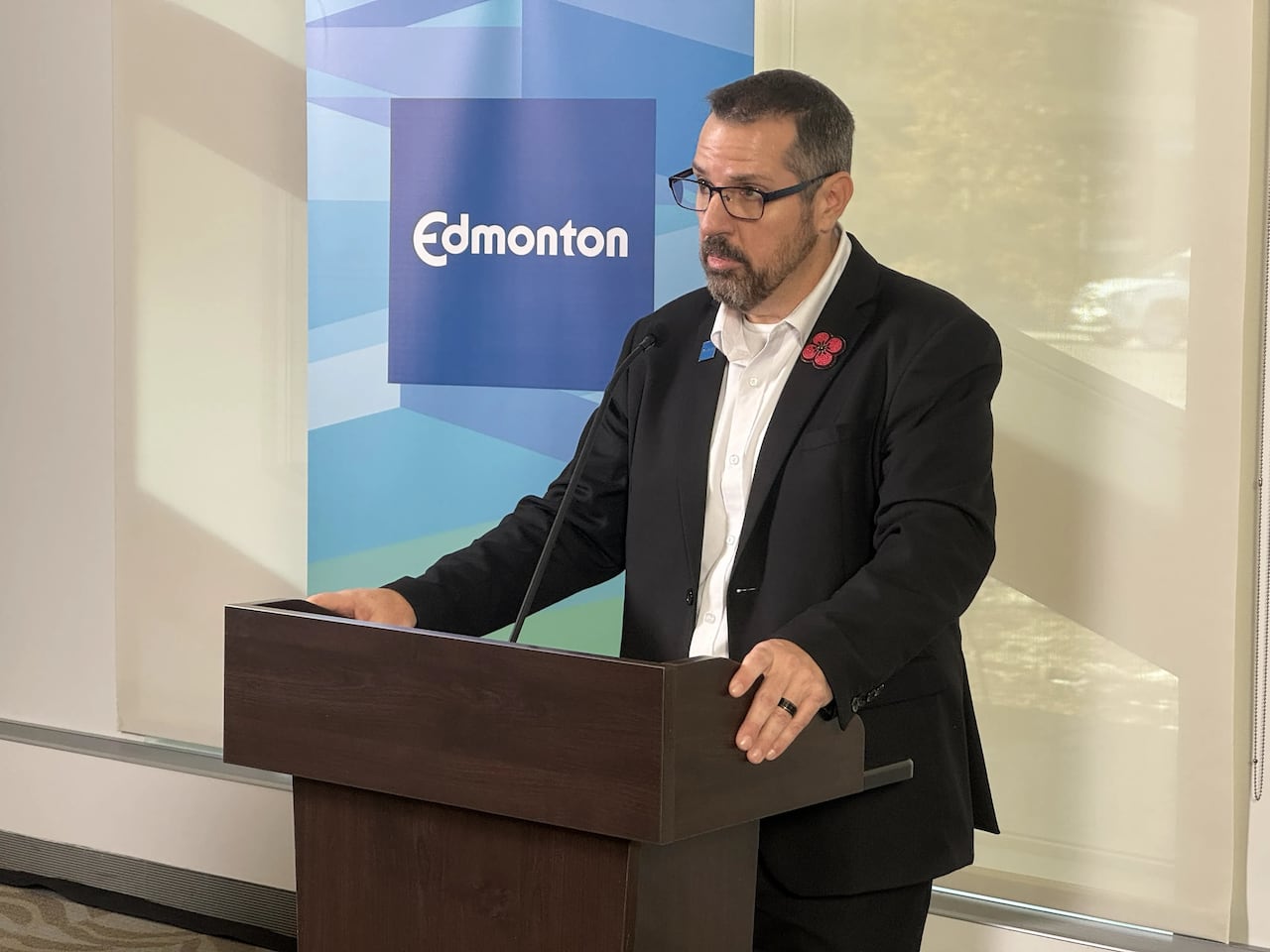
City Manager Eddie Robar speaks about proposed budgets at a news conference. (Sam Martin/CBC)
“While ongoing practices strive for efficient service delivery, there has been significant effort over the last 10 years to reduce operating and capital budgets, making it increasingly difficult to respond to rising pressures without adjusting expenses through service reductions, or increasing revenues through either user fees or property tax increases,” said a report on the proposed operating budget.
Ward Anirniq Coun. Erin Rutherford said she was relieved to see that the proposed increases were all below five per cent. Not increasing property taxes at all would mean “compromising a lot” on city services, she said.
About half of the proposed capital budget of $6.3 billion would go towards previously approved projects, like the Valley Line West LRT and Yellowhead Trail freeway conversion, with the other half going toward renewing some city assets and building required new ones.
The city says there is still an unaddressed renewal gap of $2.5 billion, and if council wants to increase renewal funding, it could approve a supplementary plan that would add 0.5 per cent annual tax increases starting in 2029.
Sara Nichols, the deputy city manager of infrastructure services, said during the news conference that the effects of not funding renewal at ideal levels compound over time.
“What we see as a bigger risk is that over the next 10 years, our renewal gap is forecasted to increase to 10 billion,” she said.
“What we don’t do now we have to do in the future.”
Results from the city’s public engagement campaign, which heard from nearly 12,000 people in the spring, suggested Edmontonians were resistant to both property tax increases and cuts to city services.
Edmontonians also told the city they wanted to see maintenance prioritized and for current infrastructure projects to be handled before new ones. They also wanted the city to focus on core services and expressed an openness to funding services through user fees instead of the tax levy.
City officials said the proposed budget includes modest fee increases for public transit fares and rec centre fees.
The city also released its climate budget, which said the city missed its target last year of reducing community greenhouse gas emissions of 35 per cent below 2005 levels.
The city is also not on track to reach its net zero emissions by 2050 for the community and 2040 for the corporation.
City administration will present the proposed 2027-2030 budgets to city council on Nov. 23.
Council will be debating and approving the budgets between Nov. 24 and Dec. 18.