
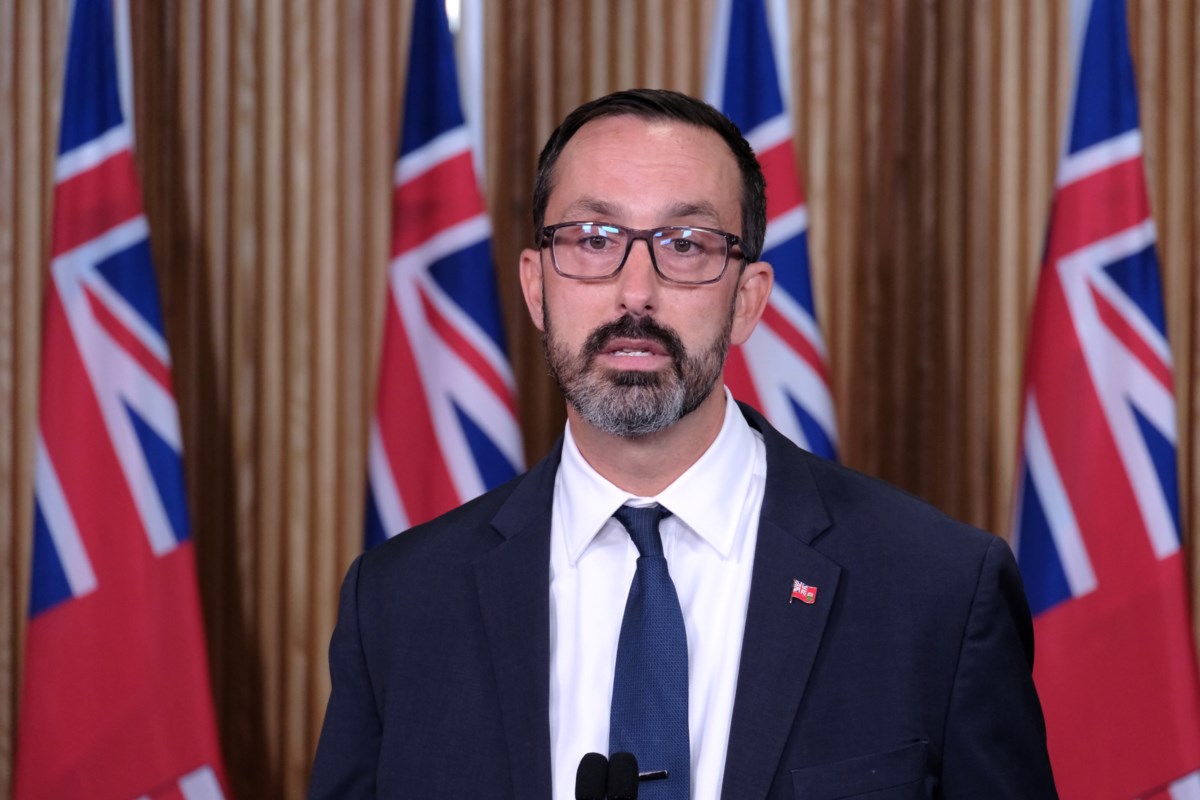
For the second week in a row, the province’s handling of OSAP dominated the legislature
EDITOR’S NOTE: This article originally appeared on The Trillium, a Village Media website devoted to covering provincial politics at Queen’s Park.
The Ford government shot down two attempts by opposition parties to get further information and action on the handling of Ontario’s student financial aid system on Monday.
In early October, the province paused all loans for students attending private colleges amid concerns around the integrity of the Ontario Student Assistance Program (OSAP). This included referring the matter to the Ontario Provincial Police and hiring third-party auditor KPMG to assess “the broader integrity” of the system.
This was after the Ford government made changes to OSAP significantly reducing the grants available to students, claiming the system as it existed was unsustainable. That claim has been disputed by experts and data obtained by The Trillium and The Canadian Press, which shows grants given to those attending private career colleges ballooned from eight per cent in 2017-18 to about 40 per cent in 2024-25.
Grant money given to students at publicly assisted universities and colleges has remained relatively stable over the last eight years, the data showed.
Documents filed in a lawsuit by a college owner show that Career Colleges Ontario (CCO) had notified the Ministry of Colleges and Universities’ OSAP Inspection and Compliance Unit of “indicators inconsistent with suspicious activity” in January 2023.
In April 2024, CCO requested that “related concerns” be referred to police.
Provincial financial aid continued to flow to students at these colleges until mid-2026, when the government sent notices of non-renewal to six campuses saying they would not be eligible for OSAP for the 2026-27 academic year. The government cited “high-risk admissions practices” and “compromised participation in asynchronous programs” as among the reasons.
Police were officially contacted by the ministry on Oct. 2, 2026.
The OSAP changes, and their impact on students and post-secondary institutions, dominated the first week of the fall legislative sitting. Opposition parties called for the resignation of Colleges and Universities Minister Nolan Quinn, while Premier Doug Ford has defended the decision by placing the blame on a group of “crooks” and “fraudsters” he says misused the system.
The second week of the sitting appears no different.
On Monday, Liberal MPP Lee Fairclough put forward a motion at the Standing Committee on Public Accounts asking that the auditor general’s office “undertake a special value for money audit of the Ontario Student Assistance Program (OSAP) spending at private career colleges from the 2020-21 academic year to the 2025-26 academic year, including the oversight of the program by the Ministry of Colleges, Universities, Research Excellence and Security.”
“In this case, given the magnitude of funds that appears to have been misused, the signal of potential fraud, and the repeated warnings to the government and minister since 2023 by Career College of Ontario that this was happening, I would anticipate that every member of this committee can see why it is so completely justified to prioritize this program for an auditor general review,” Fairclough argued.
Liberal MPP Tyler Watt added there is added value in having the auditor general look at the file earlier, rather than later, noting that the KPMG audit will likely not be made public.
“We all know we’re never going to see those results,” Watt said. “The auditor general will release those findings to the public.”
The motion was voted down by the Progressive Conservative majority.
PC MPP Jess Dixon said that the auditor general has indicated she will consider the file in future audit planning, and that directing a special audit now amid a police referral and third-party audit “risks duplicating work and complicating those processes.”
Speaking with reporters after the vote, Fairclough said the public needs to know what happened with the “mismanagement” of the OSAP program, adding that “we have no idea” if work conducted by the third-party auditor has been initiated.
“I think it most certainly would put the microscope on the government,” Fairclough said of an audit.
In the house Monday, opposition MPPs peppered the government with questions about OSAP, with Quinn consistent in putting the blame on “bad actors” in the career college system.
“What we have uncovered here over the last two years is predatory and nothing short of criminal,” said Quinn.
“I will not flow another taxpayer dollar until I have the confidence in the (OSAP) system and confidence that our bad actors have been held accountable.”
The minister has said the legislation is coming this fall to strengthen oversight and introduce guardrails against misuse of OSAP. The legislation will also stop students taking online-only courses from being eligible for OSAP.
Quinn has not provided an indication of when OSAP loans would be reinstated or when students can expect to get more information on other low-interest, third-party loan options — something the province had promised to provide.
Later in the afternoon, NDP Leader Marit Stiles used one of her party’s opposition days to call on the Ford government to “provide a plan, within 14 days, for immediate relief for students who have been left to bear the consequences of this government’s failure of oversight of private career colleges.”
Stiles didn’t specify what, exactly, should be in the government’s plan to provide relief for students, only telling reporters that students should be at the table.
“I’m giving them two weeks to do this, and we are sitting down with those students and we are talking to them about how to solve this problem. But the government has to be actually leading this right now, and they are just letting them go,” she said.
A vote on the NDP motion was rejected by the PC majority, 38 votes to 68.
A recent report from The Canadian Press found that more than half of the thousands of OSAP applicants at two career colleges last year came from a single IP address.
Further data obtained by The Trillium via a freedom of information request showed that about half of the overall OSAP funding for students at private colleges — including grants and loans — went to those studying at just 10 of the province’s 177 listed institutions.
These 10 colleges also had the largest number of students getting OSAP, representing around 46 per cent of total individuals from career colleges who received grants and loans.