
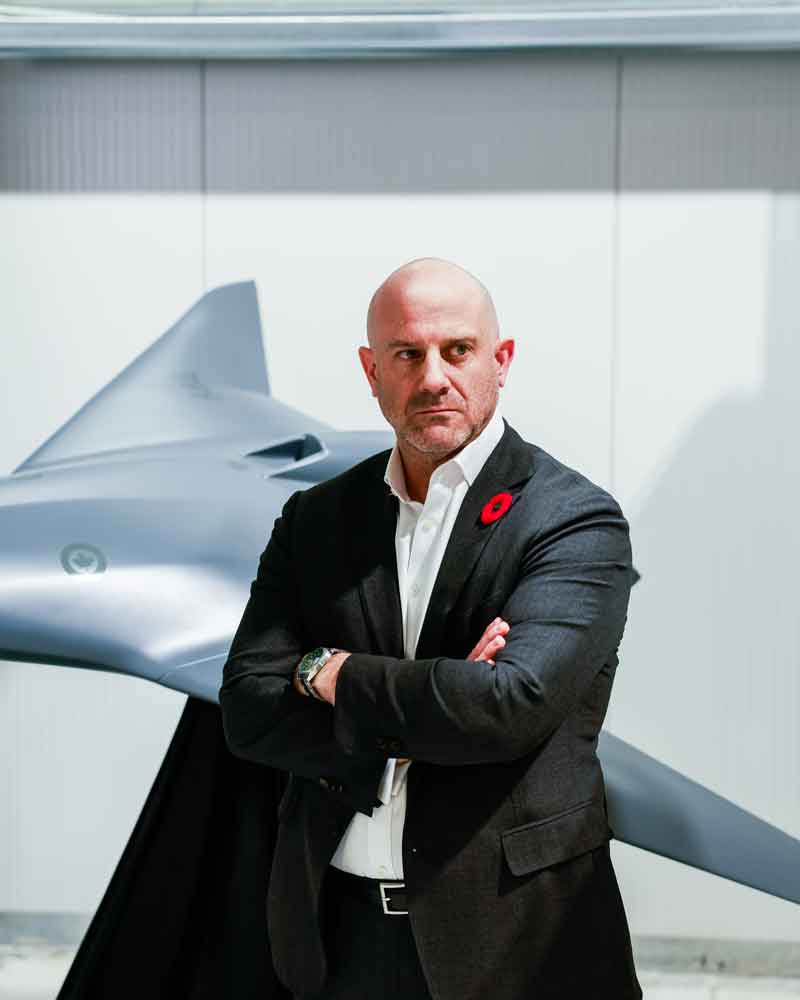
In a new series called Fortress Canada, the Financial Post explores the economic challenges and opportunities ahead as the federal government attempts to build out a high-tech, homegrown defence sector. Look for more features and guest columns in the days and weeks to come.
Eliot Pence was five-foot-eight, a smidge on the pudgy side and convinced he was going to play professional basketball. Steve Nash went to the same high school in Victoria, and if he could make it in the NBA, why not Pence?
His parents, being the sort of parents who never wanted to say no to their kids, encouraged him to pursue his dream.
“I know it sounds insane, but I believed it was possible,” he said.
The chase led to an exclusive camp in Los Angeles and daily sessions competing against top American prospects. To say things did not go well for the Canadian would be an understatement.
“I got absolutely destroyed,” he said.
No matter how humbling the experience, it did not extinguish a now 44-year-old’s capacity to see the impossible as doable and to undertake ambitious things.
For example, he uprooted his American wife and two American-born young children and relocated to Ottawa from Washington, D.C., after 20 years stateside to launch a defence technology company from scratch in a country where defence technology startups are rare and tech startups generally have a habit of moving in the opposite direction.
I don’t really care about the company. I care about the country
Eliot Pence
chief executive, Dominion Dynamics
If the move is unquestionably a gamble for Pence, the timing is no coincidence.
The federal government’s pledge to reach the North Atlantic Treaty Organization‘s spending target of five per cent of gross domestic product (GDP) means core defence spending is expected to soar to $164 billion a year by 2035, according to Parliamentary Budget Office estimates, up from $65 billion in 2025 — a figure that is already double what it was five years ago.
Add it all up, and there is about $1 trillion up for grabs, according to a Canadian Chamber of Commerce report in September, and a good chunk of that money is supposed to be spent at home. Ottawa also wants to grow the share of defence procurement contracts awarded to Canadian companies to 70 per cent, increase defence exports by 50 per cent and create 125,000 new jobs, turning defence from a fiscal drag into an engine of economic growth.
For a country accustomed to government nickel-and-diming its military, buying its gear from some other place and allowing our formerly best buddies in the U.S. to do much of the heavy lifting to recast itself as a nation of warriors equipped by a homegrown defence industry would be a massive transformation.
One thing is for certain: Pence came home to give Canada his best shot.
“I don’t really care about the company; I care about changing the country,” he said. “If we can change the country, then 50 other businesses like mine are going to exist and they are all going to be successful, but it is that country piece that I care most about.”
How to win like an American
Pence spent a decade in Africa working as a venture capitalist before being among the early hires at Anduril Industries Inc., a U.S. defence tech startup founded in 2017 out of an old lost airline luggage garage in Orange County, Calif., and backed by mega-billionaire tech investor Peter Thiel.
Anduril appeared on the scene as an industry disruptor and today holds multibillion-dollar contracts with the Pentagon, has a valuation somewhere north of US$60 billion and about 7,000 employees worldwide.
In Ottawa, Pence’s Dominion Dynamics has expanded from having one employee in June 2025 to 98. He has raised $200 million from mostly Canadian investors, including pension funds and a Big Six bank, and opened the Radisson in suburban Kanata, Ont.
The Radisson is not a hotel, but a 25,000-square-foot manufacturing facility named in honour of a famous French-Canadian explorer who did some daring things and it is built to develop software and manufacture the gizmos — for example, advanced communications networks to safeguard the Arctic frontier and giant drones that can pair up with fighter jets — of an autonomous war-fighting future at a moment when federal dollars are pouring into the defence sector.
Ottawa is full of patriotic folks with first-hand knowledge of what it is like to serve in an underfunded military that average Canadians habitually ignored until Donald Trump came along, initiated a trade war and mused about Canada as a 51st state.
 Retired Royal Canadian Navy vice-admiral Mark Norman speaks at a conference at the University of Calgary’s School of Public Policy in 2025. Norman is worried institutional inertia could derail Canada’s efforts to build up its military. (Gavin Young / Postmedia)
Mark Norman is one of those people. He turned a passion for sailing into a 39-year career in the Royal Canadian Navy, eventually climbing the ranks to become a vice-chief of defence of the Canadian Armed Forces before retiring six years ago.
These days, he works as an industry consultant and he recently grumbled about a meeting he had in Ottawa that he politely declined to disclose the juicy details of, but said it encapsulated an aircraft carrier-scale sense of frustration, something he has felt after many such meetings lately.
Sure, Norman said, there has been a palpable mood shift in Ottawa. Money is set to rain down on defence from Parliament Hill, the military is now front and centre instead of an afterthought and government messaging around the urgency to get things done is being pushed from the very top.
But institutional inertia is a tough hurdle to overcome. Canada’s military has been “genetically programmed” to contract, shrink, cut budgets and the like, so to now flip the switch to growth mode for an organization not set up for growth is difficult in the extreme, he said.
“My optimism is tempered on an almost daily basis by ridiculous examples of — and you can’t make this crap up, to put it bluntly — how we can’t seem to get out of our own way,” he said.
My optimism is tempered on an almost daily basis by ridiculous examples of — and you can’t make this crap up, to put it bluntly — how we can’t seem to get out of our own way
Mark Norman
former vice-chief of defence of the Canadian Armed Forces
Another hurdle is Canadian defence companies are typically not accustomed to being in charge of making our own stuff.
For decades, the industry has been dominated by what Norman refers to as “apex predators.” That is massive, mostly U.S.-headquartered multinationals, such as Lockheed Martin Corp., RTX Corp., General Dynamics Corp., Boeing Co., L3 Harris Technologies Inc. and others, that would vacuum up government contracts, retain the intellectual property and only dole out business to smaller Canadian enterprises employed along the supply chain.
For startups, the status quo was an innovation killer since no matter how much imagination they could bring to the table, unless they were part of an apex predator’s supply chain, “nobody in government ever gave them the time of day,” Norman said.
On top of being ignored, any enterprising smaller player had to deal with lengthy security clearances, limited access to capital and byzantine procurement processes, all without a clear idea of what exactly the government was in the market for.
Ottawa has signalled a willingness to change and in February released its Defence Industrial Strategy, which commits to building “world-leading Canadian firms” and nurturing “small and mid-sized” companies.
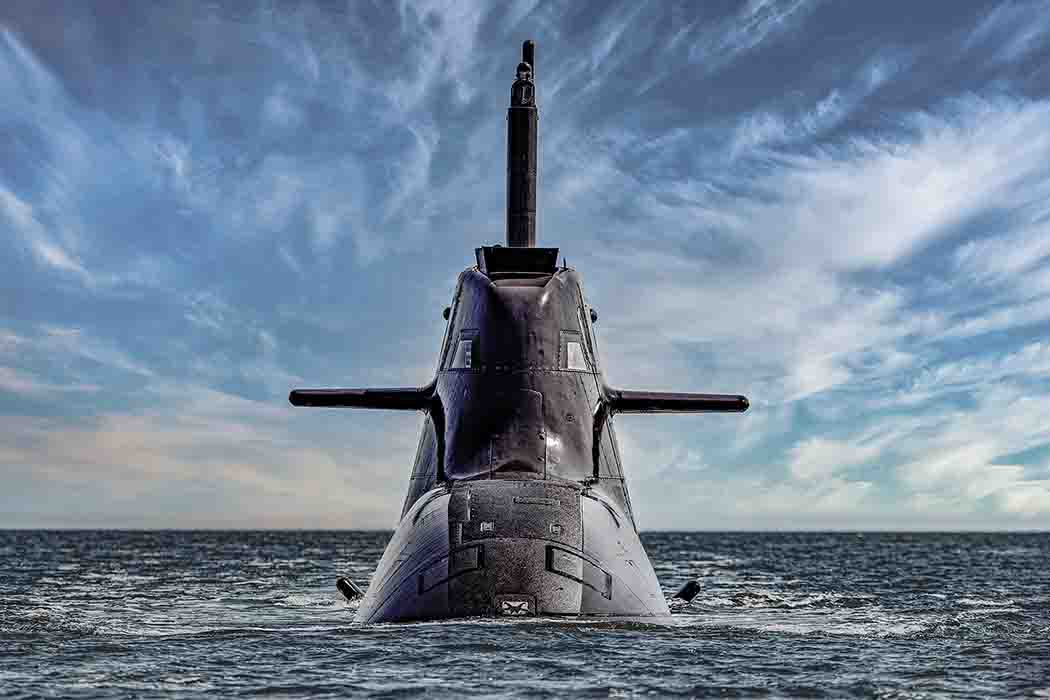 Selecting a supplier for Canada’s new submarines, ThyssenKrupp Marine Systems, within a prescribed timeframe is among the examples of the federal government keeping its word on moving the needle on defence spending. (Handout / ThyssenKrupp)
Great intentions, but words can have a way of proving empty, depending upon whom the speaker is. What seems different, however, according to David Perry, chief executive of the Canadian Global Affairs Institute and a longtime defence industry watcher, is that Prime Minister Mark Carney’s government is “developing a reputation for doing what they said they would.”
Pledging to and hitting the NATO spending target of two per cent of GDP this year and selecting a supplier for Canada’s new submarines within a prescribed timeframe are two examples of the government keeping its word.
Two years ago, a defence company lacking an established presence in Canada and a decades-long track record of selling and delivering would not have stood a chance, Perry said. But conditions today are “radically” different for a company such as Dominion Dynamics to have a shot at success.
To that end, Pence, in addition to banging on doors, writing newspaper op-eds, speaking at conferences, meeting with bankers and spreading the word about an autonomous future — all in the context of a Canadian past where undertaking amazing things was simply part of how the country rolled — met with the prime minister for about an hour in April.
Carney had questions, Pence said, such as wanting to understand what made Anduril tick, how defence procurement worked in the U.S. and how he has gone about raising money and structuring deals.
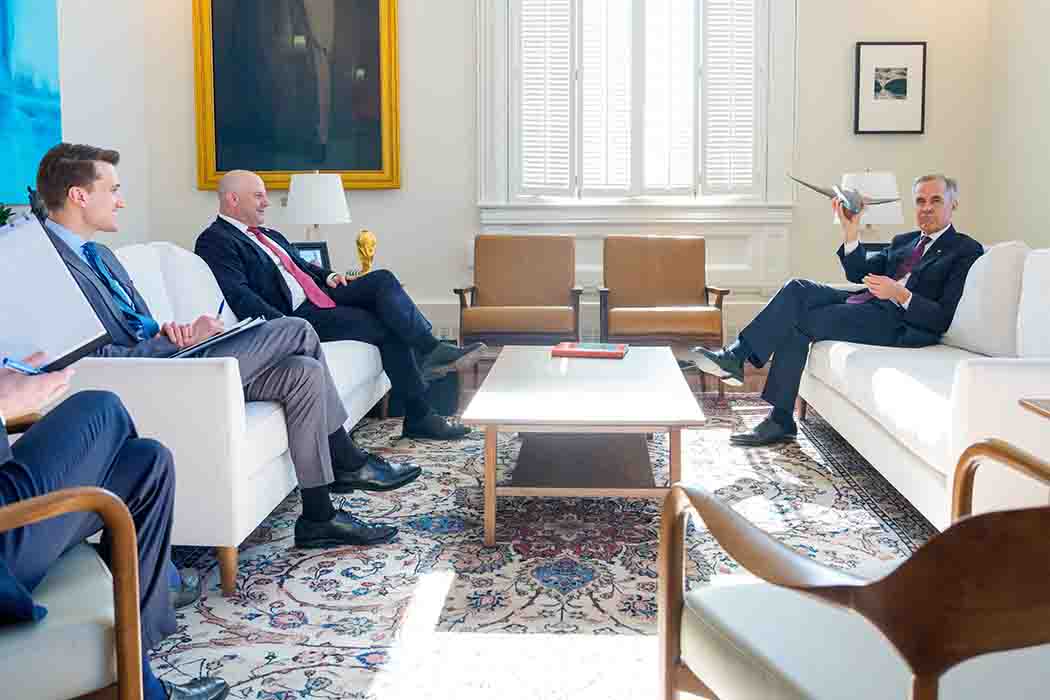 Eliot Pence of Dominion Dynamics met with Prime Minister Mark Carney in April. Pence presented the prime minister with an early model of Dominion Scout, a giant drone Dominion Dynamics is developing to work in concert with traditional fighter jets. (Lars Hagberg)
“He is a deals guy,” he said.
The two also spoke about missed opportunities. It is a sad tale of what could have been highlighted by the Avro Arrow fighter jet program’s cancellation in 1959 and the subsequent exodus of elite Canadian engineering talent to the U.S. to work for the National Aeronautics and Space Administration (NASA).
In short, Canadians stopped building fighter jets and helped put Americans on the moon. They also invented the first surveillance drones in the 1960s and autonomous submarines in the 1970s.
“We did it before and we can do it again,” Pence said.
There is a distinct, outspoken, American-style ambition to Pence and it could be because he is part American, genealogically speaking. His father is originally from Oregon and a professor emeritus at the University of Victoria. Casting about for adjectives to describe his son, he said “hard charging” pretty much sums it up.
“When Eliot jumps into something, he really jumps in,” he said.
The elder Pence met Eliot’s mom, Miriam, a speech-language pathologist, at a children’s welfare conference in Spokane, Wash. The couple owned a green Volkswagen camper van and regularly hit the road with Eliot and his sister. The family camping trips left an impression. Even today, get the younger Pence talking about B.C.’s natural beauty and the pull of the ocean, and his voice catches in his throat.
We did it before and we can do it again
Eliot Pence
Dominion Dynamics
But the scenery was not enough to keep him at home. Pence graduated from Yale University with a master of arts in international relations and got a job with the Whitaker Group Inc., a Reston, Va.-based consultancy helping U.S. companies and family offices keen to invest in Africa.
“To me, it felt like the weirdest, craziest, most interesting thing I could do,” he said.
It involved living out of a suitcase, running around Africa and identifying entrepreneurs in “frontier” markets who were often working in challenging environments where, at any given hour, say, the power might conk out and calculating whether or not to make a bet on them.
He eventually outgrew that company and in 2013 joined McClarty Associates, a strategic advisory outfit founded by president Bill Clinton’s former chief of staff, Thomas (Mack) McLarty.
John Negroponte, the firm’s vice-chair, held a number of high-profile ambassadorships and was the deputy national security adviser who briefed Ronald Reagan on the Canada-United States Free Trade Agreement the day that 1988 deal was signed.
“Reagan loved the relationship with Canada,” he said.
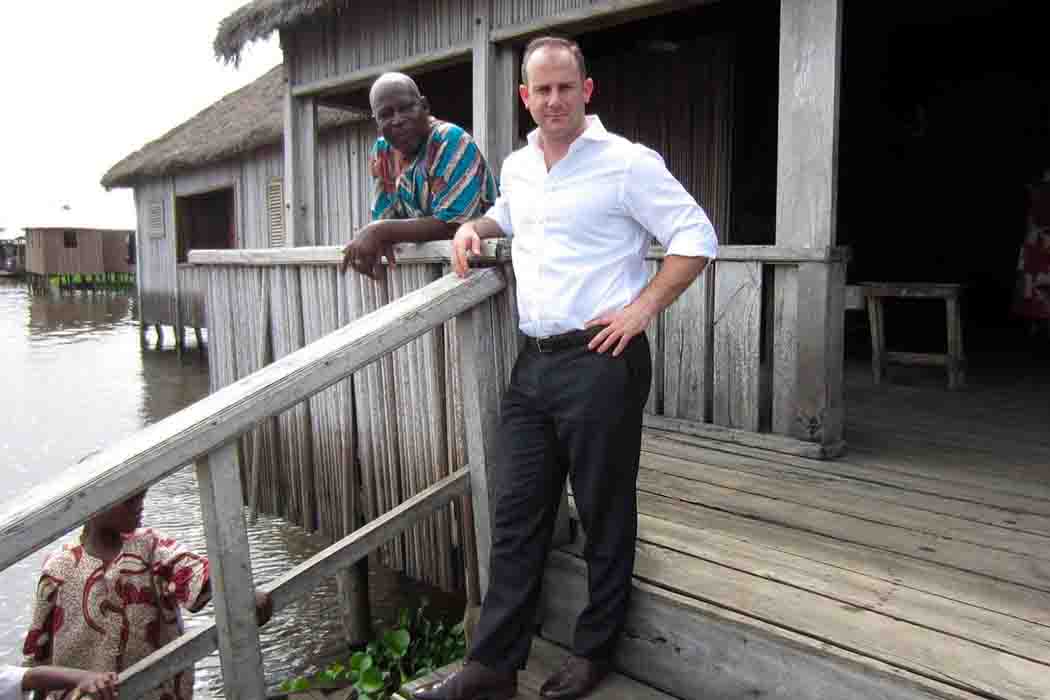 Eliot Pence spent a decade working as a venture capitalist in Africa, identifying entrepreneurs often operating in extreme environments, and determining whether to make a bet on them. (Handout / Eliot Pence)
Negroponte retains a soft spot for Pence and said the Canadian was not intimidated by the political heavyweights at McClarty and instead tried to convince them, given their skill sets, global connections and wealth of expertise, that they could make more money by recasting the consultancy in more of a financial services mold.
“Eliot was always out front and thinking, ‘OK, this is fine, as far as it goes, but how are you going to make it big time?’” Negroponte said. “He was always challenging us on whether we were getting the biggest bang for our buck.”
Pence credits Negroponte for giving him the push he needed to join Anduril. They had gone to California together to pitch what was then a fledgling defence tech startup on becoming a client.
He was simultaneously entertaining ideas of working there and had been identified by another early hire as a “hustler,” which, in the context of accomplishing things under trying circumstances in Africa, was high praise.
Negroponte told him to go for it. He also thinks Pence has “what it takes” to build a Canadian-style Anduril.
Robot wars
The world, of course, is not what it was in Reagan’s day and neither is warfare. Russia is bogged down in Ukraine in what has become a fight between drone pilots and Iran has the mighty U.S. military at a standstill in the Strait of Hormuz.
Pence got a firsthand preview of the future when he joined Anduril in 2018 to head up its global growth strategy. Company co-founder Palmer Luckey, Thiel, the money guy, and even Elon Musk “fundamentally believe that they create the future,” he said. To achieve it, they “backward-engineer” the facts and start building.
“I had always thought the future just happened to me, instead of, ‘OK, let me go and make the future,’” he said.
Anduril initially built autonomous border sentry towers for the U.S. Customs and Border Protection service. It was a self-funded proof-of-concept exercise. Lo and behold, the towers did the job and they could be tweaked in real time based on feedback from the end users.
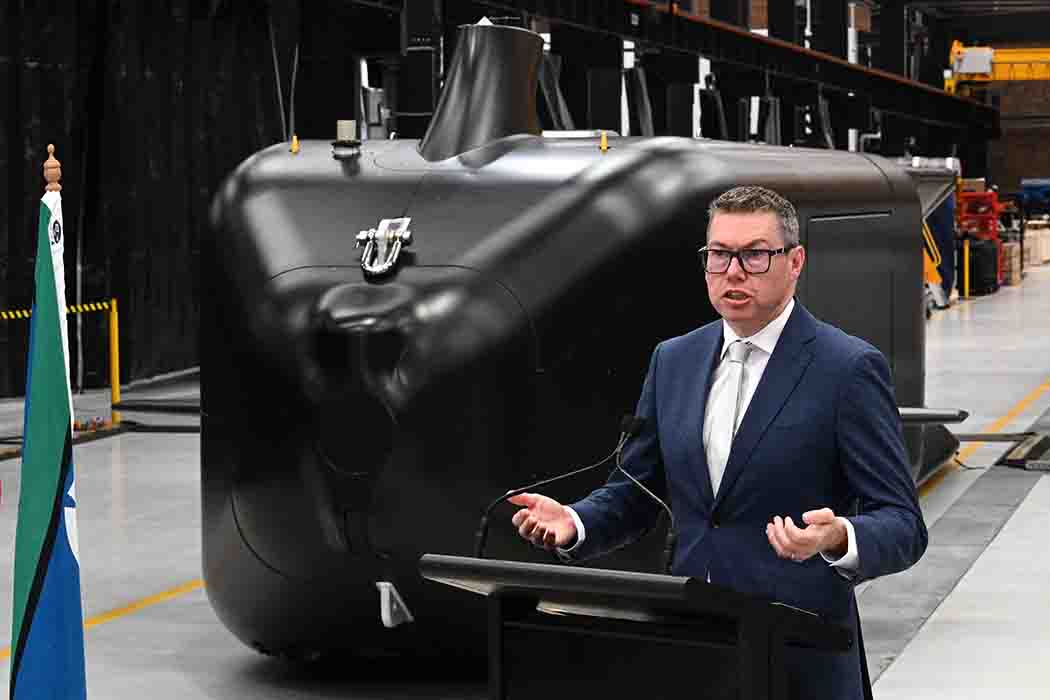 Australia’s minister for defence industry speaks to the media in front of the autonomous undersea vehicle Ghost Shark at an Anduril facility in Sydney. Eliot Pence cut his teeth in the U.S. as an early hire at Anduril Industries Inc., a U.S. military manufacturing giant. (Saeed Khan / AFP via Getty Images)
The experiment resulted in a formal government contract for more towers. What has followed since is an aggressive build-out of autonomous wonders, a locking up of global contracts and multiple offices worldwide, several of which Pence held the keys to.
Anduril was a whirlwind of a job and Pence did not want to spend the rest of his life running around the globe. He always knew he would move home at some point, a detail he shared with his American wife on their first date, and he had felt an entrepreneurial itch ever since his days in Africa. He just was not entirely clear on what would scratch it.
But he did know something about modern warfare, and as the geopolitical sands shifted underfoot, Canada’s friends stopped acting so friendly and the federal government seemed serious about doing something about it, it became clear what his next move would be.
In thinking about Canada, a country with an enormous landmass, a comparatively small population and standing army and an Arctic frontier subject to extreme weather and next to nobody living there, Pence understood the future had to be “autonomous.”
With that in mind, his startup started building. AuraNet is the company’s flagship communications software — in military parlance, a command-and-control autonomy stack — capable of being updated in real time and able to function in Arctic dead zones where there are no networks.
The Canadian Rangers, a sub-component of the Canadian Army Reserve made up of people who live and work in the Far North, test drove the technology in April during the unit’s 5,200-kilometre annual snowmobile trek across the Arctic frontier. The Rangers provided feedback multiple times daily to the company’s techies in Ottawa, who tweaked the software on the fly.
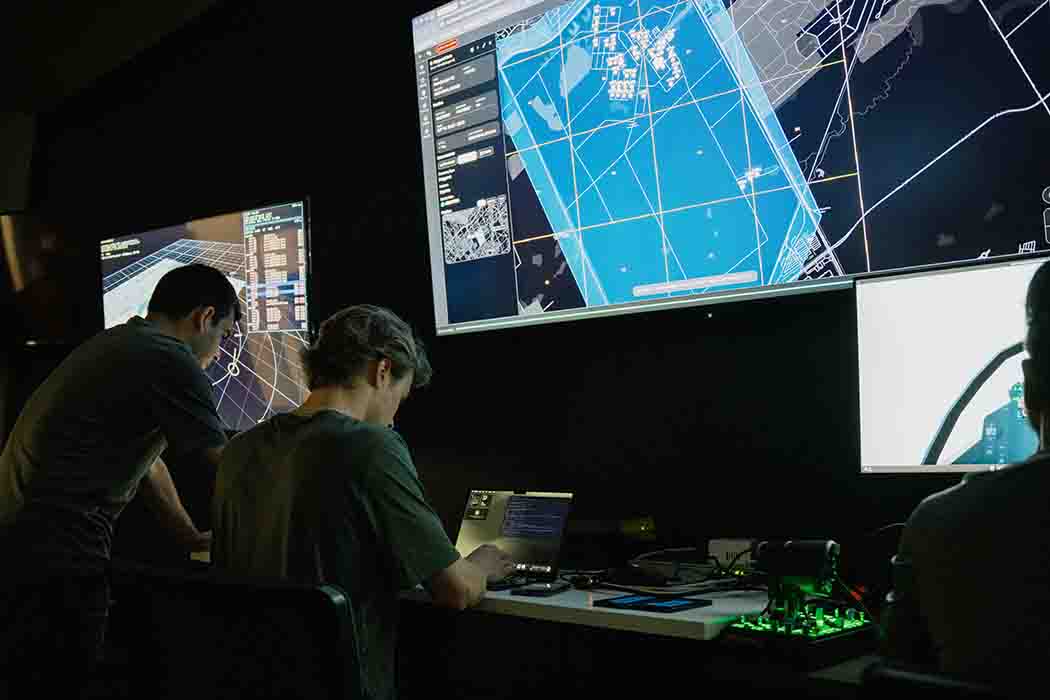 Dominion Dynamics’ engineers test the company’s command and control communications platform during a two-day field trial at Area X.O in Ottawa. (Handout / Dominion Dynamics)
“We were basically making the system together,” Pence said.
Dominion Dynamics funded the experiment and left it with the Rangers’ endorsement and a proof of concept as a reward. The company has since signed a tentative deal with Ukrainian defence technology company Tencore LLC to integrate AuraNet with its uncrewed ground vehicles. Should the deal go through, the vehicles would be manufactured in Canada and deployed in a war zone.
Pence has also knit together several other small Canadian government contracts worth about $1 million in total, he said, including two deals with the army that he can’t talk about.
That kind of money is not going to pay the bills in the long term. The much more ambitious goal is to build a drone on a two-year timeline that can be wedded to traditional fighter jets, extending the planes’ ability to see beyond the horizon and allowing the humans to talk to the robots.
Pence estimates its price tag could be somewhere in the neighbourhood of $500 million once the drone is fully developed.
“I am not too concerned about the capital side of it,” he said.
Editor’s Picks
Defence industry watchers in Ottawa, such as Perry and Norman, welcome Pence’s drive. Whatever he does or does not ultimately accomplish, Norman said, what the entrepreneur has already achieved with Dominion Dynamics is creating a sense of optimism and excitement around what could be possible.
But lacking those apex predator credentials, the challenge remains that somebody in government at some point is going to need to be willing to roll the dice on the new guys on a major contract, whether Pence is the one delivering it or not.
“A good idea will get you partway into the room, but it won’t necessarily seal the deal if people aren’t prepared to take some risk,” Norman said.
Pence was in Toronto recently speaking to a crowd of bankers and family office investment executives at First Canadian Place. Philosophically, he is not enamoured of “rapacious capitalists,” but he understands the value of money and he needs the cash to build things.
Three months ago, he felt frustrated. He said he is “fundamentally” impatient. By late October, he was digging in. Canada has historically not done a great job of supporting its startups, he said, and the code he is determined to crack is finding the lever that will allow the government to grow small companies into big companies.
“We are at an inflection point,” he said. “And if you recognize an inflection point, and you don’t do everything you possibly can at that time to be successful, then I am going to look back on this with regret.”

Joe O’Connor is a features writer at Financial Post. He has been at the job for 25 years, asking questions and telling stories about people, places and life.
joconnor@postmedia.com