
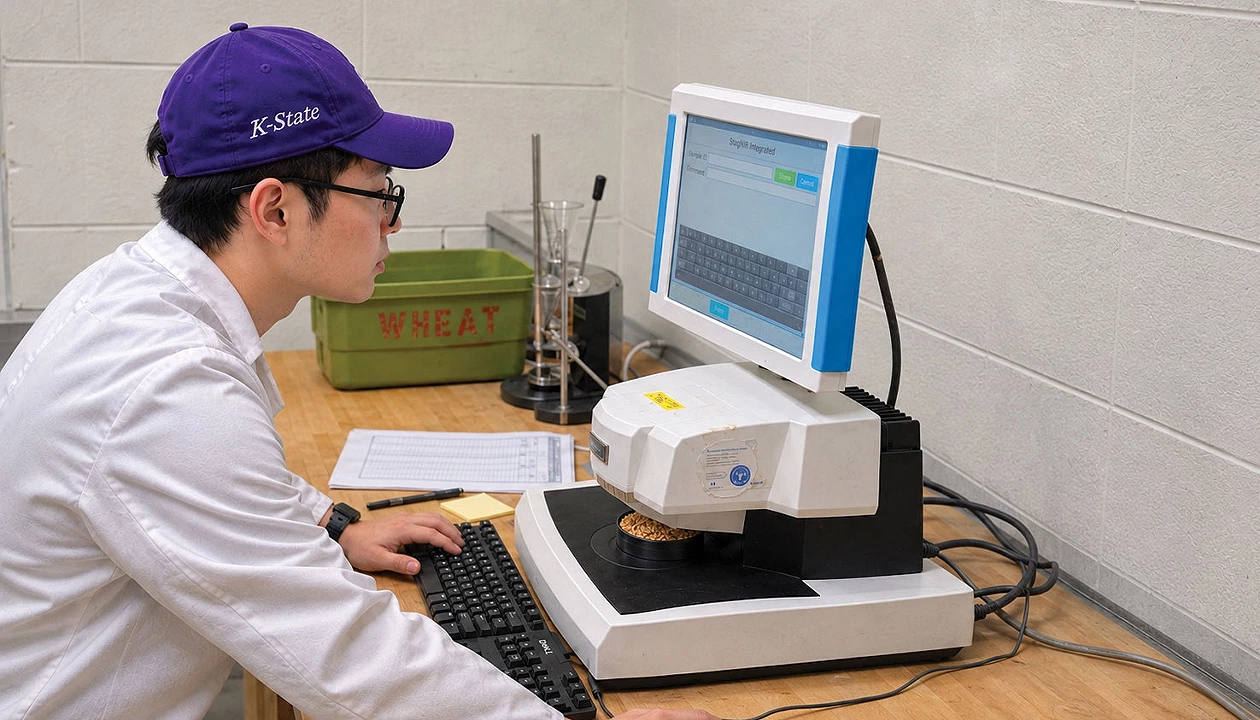
Wheat breeders can develop thousands of genetic lines of the grain each year. But knowing if a particular line of wheat will bake into a good loaf of bread takes a lot of work and a lot of flour. Now a new computer model could give breeders insight into whether their wheat will make a great bake with just a handful of kernels (ACS Food Sci. Technol. 2026, DOI: 10.1021/acsfoodscitech.6c00754).
Grain scientists at Kansas State University led by Yonghui Li made the model by using near-infrared (NIR) spectroscopy to analyze more than 250 varieties of intact wheat kernels. NIR spectra can give information about the protein, moisture, and starch in wheat kernels with minimal sample preparation. Li and coworkers milled the wheat kernels into flour, made the flour into dough, baked the dough into bread, and measured the bread’s loaf volume—a key indicator of the bread’s texture and appearance. The researchers then used artificial intelligence to create a model that predicts whether new kernels will make good bread based on their NIR spectra.