
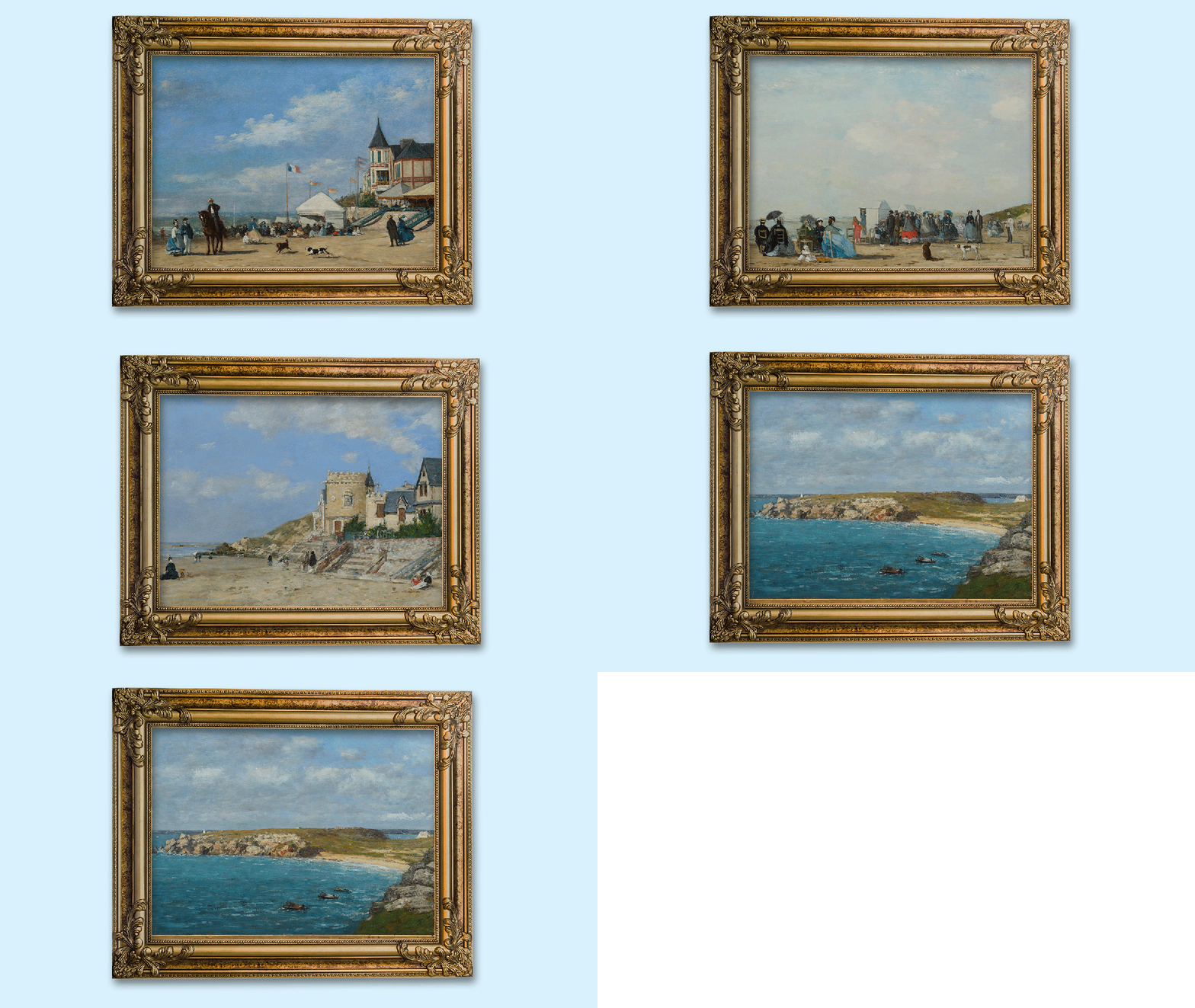
Strolling along the broad expanse of fine golden sand on Trouville beach, where sea and sky often meld into one seemingly limitless panorama, it is perhaps unsurprising that impressionism began here.
While precursors of the movement that revelled in man’s perception of constantly shifting light could be glimpsed in earlier works — in the brooding seas of JMW Turner or the East Anglian skies of John Constable — it was born on the Normandy coastline.
Impressionism, popularised by Parisian artists such as Edgar Degas, Pierre-Auguste Renoir and Claude Monet, was set in motion about a decade earlier by a lesser-known painter: Eugène Boudin.
Now, a major exhibition at Paris’s Musée Marmottan Monet explores the role of Boudin — and the northern French coastline — in the origins of perhaps art history’s most famous movement.
“Impressionism is the representation of transience, and what Boudin was painting was a coast where the weather changes extremely fast,” said Laurent Manoeuvre, the show’s curator.
Searching for a way to capture the fleeting effects of light, colour and atmosphere on the Channel coast with its unpredictable, ever-changing weather, Boudin and others drifted away from classical draughtsmanship. Loose, visible brushstrokes and vibrant colours started to replace painstaking detail as they strove for a feeling of immediacy by painting outdoors — en plein air.
“Impressionism could not have been born in Barbizon [the village near Paris where pioneers of the naturalist movement in landscape painting were based], because the weather is less changeable. It hasn’t got the same shifting skies,” Manoeuvre said. “The impressionists had to work fast before the weather turned and that lent itself to a new, broad-brush approach.”
“Boudin was one of the fathers of impressionism, although you might describe him as pre-impressionist because he didn’t take things quite as far as the other impressionists like Monet, Renoir and Degas. There’s more detail in his work.”
Almost a decade after Boudin painted the beach at Trouville, Monet’s 1872 work Impression, Sunrise captured dawn at Le Havre further up the coast and gave a name to the distinctive style. It featured two years later in a radical Paris show that became known as the Exhibition of the Impressionists. Monet, who is more famous today, credited Boudin as his teacher, saying: “I owe him everything.”
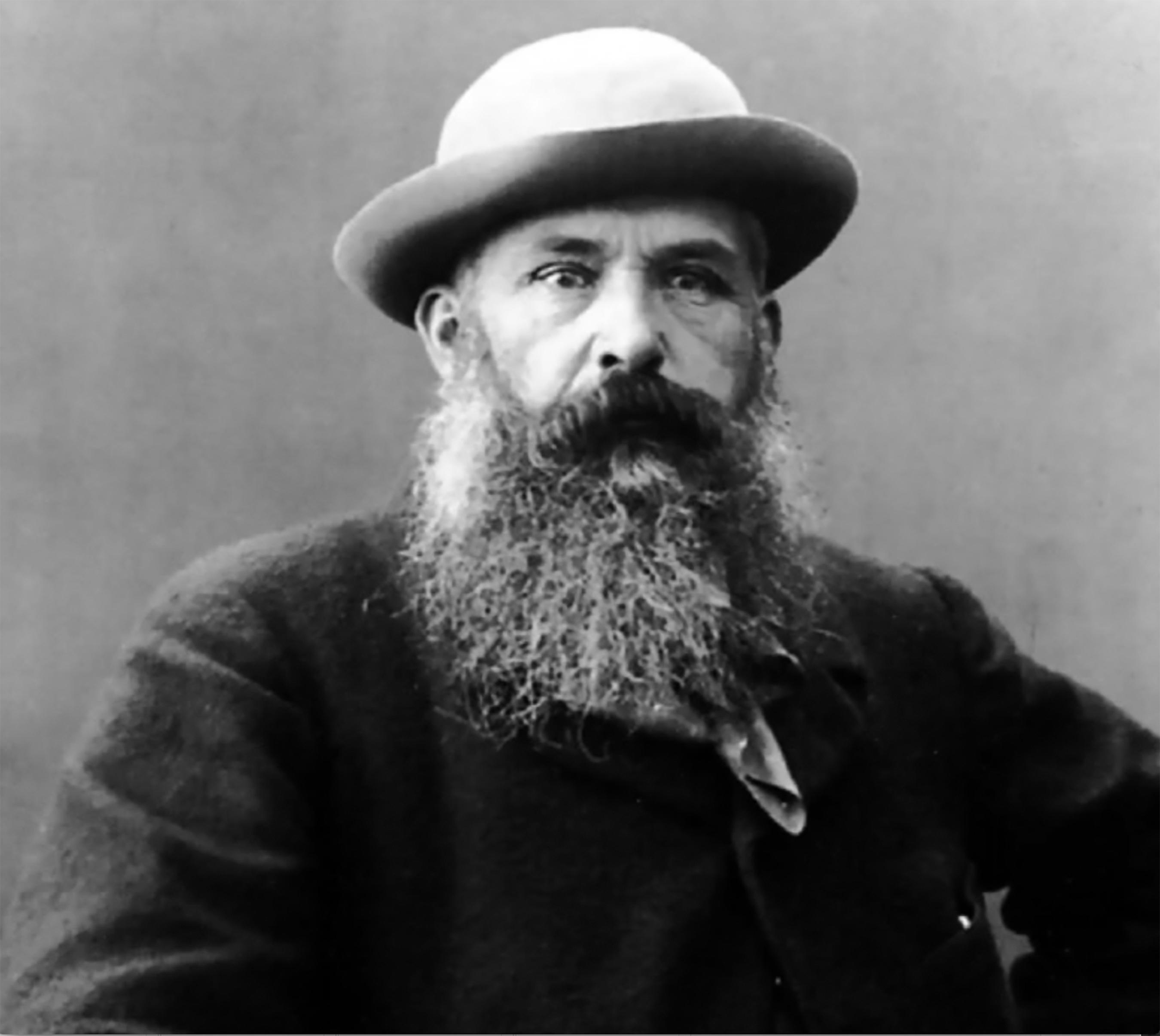
Claude Monet and, below, his painting Impression Sunrise, 1872
ALAMY

Today Trouville and the adjoining resort of Deauville offer a tableau of Normandy life at its most refined and cultivated. The beaches have changed little since Boudin set up his easel among elegant ladies shaded by blue and white parasols, or sitting under pastel-striped tents, which are still in evidence today.
The top-hatted gentlemen Boudin depicted, perhaps coming straight from the excitement of the horse races, are long gone. Nowadays, however, many well-heeled Parisians frequent the casino, a splendid neoclassical landmark built in 1912.
“Boudin’s paintings of fashionable people on the beach remain very contemporary.” Manoeuvre said. “The figures were dressed very differently from today, but what really interested him was the atmosphere, and the atmosphere hasn’t changed much.”
Claire Tifine, a 59-year-old nurse from the Paris region walking along the beach with her family, said: “The seafront looks almost the same as it did in the days of the impressionists. You don’t see details in impressionist paintings so it feels like time has stood still.”
The fairytale Malakoff tower, painted by Boudin, still stands, with its whimsical crenellated turret reminiscent of an ancient castle. It now houses luxury apartments, but the exterior has been lovingly preserved.
The seafront is lined with half-timbered traditional Norman style houses and opulent villas, some also resembling mini-châteaux with turrets.
• 10 of the most beautiful places in France (and how to see them)
Bill Leyshon, a British portrait painter who lives in Trouville, said: “When you’re an artist and you’re walking on the beach, you’re not just thinking about your next ice cream, you know you’re walking through history on the beach where Monet and Boudin painted and it makes you up your game.”
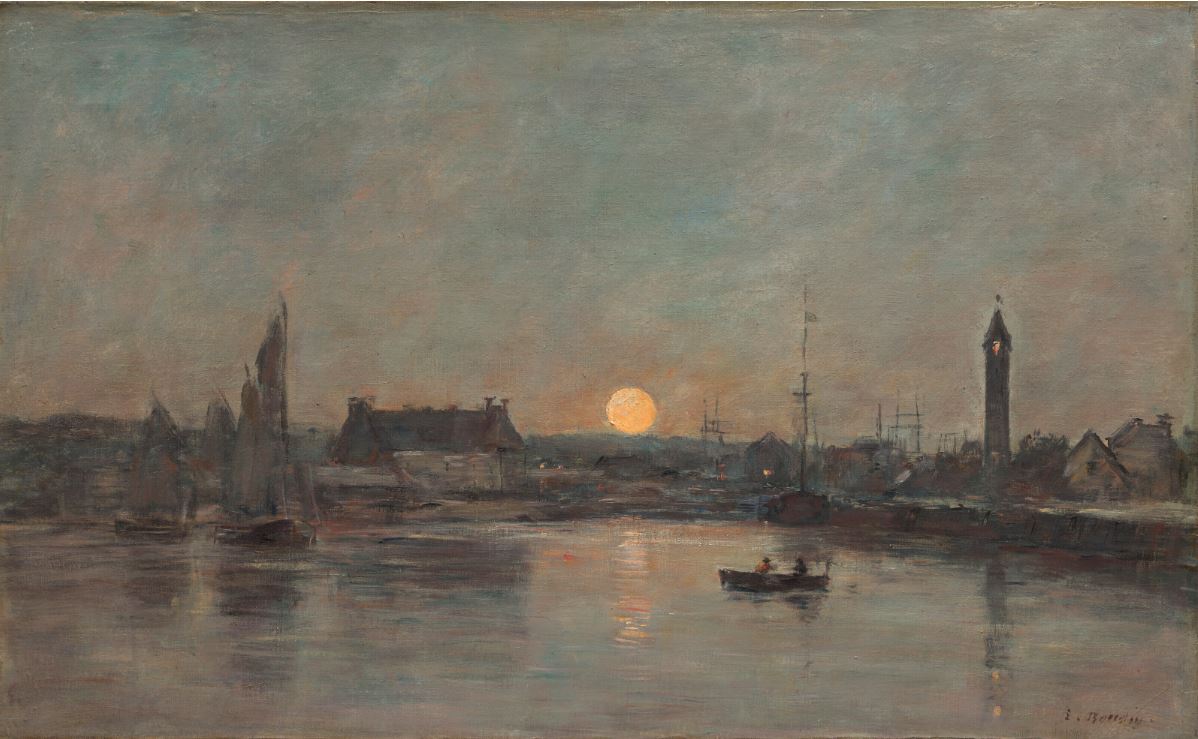
Vue du port de Trouville au Crépuscule, Boudin, 1885-1890
Leyshon, 68, whose studio is on a busy shopping street lined with café terraces near the seafront, said: “The early trains made Trouville accessible to Parisians and when the impressionists got here and unpacked their easels and paints, they didn’t feel like going much further.
“The beau monde [fashionable society] were here and there were good restaurants so they could eat well at the end of the day. Not that different from today, really.”
• James Marriott: My journey through Provence in the footsteps of my favourite artists
The legacy of Boudin is not lost on today’s holidaymakers. Christiane, 58, went to the Boudin exhibition in Paris before coming to Trouville.
She said: “We had already booked our holiday and when we saw that many of the paintings being exhibited had been done on this beach, we decided to go. It adds to the enjoyment, thinking you’re following in the footsteps of the artists.”
Didier Morel, 70, who owns a holiday home in Trouville, said: “The colours are just as the impressionists painted them, and many things are the same, but Trouville now is more accessible to young families, not just the smart set. That’s a good thing.”
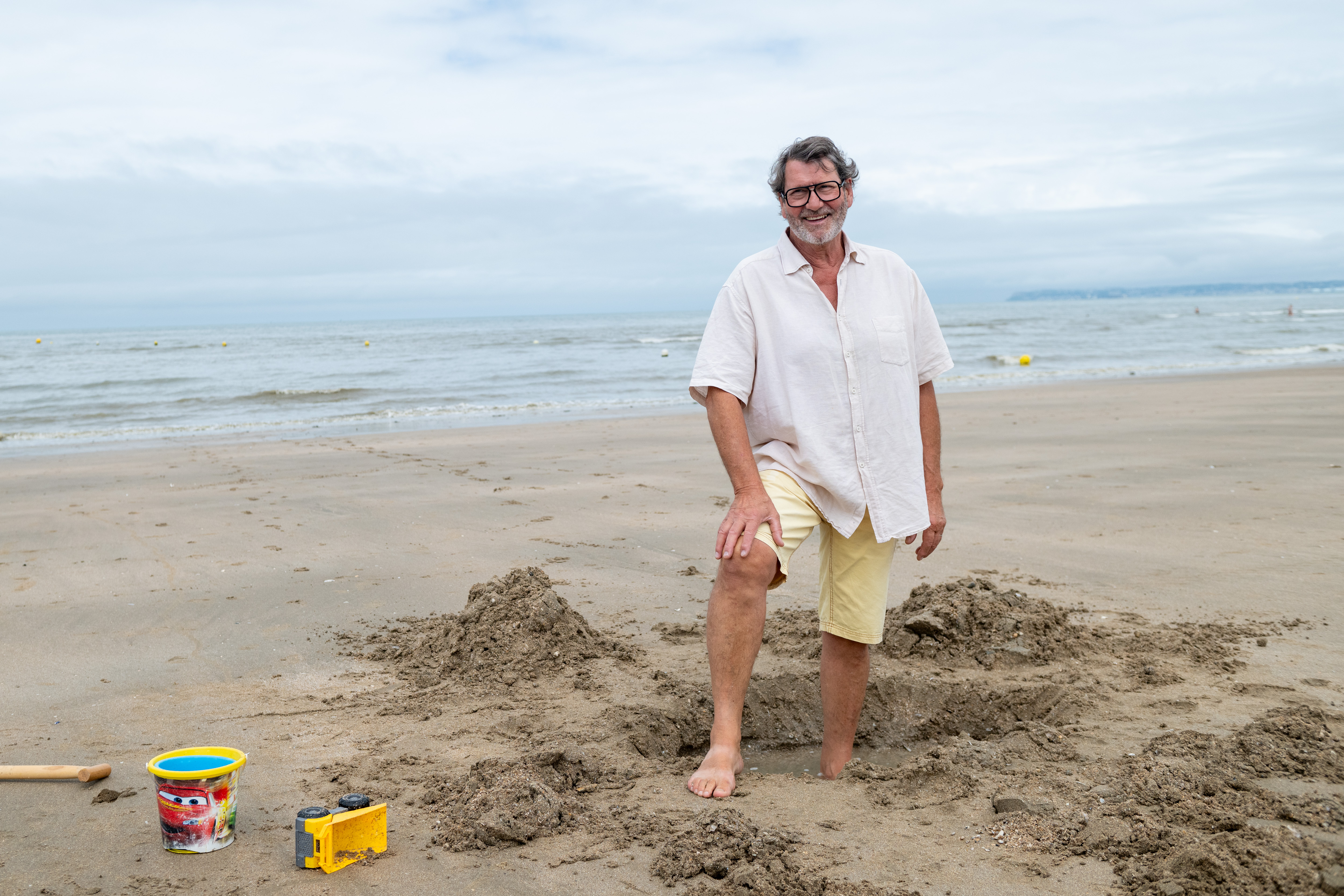
Didier Morel: “The colours are just as the impressionists painted them”
BENJAMIN GIRETTE
Boudin’s beach scenes are celebrated today, but at the time he couldn’t sell them.
The ladies of the day were disappointed not to see their dresses shown in detail, especially those whose outfits were designed by Charles Worth, an Englishman based in Paris who is often credited with inventing haute couture.
“Boudin showed them just as blobs of colour. They might have forgiven him if he had painted the sky badly, but not their dresses,” Manoeuvre, the curator said.
Another problem was that Boudin painted ladies bathing.
“At the time, only actresses and courtesans did that, so it would have been impossible for his beach scenes to grace the wall of a Parisian salon,” Manoeuvre said. “Too racy, except perhaps for the gentlemen’s smoking room.”
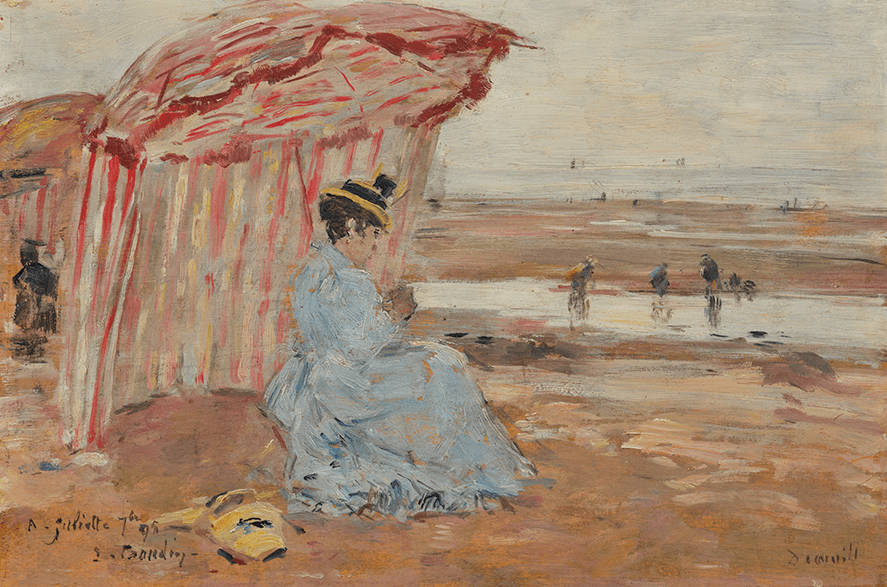
Deauville, Juliette sous la tente, Boudin, 1895
Boudin abandoned beach scenes in favour of seascapes and boats, which were safer but still reflected his love of the sea.
Born in nearby Honfleur to a seafaring Normandy family, he had worked on boats in his teens. “There were no weather forecasts in those days and he learned how to study the sea and judge its moods,” Manoeuvre said. “That helped him depict it so vividly.”
Leyshon, the artist, told me that talking about Boudin made him feel like setting up his own easel on the beach. Walking back along the seafront at the end of the day, the sun slowly began to dip and streaks of rose appeared in the soft blue sky amid delicate, wispy clouds.