
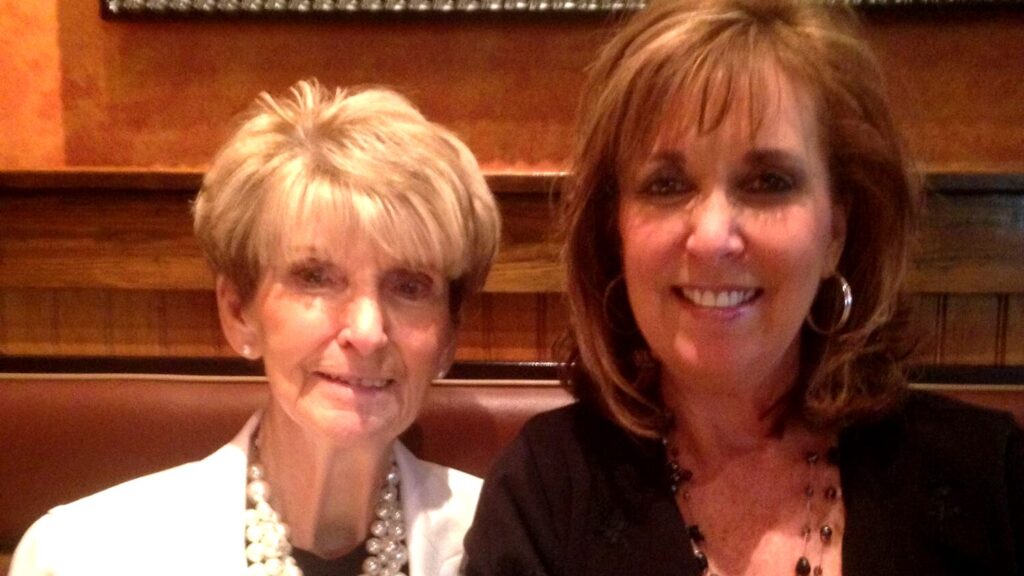
In 2009, what began as a swollen ankle ended with a terminal cancer diagnosis. Driving home from Florida, I could barely walk when I pulled off I-95. A Virginia ER dismissed me as constipated. But back in New Jersey, CT scans revealed a 28-centimeter uterine mass and multiple lung metastases. A lung biopsy confirmed stage IV uterine leiomyosarcoma.
My sister Kim flew in from Houston. Before I was discharged, a doctor warned, “you have two weeks to get this removed, or it’s going to your kidneys next.” Kim said, “You’re coming with me to MD Anderson,” a cancer treatment center in Houston. That night we shipped my pathology and CTs ahead of my appointment.
Not long after, I was at MD Anderson Cancer Center with my mother, sister, and stepfather. We spent nearly four hours in the reception area before being called back to a patient room, where physician Vinod Ravi appeared in the doorway and said, “I believe I have some good news. We don’t think you have cancer.”
My family and I sat in stunned silence. My death sentence had been lifted.
I had a condition so rare many oncologists have never seen it: benign metastasizing leiomyoma, a hormone-driven tumor that behaves like cancer by spreading to distant organs despite being non-malignant under the microscope. BML has been reported in fewer than 150 cases in medical literature. Benign in name, often deadly in how it’s treated before the right diagnosis is made.
Fortunately, I got the right diagnosis fairly quickly. Lupron, a drug that suppresses estrogen, shrank my tumors and relieved my symptoms almost immediately. Within weeks, I had a steady flow of urine for the first time in over a year. My health stabilized. It was nothing short of miraculous.

My mother refused treatment for her breast cancer. Her doctors should have respected her choice
At my first follow-up, a CT showed a 30% reduction in my uterine mass. Dr. Ravi hugged me and said, “I love it when a theory is right.” Lupron was working — I did not have cancer.
But the story did not end there. Being told you are dying of cancer, and then told you are not, can shape how you and those closest to you understand diagnoses and treatment decisions.
Almost a decade later, in October 2017, my mother, Mildred Tetley, was diagnosed with what doctors thought was a benign scalp growth. Her hairstylist had spotted a dime-sized lesion and urged her to have it checked. She did, but her dermatologist dismissed it, saying “old age will kill you before this does.”
At first, her diagnosis sounded similar to mine: noncancerous, manageable, and survivable.
It wasn’t. Hers was angiosarcoma, an extremely rare and aggressive cancer. Several weeks later, by the time she was correctly diagnosed, valuable time had been lost.
Right after she was diagnosed, she sought treatment at MD Anderson like me, but her insurance carrier denied her request, sending her to a closer Nashville hospital instead. Initially, she declined chemotherapy and radiation, believing that a miracle might be around the corner, just like it had been for me. When she finally agreed to those treatments, it was too late.
Her suffering was relentless. She underwent two flap surgeries — the first in 2018 removed the top of her scalp and the second in 2020 removed the back. After her second flap surgery, the cancer spread to her lungs, which collapsed again and again, requiring repeated and painful thoracentesis. At one point, her doctors applied sterile talc powder between her lungs and chest wall to keep them inflated.
Cancer stole my mother’s life, and her every waking moment was filled with fear. Still, she clung to hope. One afternoon, she looked at me from her hospital bed and said, “Michelle, this sweet nurse thinks I can beat this.”
Her doctors had given her four weeks to live. She lived for five more.
She died in 2021.
I still wonder: If I had not survived a rare misdiagnosis, would she have fought harder for her own treatment? If she had understood how unlikely my outcome was, if her doctors had explained that BML was an anomaly, not a mirror, might she have accepted aggressive care sooner?
It’s possible her doctors explained how astronomically rare my condition was. But the message never reached her in a way that overcame the hope she carried from my story. She saw my survival as proof that her death sentence might be commuted too. She often told me, “Doctors can be wrong,” and talked about my condition as if searching for reassurance that her cancer might not be cancer either. Had she been able to seek treatment at MD Anderson, I keep thinking, Dr. Ravi would have explained it in a way she would have understood.
I have carried that guilt quietly for years. I did not ask to survive something so rare, and what once seemed like a miracle now feels like a false promise to someone else — and not just anyone else, but to my mother. Her initial misdiagnosis as benign only reinforced that false sense of safety. And the misdiagnosis that saved me may have influenced her decision to delay radiation and chemotherapy. We both trusted the rules. We both thought we had time.
In both cases, rare diseases were misdiagnosed. In both cases, earlier intervention could have changed the course of illness. But one of us lived. And one of us did not.
Cancer burden is shifting from men to women and old to young
The difference was the hospital.
I received care at MD Anderson, where a multidisciplinary team reviewed my pathology, ran new tests, and ultimately saved my life. My mother was treated at a respected hospital in Tennessee that was not cancer specific. She never got to MD Anderson, even though her insurance eventually would have covered it, and even though Dr. Ravi — my doctor — would have treated her.
Her loss has haunted me. It has also shown me something broken in our health care system. Rare disease patients fall through the cracks. Misdiagnoses are often fatal. I was lucky. My mother was not. The system saved me but failed her.
Over the past 15 years, I have lived with BML. I stopped treatment for a decade and resumed Lupron only when my tumors began to grow again. When I returned to MD Anderson in 2023, Dr. Ravi told me, “Even more proof you never had cancer.” Had my tumors been malignant, I would not have survived untreated for 10 years. That kind of stability does not happen with real metastatic cancer.
Recently, I was invited to join MD Anderson’s APOLLO Moon Shots Program, which studies the most biologically complex and rare cancer-related cases. My inclusion was based on how dramatically my case defied traditional medical expectations.
BML remains so obscure that almost no one, not patients, not primary care physicians, and not most oncologists, knows what it is. There are no formal treatment guidelines, no support groups, and no clinical trials. To my knowledge, I am still the only woman with BML who has written publicly about her experience.
We talk often about the need for greater awareness of breast cancer, reproductive cancers, and chronic conditions that affect women, and we should. But rare conditions like mine reveal another level of invisibility: the way rare diseases, especially in women, go under-researched, underfunded, and unrecognized in every layer of care.
The loneliness of a rare diagnosis is not just clinical, it’s emotional too. No roadmap. No community. No certainty that you are making the right choice.
If I had not gone to MD Anderson, I’d be dead. And if my mother had gone there, she might still be alive.
That’s not medicine. That’s roulette.
We need a system that does not leave rare disease patients to fend for themselves. One that makes second opinions easy, flags pathology reports with ambiguity, and trains clinicians to pause and re-question assumptions, especially when a diagnosis does not fit the textbook.
In practice, that means automatic second opinions, specialist review of ambiguous pathology, and fast referral to the few doctors who truly know how to treat rare diseases. Such a system caught the error that saved my life. For my mother, it could have meant access to MD Anderson and Vinod Ravi, who has managed more angiosarcoma cases than anyone else in the world. Instead, her insurance carrier denied the request. It may not have guaranteed her survival, but it would have given her the strongest chance, and she was entitled to nothing less.
Our outcomes should not depend on landing at the right hospital with the right doctor at the right time.
I got that chance. My mother didn’t.
Michelle Patroni, a graduate of the University of Pennsylvania, is a legal case manager and founder of HOA (Help One Another) Inc., a nonprofit working to restore rural transportation in Appalachia.