
IN A NUTSHELL
🏗️ The Jeddah Tower is set to become the world’s tallest building by 2028, surpassing the Burj Khalifa.
🌍 The tower is a key part of Saudi Arabia’s Vision 2030, aiming to diversify the economy beyond oil.
🔧 Innovative engineering solutions were employed, including a buttressed core system for stability.
♻️ The project faces criticism for its significant environmental impact, raising concerns about sustainability.
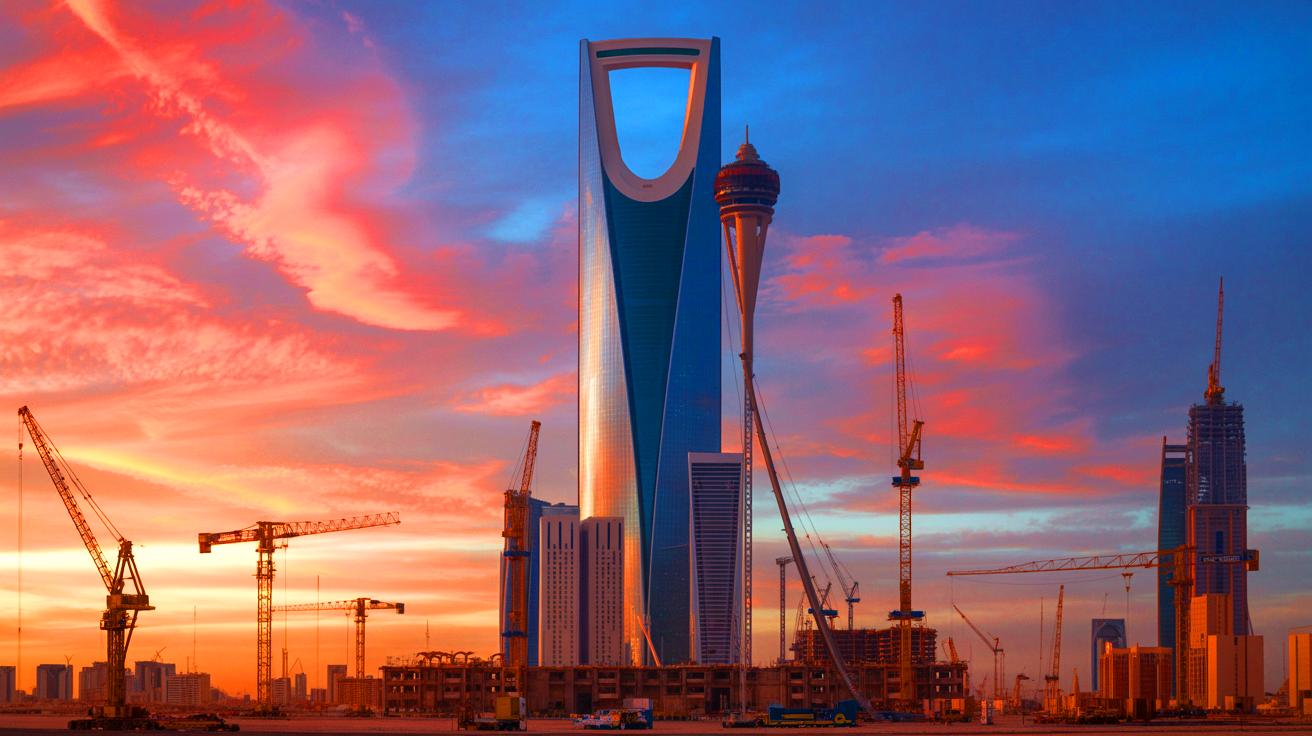
The Jeddah Tower, poised to become the world’s tallest building, represents a monumental leap in architectural ambition and engineering prowess. Slated for completion in 2028, the tower will stand over 1,000 meters (3,281 feet) tall, surpassing Dubai’s Burj Khalifa by a significant margin. This ambitious project is not just about breaking height records; it embodies Saudi Arabia’s broader vision of economic transformation and global engagement. As construction resumes with fervor, the Jeddah Tower emerges as a symbol of both national pride and the complexities of modern development.
A Vision Interrupted, Then Reborn
The inception of the Jeddah Tower was driven by grand ambitions to mark Saudi Arabia’s modernization journey. Initially called the Kingdom Tower, it was conceived to symbolize the kingdom’s economic transformation. The design, crafted by Adrian Smith of Adrian Smith + Gordon Hill Architecture, features a form inspired by nature, mimicking the fronds of desert plants. This design is not only aesthetic but also functional, offering aerodynamic efficiency to withstand the intense winds at such heights.
However, the journey was not without setbacks. Construction halted from 2018 to 2023 due to economic and logistical challenges. Yet, the vision persisted. In January 2025, construction resumed with renewed vigor, led by the Saudi Binladin Group, Dar Al-Handasah, and Turner Construction. By September 2025, the tower had reached its 70th floor, with a construction pace that aims to meet the 2028 completion target. The project’s revival underscores the kingdom’s commitment to realizing its architectural dream, a testament to the resilience of its vision.
Engineering the Impossible
Constructing a kilometer-high skyscraper entails unprecedented engineering challenges. The foundation itself is a marvel, utilizing a hybrid piled raft system with 270 piles extending up to 344 feet. This 5-meter thick raft foundation spans over 34,000 square feet, adeptly managing massive loads. The tower employs a revolutionary buttressed core system, eliminating the need for traditional structural elements. This design innovation uses high-performance concrete to ensure stability.
Vertical concrete-pumping technology has achieved a milestone by reaching 2,624 feet, a testament to engineering advancement. The tower’s infrastructure includes 59 elevators and multiple sky lobbies, facilitating efficient vertical movement. Moreover, sustainable technologies are integrated throughout, from high-performance glazing to rainwater harvesting systems. The tower’s orientation and shape are optimized to minimize solar heat gain, crucial for Saudi Arabia’s challenging climate. These engineering feats highlight the project’s blend of innovation and sustainability.
Building Tomorrow’s Saudi Arabia
The Jeddah Tower is more than just a skyscraper; it is a cornerstone of Saudi Arabia’s Vision 2030. This strategic plan aims to diversify the kingdom’s economy, reducing reliance on oil. The tower signifies Saudi Arabia’s ambition to become a global hub for tourism and cultural exchange. Housing a Four Seasons luxury hotel, premium residential apartments, and Class A office spaces, the tower is designed to attract international businesses.
The highlight will be the world’s highest observation deck at 2,112 feet, offering panoramic views of the Red Sea. This feature is expected to become a major tourist attraction, drawing visitors from around the world. The Jeddah Tower is poised to be a beacon of modernity, signaling Saudi Arabia’s openness to global business and tourism. As part of a $20 billion development project, the tower plays a vital role in reshaping the kingdom’s economic landscape.
The Environmental Elephant in the Room
Despite its grandeur, the Jeddah Tower raises significant environmental concerns. The construction demands approximately 500,000 cubic meters of concrete and 80,000 tons of steel, leading to substantial carbon emissions. Critics argue that the project’s symbolic value does not justify its environmental impact. The steel alone accounts for a significant carbon footprint, challenging the project’s sustainability claims.
Environmental scientists have labeled the tower a ‘vanity project,’ suggesting that it prioritizes record-breaking over practicality. The substantial carbon emissions associated with such projects highlight the need for more environmentally conscious development approaches. As the tower progresses, it serves as a reminder of the environmental costs associated with ambitious architectural endeavors. The challenge lies in balancing symbolic achievements with ecological responsibility.
As the Jeddah Tower continues to rise, it stands as a testament to human ambition and engineering excellence. Yet, it also prompts reflection on the environmental responsibilities that accompany such projects. With its completion on the horizon, the tower poses a critical question to global architects and developers: how can we reconcile our drive for monumental achievements with the imperative of sustainable development?
This article is based on verified sources and supported by editorial technologies.
Did you like it? 4.4/5 (22)