
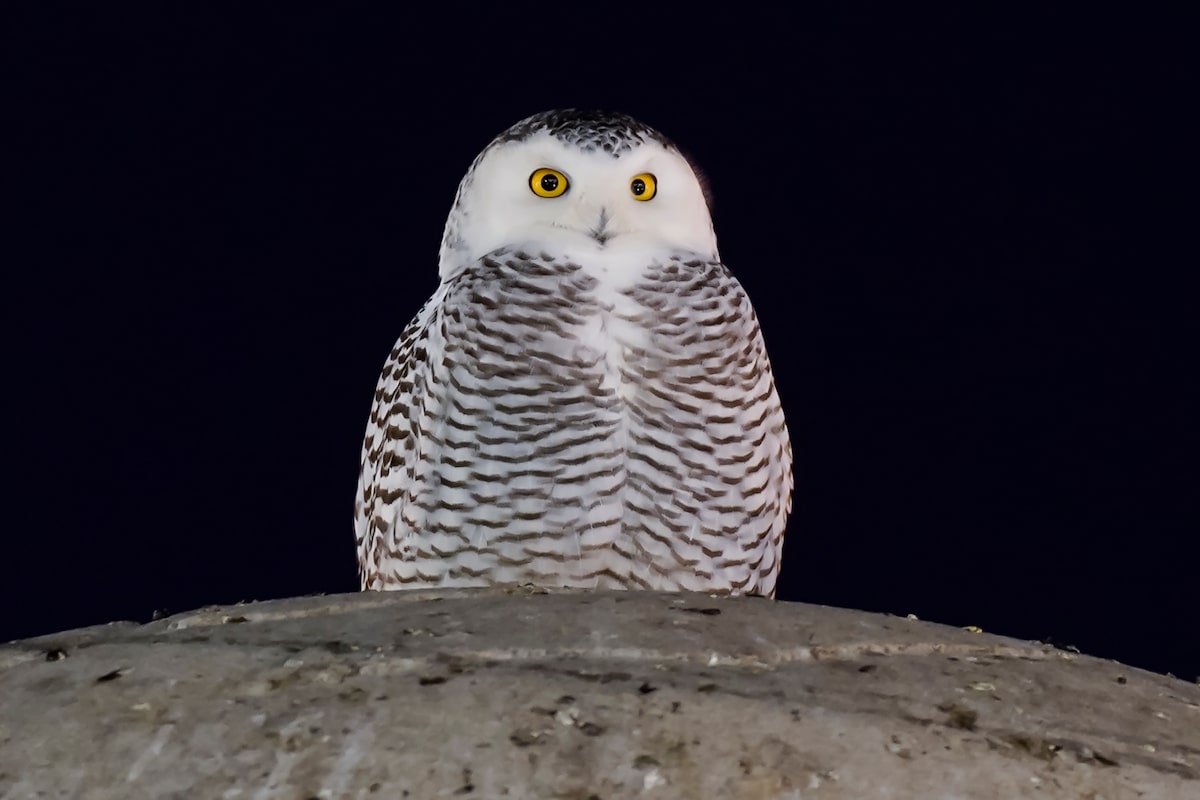
A new report shows Canada’s wildlife populations, such as the snowy owl, are declining.Carolyn Kaster/The Associated Press
Environmental advocacy group WWF has updated its Living Planet Index for Canada and found that downward trends in monitored wildlife populations are becoming more pronounced – a sign that federal and provincial policies are inadequate to the task of protecting species at risk across the country or improving their chances of recovery.
In a report released on Monday, the organization found that 53 per cent of the Canadian species it measures are decreasing in abundance, with an average decrease of 10 per cent since 1970 (a point in time from which wildlife population data were sufficient to allow for reliable estimates). Among those species already listed as threatened by the International Union for the Conservation of Nature, 43 per cent showed population declines, including the boreal caribou.
“This is biodiversity loss happening in real time,” said James Snider, vice-president for science, knowledge and innovation with WWF Canada during a media briefing. He said that the report, built on more than 5,000 records tracking 910 species, offers “a stark reminder of the trajectory of wildlife in Canada.”
The report marks the fourth edition of the Canadian version of WWF’s Living Planet Index, which is updated every five years. It is not a comprehensive measure of all species across the country but focuses instead on a subset of vertebrates – including fish, birds, mammals, reptiles and amphibians – that occupy a range of habitats in Canada, from marine and freshwater ecosystems to wild and human-dominated landscapes.
As in previous editions of the index, species that are found in grasslands – such as the swift fox and prairie rattlesnake – have declined the most on average, reflecting the historical impact of habitat loss because of agricultural activity.

Wildlife trends across habitats in Canada
Index value = Average change in species populations since 1970
the globe and mail, Source: wwf canada

Wildlife trends across habitats in Canada
Index value = Average change in species populations since 1970
the globe and mail, Source: wwf canada

Wildlife trends across habitats in Canada
Index value = Average change in species populations since 1970
the globe and mail, Source: wwf canada
Elsewhere, invasive species, pollution and climate change effects are adding to pressures that are more directly linked to human activities and infrastructure.
Mr. Snider said that a striking takeaway from the report is that efforts to conserve endangered species have not stopped new and sometimes iconic creatures from joining the ranks of those already listed.
A case in point is the snowy owl, Quebec’s provincial bird. Last May, for the first time, the scientific panel that advises the government on the status of Canada’s wildlife said that the owl should now be listed as threatened under the federal Species at Risk Act.
The owl is one of many species that also carry cultural significance for Indigenous peoples. In its latest iteration, the WWF report includes interviews with Indigenous community members speaking about changes in species populations that have occurred within the collective memories of their communities.
One such participant, Kiarra Bear-Hetherington, is a water protector with the Wolastoqey Nation in New Brunswick and a graduate student in marine management at Dalhousie University in Halifax. As part of her role, she has gathered information from elders about the historic abundance of Atlantic salmon on the Wolastoq (Saint John) River prior to the construction of hydroelectric dams starting in the 1950s. The salmon population has crashed since then and there is currently a ban on commercial and recreational fishing of the species, which has impacted Indigenous communities on the river.
A severe marine heat wave nicknamed ‘the Blob’ has finally been explained
Ms. Bear-Hetherington said support for Indigenous-led conservation projects has been a positive development that benefits species and also links communities to their heritage.
“We have so many young people that are wanting to recreate that connection back to our river, our waterway. That gives me hope,” she said.
Compared to the Living Planet Index that WWF International prepares as a global snapshot, the Canadian version has a much higher proportion of its vertebrate species represented and is better able to capture the variability in population numbers, said Jessica Currie, a senior specialist with WWF Canada.
To some extent this can help reduce oversensitivity to small changes in species with low populations numbers, which otherwise could make the overall trends seem more dire than they really are.
Ms. Currie said the WWF Canada report includes some methodological changes designed to strengthen its statistics. The changes were made in consultation with Environment and Climate Change Canada officials who use a version of the index to track changes in Canada’s biodiversity.
Federal forest report obscures logging’s impact on wildlife and climate, conservation groups say
Protecting that biodiversity has proved a challenge in Canada in part because of delays in implementing the federal species law, and difference with provincial governments who often have more direct control over the habitat on which many species depend.
Among the provinces, for example, British Columbia does not have its own species legislation while Ontario’s government has recently amended its laws to weaken species protections.
Chris Johnson, a professor of conservation and wildlife ecology at the University of Northern British Columbia, who was not involved in the WWF report, said the current political situation underscores the need for maintaining laws that protect individual species at risk, a position supported by a study he co-authored earlier this month in the journal Facets.
“It’s about having those last ditch policy and legislative tools to keep those species from falling off the cliff,” Dr. Johnson said.
During the briefing Mr. Snider said that while the federal government prioritizes economic development to counter threats from the United States, it cannot afford to lose sight of the country’s natural assets.
“As we look forward to building our economic sovereignty, our broader security, we also need to be considering the biodiversity and nature impacts in that decision making process,” he said.