
Credit:
BIOGRAPHY
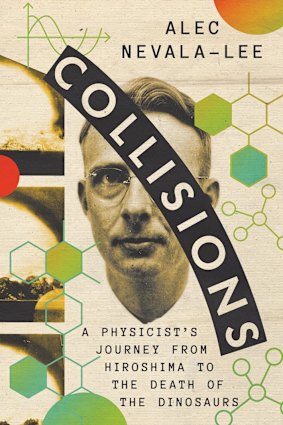
Collisions
Alec Nevala-Lee
Norton, $52.95
“Curious people,” according to Nobel Prize-winning physicist Luis Alvarez, “had the right to exhibit a controlled disrespect for authority.” In this revealing, and at times disturbing biography, Alec Nevala-Lee follows the tempestuous career of one of the most curious characters of 20th-century science. Both inquiring and peculiar. Curious.
As a physicist, Alvarez is best known for his work on the Manhattan Project, which led to the atomic weapons used in 1945, though his 1968 Nobel Prize was awarded for his discovery of “resonance states” in particle physics.
Readers should not be put off by the fact that they, like me until last week, have no idea what a resonance state was, is or even means. It doesn’t matter. This fascinating story isn’t about resonance states. It’s about Luis Alvarez.
Putting nuclear physics aside for the moment, many readers will have heard the name Alvarez in what seems at first blush to be an utterly unrelated piece of work, the asteroid impact theory of the extinction of the dinosaurs. In 1980, Alvarez and his geologist son, Walter, proclaimed to a deeply sceptical paleontological establishment that the disappearance of giant reptiles at the end of the Cretaceous period, some 65 million years ago, was caused by a massive chunk of space rock smashing into the earth.
A fortuitous family affair, it was Walter who noticed the subtle layer separating fossil-rich Cretaceous rocks from the fossil-poor strata piled above them, and his physicist father who worked out that by measuring isotopes of iridium (rare on earth, plentiful in asteroids), they could establish that the big lizards were killed off in very short order, not the millions of years of conventional wisdom.
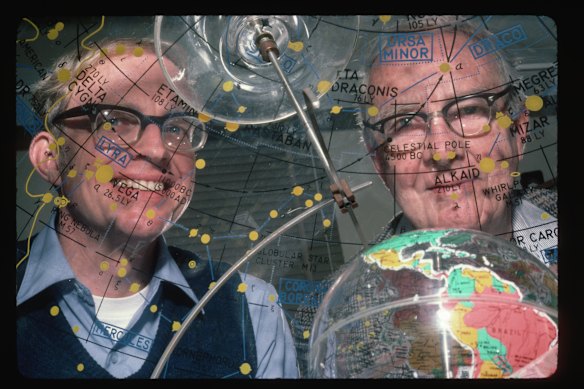
Alvarez (right) with his son Walter.Credit: Corbis/VCG via Getty Images
Nevala-Lee’s book is a fine example of intriguing, explanatory science writing as much as a biography, and as such traces his subject’s life through his work and the scientists he both collaborated and fought with. There is little here about his two marriages and four children (except Walter), and indeed, if his cantankerous reputation among his peers is anything to go by, Alvarez would not have been the easiest person to live with.
But if he was no diplomat, he was a brilliant physicist and a hands-on lab man of the old school. If he needed a piece of equipment that didn’t exist, he would twist arms to get the money and build the thing himself. By 1940, along with just about everyone with valued skills in physics and chemistry, he was up to his elbows in building weapons, in his case, radar navigation.