
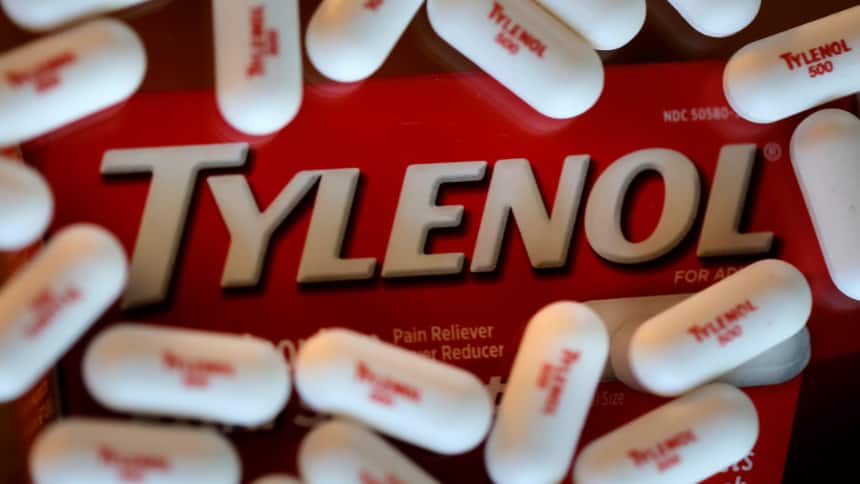
Tylenol is safe when used properly, experts say
A common drug for pain and fever management, Tylenol, is in the news.
That’s because on Sept. 22, U.S. President Donald Trump claimed without definitive evidence that there was a connection between using acetaminophen (the active ingredient in Tylenol) during pregnancy and an increased risk of children developing conditions like autism and attention deficit hyperactivity disorder (ADHD).
Trump held a news conference at the White House in Washington, D.C., where he told pregnant people not to use the drug unless it was absolutely medically necessary.
“Don’t take Tylenol. Don’t take it,” he said.
Doctors, scientists and major health organizations in Canada and around the world quickly pushed back against those claims, saying there was no confirmed evidence of a connection between Tylenol and autism.
The difference between Trump’s claims and doctors’ expertise has many people confused and wondering what to do when it comes to taking Tylenol.
What are doctors and scientists saying?
Health Canada, the Society of Obstetricians and Gynaecologists of Canada and other expert groups all say there is no definite evidence that Tylenol causes autism, and it is generally safe when used as directed.
Used as directed means that the person taking Tylenol follows the instructions on the bottle when it comes to dosage.
Most experts and doctors agree there is no single “cause” of autism, according to the executive director of the Autism Alliance of Canada, John Lai.
“We can’t frame it as an epidemic or a preventable disease,” Lai told CBC News Nova Scotia. “I think we have to realize there’s a complexity of genetic, biological, environmental factors that we don’t understand completely yet.”
Correlation doesn’t equal causation, say experts
Autism rates have increased in the past few decades, but experts said that doesn’t mean it’s related to Tylenol use.
It comes down to a scientific saying: correlation does not mean causation.
Basically, correlation is when two things may appear connected — like if a pregnant person takes Tylenol and has a baby diagnosed with autism.
Just because two things are correlated doesn’t mean that the Tylenol use directly caused autism (causation).
Health Canada, the government department responsible for the health of all Canadians, issued a public advisory after Trump’s announcement.
It said there is “no conclusive evidence” that using acetaminophen or Tylenol as directed during pregnancy causes “autism or other neurodevelopmental disorders.”
“It has been used safely by millions of Canadians for decades, including during pregnancy and while breastfeeding,” the statement said.
Health Canada also warned that untreated fever and pain during pregnancy “can pose risks to the unborn child.”
It said that acetaminophen should be used at the lowest dose for the shortest time needed to treat fever.
Tylenol is safe for kids, doctor says
The Canadian Paediatric Society is a national organization of medical professionals who work with children. Its director of medical affairs, Dr. Sam Wong, told CBC Kids News, “Taking acetaminophen [Tylenol] will not cause a child or teen to develop autism or any other neurodevelopmental disorder.”


Children’s Tylenol, or acetaminophen for kids, has a lower dosage than Tylenol for adults. (Image credit: Tylenol)
He added that Tylenol is “one of the most common, and safest, pain and fever relievers for children and teens when used properly.”
Wong said that children under 12 should never use an adult product, but instead use a version designed for children.
As with any medication, he said it is important to follow the instructions on the packaging and keep in touch with your health-care provider if your symptoms do not improve.
Have more questions? Want to tell us how we’re doing? Use the “send us feedback” link below. ⬇️⬇️⬇️
With files from CBC News
TOP IMAGE CREDIT: Justin Sullivan/Getty Images