
David Suzuki isn’t grieving Jane Goodall’s death — he’s grieving that she never got to see the changes she championed.
Suzuki, longtime host of The Nature of Things and one of Canada’s most prominent science communicators, says Goodall’s influence is felt far beyond the realm of chimpanzees.
Yes, that was her primary species of study, he told Canada’s National Observer, but through her work on chimp behaviour she linked “the fate of chimps and their habitat to the fate of humanity.”
“She used her animal of study to paint a much bigger picture, and that’s what I really admired about her,” he said.
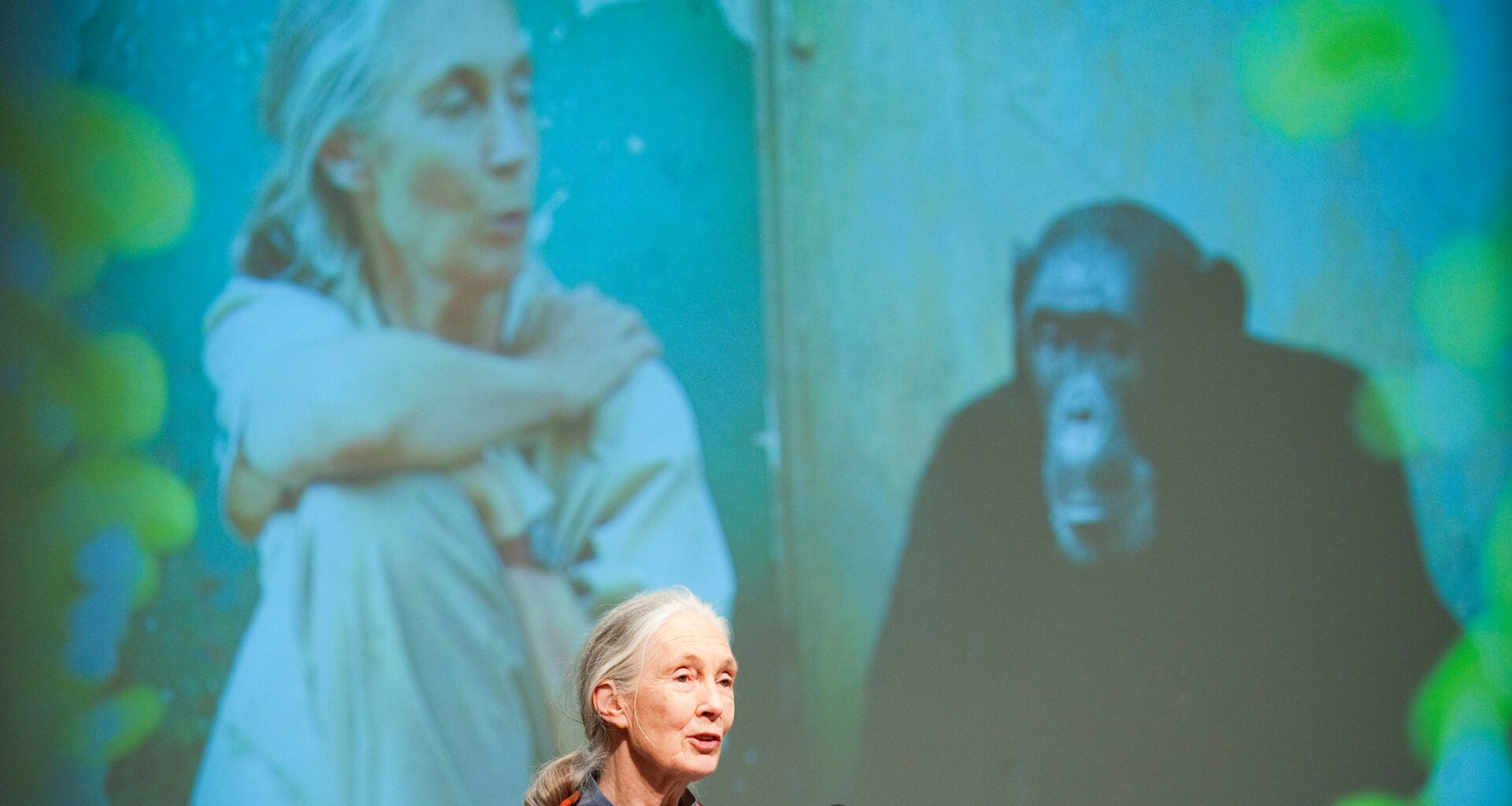
Goodall, the renowned primatologist and one of the most influential champions of the natural world, died of natural causes at the age of 91 while on a speaking tour in California on Wednesday.
“The thing I grieve, is that she never lived to see the big changes she was pushing for,” Suzuki said.
Those big changes Suzuki references are reforms to the political, economic and legal systems that prioritize resource extraction over nature. The systems that are driving climate breakdown, severe biodiversity loss and exacerbating environmental inequity — the three crises the Jane Goodall Institute tackles.
David Suzuki counts Jane Goodall among his top inspirations, but he isn’t grieving her death. He’s grieving she never got to see the big changes to the political, economic and legal systems that destroy nature and must be reformed.
“She gave her life to spread the message, but we never really got that in terms of looking at the systems themselves,” he said. “And I regret she never got to see that big change, because the big change is going to happen whether we plan it or not.”
Goodall’s legacy is typically credited as pioneering studies into chimpanzee behaviour. She began that research in the late 1950s and spent decades observing chimps in their natural environment. She saw chimpanzees craft tools to fish for termites, chimps holding hands and patting each other on the back. In an interview with ABC in 2020, she said the most surprising discovery she made was how like us they are.
That said, her favourite animals were dogs.
High-profile tributes have poured in since her death was announced. David Attenborough, a friend who also would be counted on the Mount Rushmore of conservationists, called her a “great champion of environmental protection.” Former US President Barack Obama said, “her groundbreaking work … opened doors for generations of women in science.” The United Nations, which appointed her a Messenger of Peace in 2002, said her “legacy will continue to guide and inspire humanity’s collective efforts for peace, sustainability, and harmony with nature.”
But beyond her scientific work, her legacy is an inspiration, her admirers say.
Former environment minister Steven Guilbeault, now serving as minister of Canadian Identity and Culture — which oversees the nature protection file — said he doesn’t think it’s an exaggeration to say millions are now advancing her mission.
He said the government’s commitment to protect 30 per cent of land and water by 2030 — a target shared by the world after the Kunming-Montreal Global Biodiversity Framework was inked in late 2022 — is part of her legacy.
“She was an inspiration for so many of us, and for so many governments around the world,” he said. “Many governments now have laws to protect biodiversity, and to put more funding into conservation … we want to continue with national parks, with marine protected areas and urban parks.”
Among Goodall’s lasting influences was her work speaking to children. In 1991, she founded Roots & Shoots, an advocacy organization to bring together young people for environmental and conservation work.
It was her work speaking to children that inspired Fernando Melo, now the Canadian Renewable Energy Association’s senior director of federal policy.
Melo said he was about seven years old when Goodall came to speak in Hamilton, Ont.
“To hear this woman speak and tell stories about her friends, the chimpanzees, who were just like me was remarkable,” he said. “To understand that humans are the reason for these animals having such problems, but humans can be the reason why these animals can thrive again … It was just this moment where it all connected.”
“She put something out there — a call to all the kids — to take on a life of conservation and well, I was a sincere little kid and I’m still a sincere guy now,” he said. “I took it to heart.”
For Melo and countless others now working in the climate and environmental industries, Goodall was an entry point for seeing the world differently.