
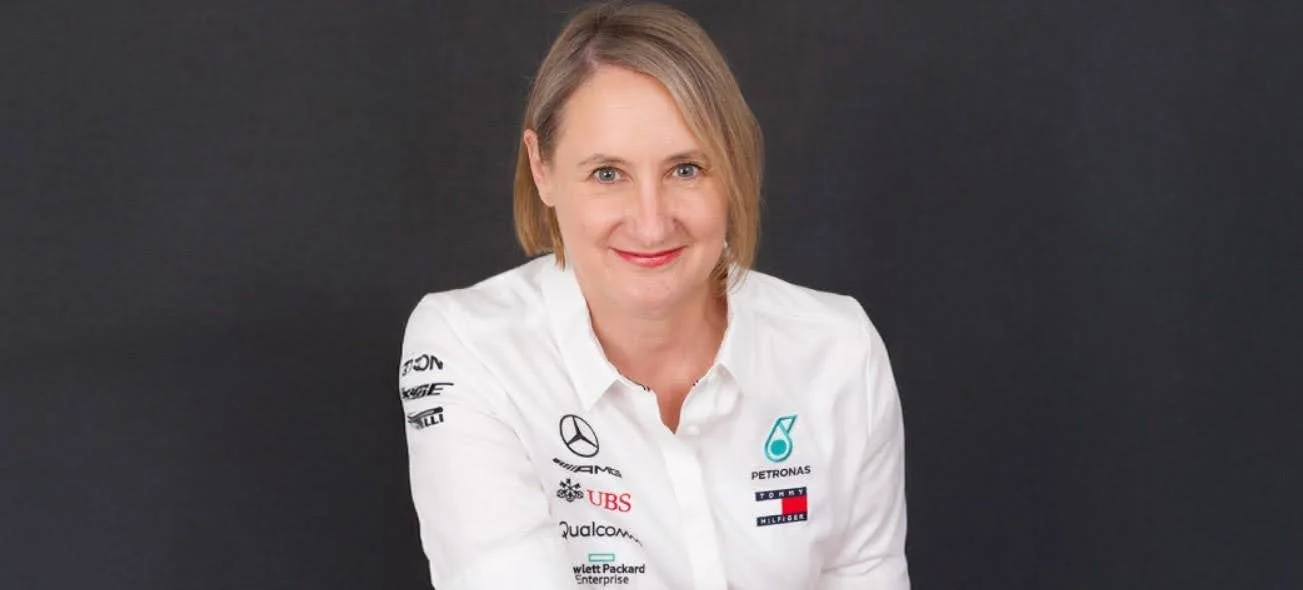
Nicole Bearne is a renowned inspirational leadership speaker, celebrated for her rare blend of motorsport precision and people-first leadership.
With a distinguished career in Formula 1 – including pivotal internal communications roles at Mercedes-AMG Petronas – she understands how to spark performance under extreme pressure.
As the founder of The Comms Exchange and a recognised expert in organisational behaviour, she now translates the high-stakes lessons of the racetrack into strategies for modern businesses. Her work spans leadership, diversity & inclusion, team culture, and employee experience.
In this exclusive interview with The Inspirational Leadership Speakers Agency, Nicole shares how F1 leadership principles can transform boardrooms, how communication builds trust in high-performing teams, and why adaptability and candour are non-negotiables in the race for business success.
Q: Formula 1 teams are renowned for their precision and unity under pressure. From your experience, what leadership principles from F1 can business leaders adopt to build high-performing teams?
Nicole Bearne: “That growth mindset is really a key element of F1 team culture. So, I always say Formula One teams are quite unique, I think, in the world of sport because behind the athlete – or the race drivers in our case – you have, effectively, a high-precision engineering company with all the same departments and functions that you would expect to see in any other company.
“So, you have R&D, manufacturing, design, operations, comms, marketing, finance, all of those – HR, you name it – and the leadership team are pretty much facing the same challenges and situations as any other organisation outside the sport.
“As in any other company, their goal is really very much to establish that clear mission and vision for the team and then build a culture, and build the facilities that the team is going to need to achieve those goals. The big difference with a Formula 1 team is that underpinning all of that engineering and corporate culture, there’s a race team.
“We very much apply a sporting approach to managing the challenges that we’re going to face as an organisation, and we have to build a team where everyone is working together to achieve our goals.
“In terms of our leadership principles, I always say – and I’m probably biased because of my role – but communication is the key. Every single person in the team needs to be pulling in the same direction. They need to know what’s happening around the organisation; they need to know what’s expected of them.
“Within Mercedes, the approach was very much to lead through intent, which is to set a very clear set of goals at the start of every year and then create a very clearly articulated strategic intent that sets out how the team is going to work together to achieve those goals.
“That intent is distilled down into a really simple statement of intent – effectively a couple of paragraphs in written text – that explains what the team is aiming to achieve in the coming year. That gets communicated to every single team member. It’s woven through all company communications across the year and forms a really compelling call to action to everybody.
“Each department head can look at the team intent and work out what their department needs to do to achieve it. Every single individual can look at the team intent and see what they personally need to do to achieve it.
“It just creates that really clear line of sight for every team member across the organisation and builds that sense of ownership and responsibility so that they can all work together.”
READ MORE: Five reasons why McLaren won the 2025 Constructors’ World Championship