
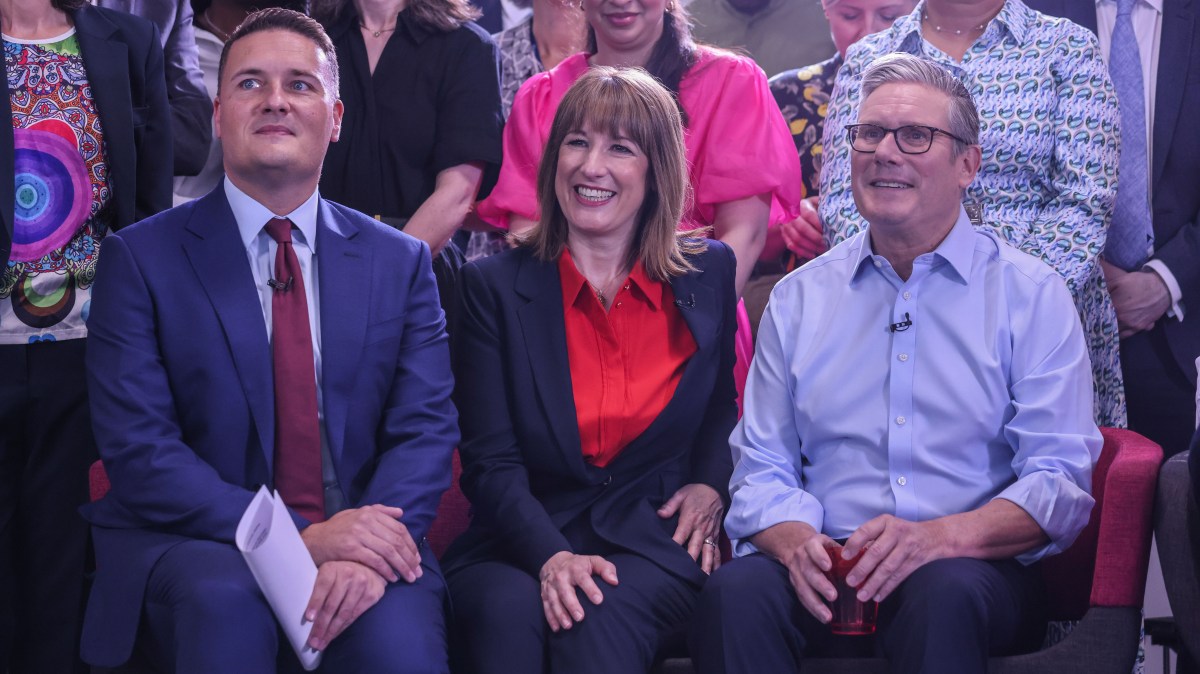
Wes Streeting has said he is delighted that Sir Keir Starmer is planning to blame Brexit for raising taxes in next month’s budget as he expressed “frustration” at being unable to speak out about the “problems” caused by leaving the European Union.
The Times revealed on Saturday that the prime minister and his chancellor, Rachel Reeves, will open up a new attack against Nigel Farage by blaming him for delivering Brexit with “easy sloganeering” but without having a plan.
They will effectively lay the responsibility of tax rises in next month’s budget on Farage by citing official figures suggesting that if Britain had not left the EU the economy would be about £120 billion bigger by 2035 than current forecasts suggest. This is due to a significant downgrade in Britain’s productivity, which has been lower than forecast.
Speaking on a panel at the Cliveden Literary Festival, Streeting, the health secretary, said the country faces an “enormous amount of jeopardy” and admitted he feels “anxious” about the future because of the “deep structural problems in our economy”.
He said: “We had over a decade of low productivity, low growth, and therefore you end up a with high burden of taxation and people paying more through their taxes and feeling they are getting less because they are.”
Asked how much Brexit can be blamed, Streeting referenced the article in The Times and added: “It’s part of it. There’s no doubt that that’s the other problem we’re dealing with. I’m glad that Brexit is a problem whose name we now dare speak.”
• Keir Starmer’s plan to blame Nigel Farage for budget tax rises
He said that while he had “enormous respect” for people who voted to “take back control”, there had not been a proper debate about the problems it had caused economically.
Streeting said: “This has been my frustration about it … we were warned it was going to have an economic impact and it has. And it’s hit our country hard, so we’re having to deal with Brexit.
“We’re having to deal with the structural problems in the British economy, and we are doing that by creating stability and the conditions in which people can invest confidently in our country, recognising that governments don’t create growth, but we can help to create the conditions for businesses to grow and thrive, and that’s what we’ve got to do.”
He added: “We’re also trying to have a more rational conversation with our biggest and nearest trading partners, the European Union, by resetting that relationship, and beginning to build back what we have lost.”
Streeting also said he did not expect small business owners to suffer again following last year’s tax hike in employer national insurance contributions.
Asked if small businesses were likely to be hit again, Streeting said: “No, I don’t think so, because, you know, I think that the choices we’ve made, we haven’t made lightly, and without recognising the impact that it does have on people and on businesses.”
Reeves is having to consider a range of tax hikes to fill a black hole in the public finances of £20 to £30 billion due to dire economic forecasts from the Office for Budget Responsibility. The spending watchdog has concluded that the performance of Britain’s economy over the past decade was even more anaemic than previously thought.
Among the options being considered is raising income tax, which would break Labour’s manifesto promise not to raise the three main taxes, which also include VAT and national insurance.
Richard Tice, the deputy leader of Reform, accused Starmer of hypocrisy for planning to pin the blame for economic failure on Farage.
He said: “First Keir blamed the Tories; now he is blaming Nigel, reaffirming his brand of ‘two-tier Keir’. Third time lucky he should send Rachel back to the complaints department. Hypocrite-in-chief Keir is running out of people to blame after over a year in office. Voters know he is to blame.”
Jeremy Hunt, speaking at the Cheltenham Literature Festival, revealed he would now vote for Brexit if the EU referendum were held today.
Jeremy Hunt, pictured at the Cheltenham Literature Festival, supported Britain remaining in the EU in the 2016 referendum
ADRIAN SHERRATT
The former chancellor, who was a leading Remain campaigner in David Cameron’s government in 2016, said: “I voted to remain. I’m not sure I would today and let me explain why I think the world is so dangerous and so volatile, there is a premium on nimbleness and flexibility today.
“That was not actually the case in 2016. I even then had no doubt that Britain could flourish inside the EU or outside the EU, but we have to be honest, that it is a different economic model.
“If you’re inside the EU, we had a very straightforward model.
“We were just going to be the most pro-business, low tax, foreign investment, friendly economy inside the single market, and we hoover up all those people who wanted to sell into the single market.
“You can’t obviously have that model outside the single market. So you have to think like an Israel or a Taiwan or Korea, and you have to say, what is the sector, or sectors where we’re going to clean up, globally.
“We’re going to really make things or do things that other people want to buy and I don’t believe, unlike some representatives that you know, voting to leave is an automatic ticket to huge prosperity.
“It’s entirely up to us whether we do this, but there is a perfectly good economic model, and there’s no reason with an economy bigger than Canada or Australia, we can’t be as successful as them.”