
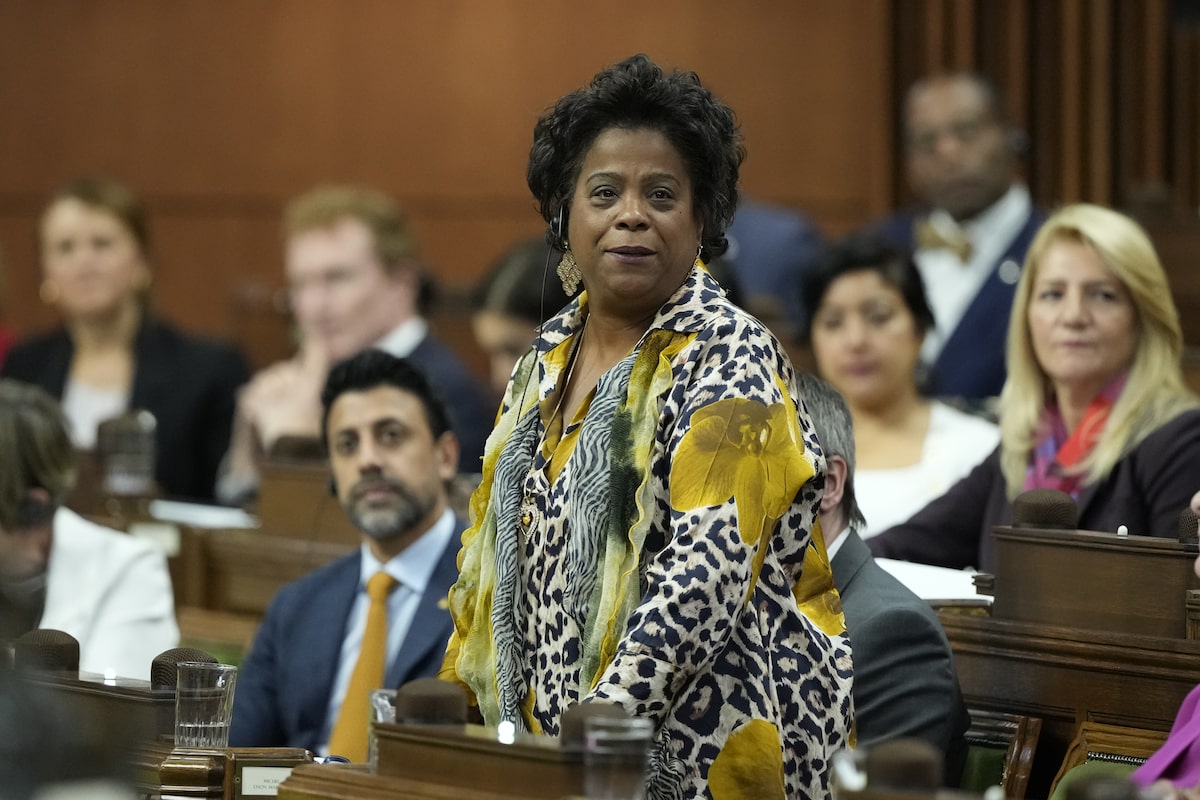
Health Minister Marjorie Michel during Question Period on Parliament Hill in Ottawa, on Oct. 2.Adrian Wyld/The Canadian Press
Canada’s Health Minister wants to introduce legislation to improve labour mobility for health care workers, mirroring a recent federal bill that removed barriers to interprovincial movement but did not specifically include physicians, nurses and other health professionals.
Future legislation would be similar to Bill C-5 and could feature a national licensing system for health care workers, Health Minister Marjorie Michel said in an interview. Bill C-5 was approved by the House of Commons in June and sets out to fast track major nation-building projects.
The shortage of primary-care providers in Canada is a key concern for the country’s health care system. It’s estimated that five million Canadians lack access to a family doctor or nurse practitioner.
“Health care was not part of C-5, but that doesn’t mean that we don’t have to work all together to see how we can improve mobility,” Ms. Michel said.
When this hospital couldn’t staff its ER, doctors were asked to name their price
It’s not clear exactly what the legislation would entail, but interprovincial mobility is one of the topics Ms. Michel said will be on the table when federal, provincial and territorial health ministers meet in Calgary on Thursday and Friday. She said reaching consensus among the provinces and territories will be crucial, however, because health care is ultimately their jurisdiction.
Earlier this year, federal, provincial and territorial governments announced they had agreed to take down internal trade barriers and improve labour mobility in response to U.S. tariff threats. B.C. Premier David Eby said part of the eventual goal was to eliminate barriers so teachers, doctors and nurses could “move seamlessly between provinces.”
It’s currently expensive and burdensome for doctors to obtain approval to practise across provincial lines. Advocates have long called for reforms that would allow physicians to more easily move across the country, for example by introducing pan-Canadian licensure.
While some provinces and territories have hesitations about the removal of barriers, Ms. Michel said they remain open to the idea. She said the federal government would ultimately play a “leadership role” to help provinces and territories reach a preferred outcome.
“I think one of the challenges – the fear, I would say, from some provinces – is the fact that we have a lack of health professionals and they are just scared to lose their professionals to another province,” she said.
Ahead of this week’s meeting, the Canadian Medical Association (CMA), the advocacy organization, which represents more than 75,000 physicians, urged the federal government to introduce legislation focused on improving physician mobility, directly referencing Bill C-5 and calling on the government to “bring health worker mobility through the finish line.” The CMA said the current system hampers access to care, particularly in rural and Indigenous communities.
Interest from U.S. doctors looking to work in Canada has spiked, but few have made the move
Margot Burnell, president of the CMA, said in an interview Tuesday that the association would welcome federal intervention.
“This would help with the mobility of physicians across the country and would certainly help with servicing areas in rural, remote parts of our country.”
She said that legislation would hopefully encompass physicians, nurse practitioners and other allied health professionals who are in good standing. Appropriate safeguards would be needed to protect the public, she added.
Dr. Burnell said cross-country licensing has been undertaken in places like Australia and the U.S., resulting in 10 per cent to 15 per cent more positions in rural and remote areas.
That’s because it is not only easier for professionals to move across the country but it also “allows people to see new communities and to fill in for other locums,” Dr. Burnell said.
Ms. Michel said Ottawa also wants to help provinces streamline licensing for immigrating physicians – an issue of growing interest as provinces and territories aim to attract workers who no longer want to work in the U.S. because of political unrest.
“Right now, there’s no alignment on immigration and the need for doctors,” Ms. Michel said.
The Calgary meetings will be co-chaired by Ms. Michel and Alberta’s Minister of Primary and Preventative Health Services Adriana LaGrange.