
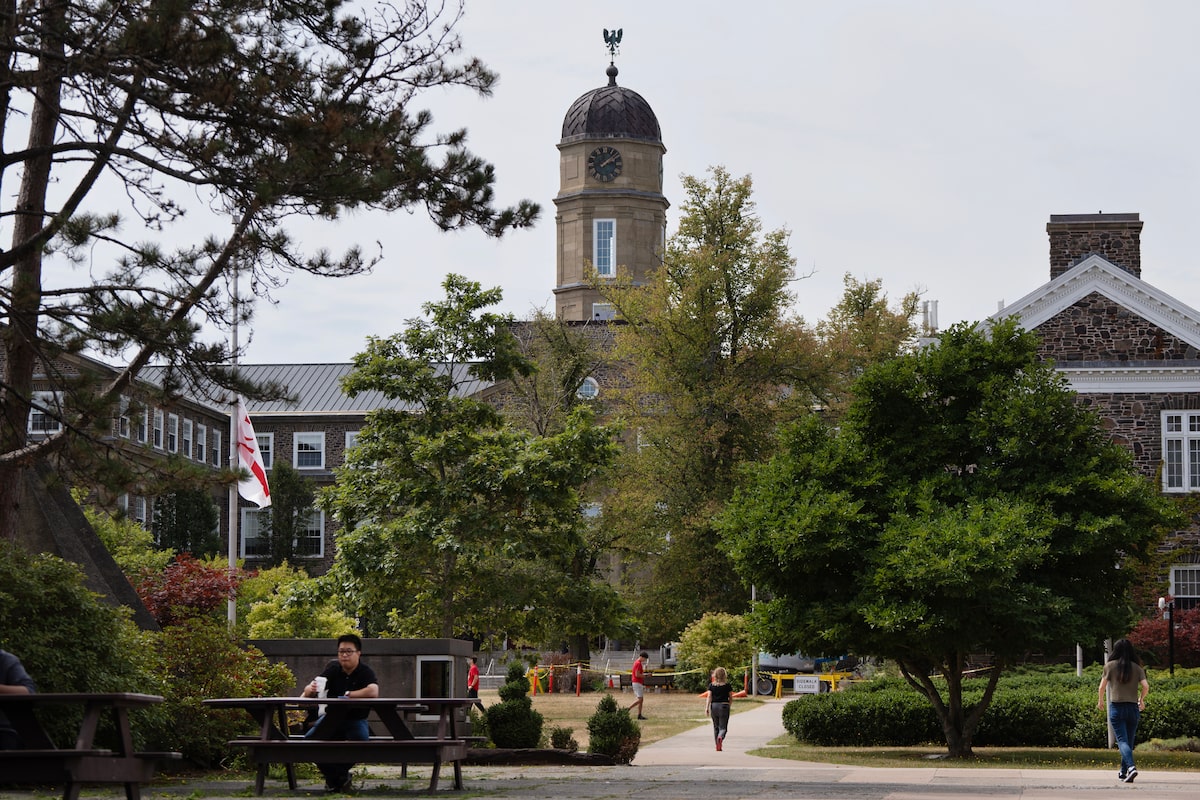
The Dalhousie University campus is seen in Halifax, in August. Dalhousie’s international enrolment dropped by about 21 per cent this year, according to new enrolment data.Darren Calabrese/The Canadian Press
International student enrolment is down sharply at universities in Atlantic Canada this year as the federal government’s cap on the number of study permits it will process takes a toll on the postsecondary sector.
International enrolment is down nearly 28 per cent at universities in Nova Scotia, New Brunswick, Prince Edward Island and Newfoundland, according to a preliminary survey of enrolment released Wednesday by the Association of Atlantic Universities.
The AAU said in a release that the international student numbers have been “badly eroded” by federal policies that have affected the recruitment of students.
International student tuition became an important source of funding to universities and colleges across the country over the past decade. The reduction in international students is having a financial impact at individual schools, in some cases resulting in revenue losses of millions of dollars.
University of New Brunswick president Paul Mazerolle said in a statement that Atlantic Canada and its universities have been disproportionately hurt by the federal government’s cap. Since the cap was introduced nearly two years ago, international enrolment at Atlantic universities is down by 36 per cent, a loss of 9,425 students, according to the universities.
In 2024 the federal government imposed a cap on the number of international study permits it would process, with the aim of reducing the number of international student visas by 35 per cent. It also made a series of policy changes over the next year, including raising the amount of money students were required to hold in a bank account, limiting off-campus work and making it more difficult to obtain a postgraduate work permit, which the AAU described as having “damaged Canada’s image as a welcoming country.”
Two Ontario colleges face deep cuts as foreign-student cap shrinks enrolment, reports show
Matthew Krupovich, a spokesman for Immigration, Refugees and Citizenship Canada, said the government is committed to restoring immigration to sustainable levels. Under the federal immigration levels plan, the targets for permanent and temporary migration have been reduced to “help align immigration with Canada’s capacity to welcome and integrate newcomers.”
“Education is a provincial and territorial responsibility in Canada – so is the adequate funding of public education institutions,” Mr. Krupovich said in a statement.
When the changes were announced in 2024, the federal government said the goal was to reduce strain in the housing market and on the health care system. During the most recent federal election the Liberal Party pledged to further reduce the number of temporary residents (students and temporary workers) to less than 5 per cent of Canada’s population by 2027, from a high of 7.3 per cent.
The new enrolment data show the number of international students declined at every university across the Atlantic region this year. Nova Scotia was hardest hit, with a decline of 37.5 per cent, a loss of about 4,670 students, while New Brunswick was down about 11 per cent, Memorial University in Newfoundland was down about 23 per cent and the University of Prince Edward Island was down about 14 per cent.
During the recent lockout at Dalhousie University in Halifax that kept students from class for several weeks the university administration described a “challenging financial situation” stemming from federal policy changes on international students.
Hundreds of part-time college instructors affected by drop in foreign enrollment
The data show Dalhousie’s international enrolment dropped by about 21 per cent this year, which would mean a loss of millions in revenue. The largest drop was at Cape Breton University, which saw its international student numbers drop by more than 56 per cent, or more than 3,200 students.
Peter Halpin, executive director of the AAU, said universities are concerned that the series of policy changes have tarnished Canada’s brand as a destination for international students.
“Canada’s policies have been discouraging,” Mr. Halpin said. “It’s a big blow to our region to lose that many international students.”
Mr. Halpin said that Atlantic Canada had been relatively successful at retaining students after they completed their studies. He said that about 60 per cent of former international students stayed in the region before the cap was introduced.
Dr. Mazerolle said the Atlantic universities have provided Immigration Minister Lena Diab with a regional immigration strategy that would create what he called a sustainable international student enrolment program.
The federal government will work with provincial governments, institutions and other stakeholders to develop what it described as “a sustainable path forward for international students,” Mr. Krupovich said.