
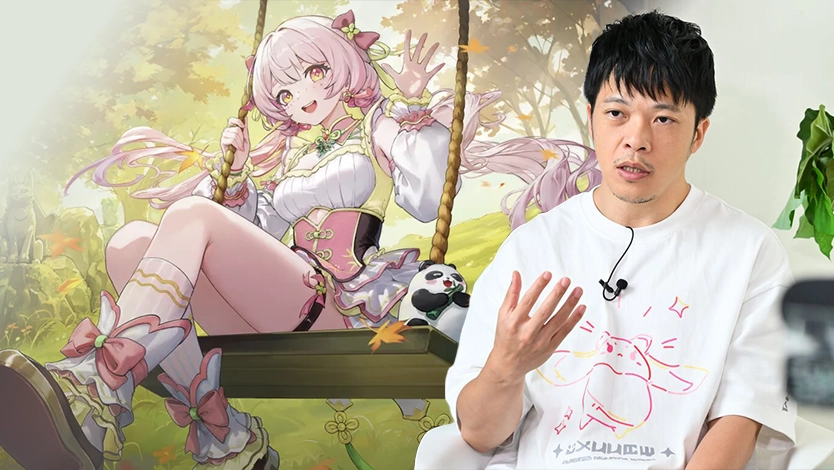
Blue Protocol: Star Resonance has the foundation to become a giant in the MMORPG space. Chen Min (Roy) is the Director of Bokura, the development team behind BP:SR. He sat down with Competitive Core at their office in China and hashed out the good, the bad, and the lessons they are still learning as they craft the perfect MMORPG.
As you read through the entire interview, we appreciate how open and honest Roy is during their talks. Not all developers are so direct and vulnerable with their player base on a public level like this. Season 2 will release in China on October 30, 2025. Offering facelifts to existing systems, new dungeons, raids, areas to explore, and much, much more as the season progresses.
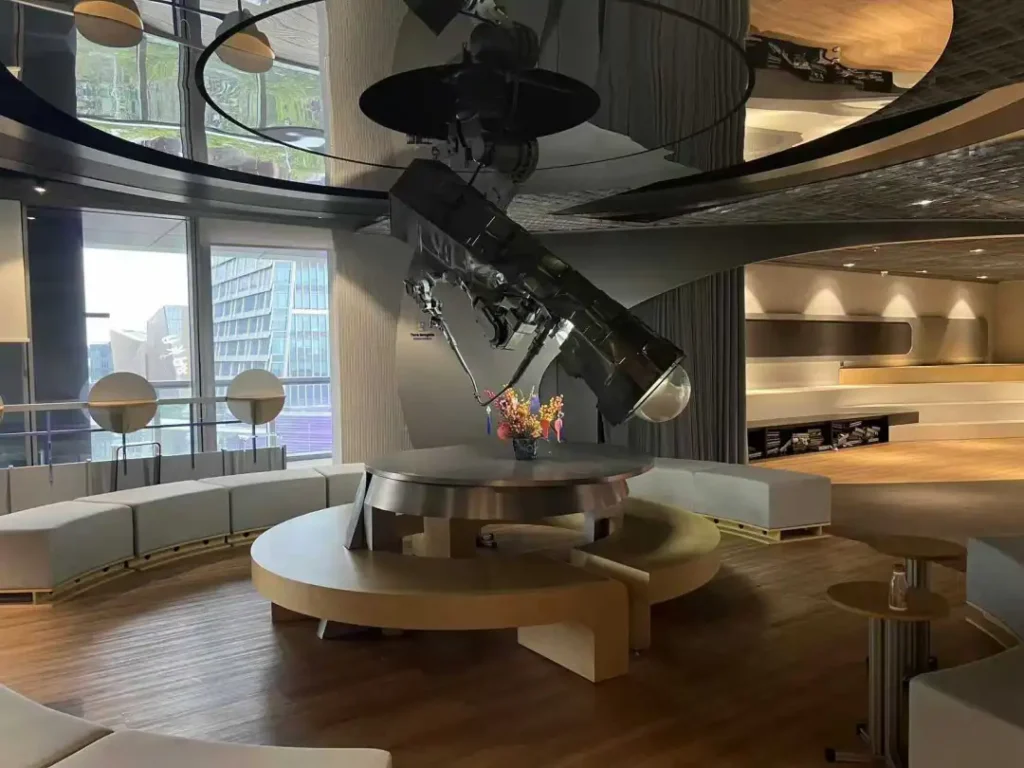 Shanghai Bokura Network Technology Co., Ltd Office. (Courtesy of Competitive Core)
The answers given by Roy are translated from simplified Chinese into English. We did not alter what was said to avoid misinterpretation. Some language and terms displayed may not be properly conveyed.
Improper Pre Launch Testing That Caused Server Issues (Roy)
During the stress test, we did some single-scenario verification, such as having all characters log in continuously, or doing other ‘similar things’. But in reality, we should have done comprehensive scenario verification, dividing the characters into batches, with one group logging in, another doing dungeon runs, another doing the main storyline, sending emails, and so on, to simulate as closely as possible the server state of a large number of players playing after the actual public beta. Unfortunately, we established this awareness too late.
China Server Issues Aftermath and Team Exhaustion During Launch (Roy)
After the server crash, everyone was anxious and wanted to quickly resolve the server issues so that players could have a normal gameplay experience. So we quickly made some updates and adjustments, but these adjustments were not fully tested. As soon as we solved one problem, several new ones arose. We continued to spend time solving problems, but some were really difficult to solve.
For example, login anomalies and players needing to wait five to ten minutes to log in were designed to protect player account security. However, when the server was very slow, data anomalies occurred frequently, and we had to temporarily block the relevant accounts and activate them again after the data returned to normal.
Since we were just trying to solve the problems in a hurry, we made mistakes. The busier we were, the more mistakes we made. Later, when so many problems piled up, the team’s morale was affected. This also led to everyone being exhausted from dealing with every update afterward. We would not sleep for dozens of hours during emergency repairs, and our (physical) condition got worse.
Resource Management and the Need for Casual Content (Roy)
Given limited production capacity, Starscar Resonance is first and foremost an RPG, with combat being paramount. Therefore, we’ve allocated the majority of our production capacity to dungeons, combat, and development. While the casual content is relatively small at the moment, maintaining this focus is the long-term direction of the project team.
Our vision for this casual area is for casual players to organize in-game activities—cyber cosplay, cyber activities, cyber chats—rather than constantly grinding dungeons and increasing combat power. The problem is that we currently offer too little content for casual players.
Introducing Mechanics To Players Earlier (Roy)
We may not have made each dungeon fresh enough. For example, in the Goblin fight, we may have released all the mechanics early in the main storyline, so players already have a sense of the pinball mechanics. The subsequent higher-difficulty dungeons simply add stats and some mechanics. So, we consider splitting up the mechanics more in the future seasons to give players a progressive experience.
Standing Out in the MMORPG Space (Roy)
First of all, the barrier to entry for this market is very high. For 2D games, players must recognize you as ‘2D.’ However, the MMOs currently on the market are either Japanese, Korean, or set in a martial arts or ancient style. Few players consider a game to be 2D MMOs. Secondly, we generally don’t call ourselves 2D but rather ‘anime MMOs.’ Players who enjoy anime and multiplayer experiences may come to play our games. The current definition of 2D gamers also has some overlap with our player profile, though the overlap may not be significant, as many 2D users simply don’t enjoy in-game social interaction, which can put a lot of psychological pressure on them.
These players might prefer to create their own character, personalize it, dress it up, and then adventure in this world. This is quite different from most second-tier games on the market, which simply give you a ready-made character and let you control it to experience it firsthand.
What we excel at is providing differentiated experiences. We create a better social environment for players, where everyone can play as themselves and have various of differentiated experiences. We’re also unique in that we can smoothly integrate with various animes, allowing players to find joy in many meaningless (cyber-social, stunt-based) activities.
When we first saw Blue Protocol, we immediately thought it had the style of Sword Art Online—very anime like and exciting. There were basically no games on the market that could give players a similar feeling. So, even though the risk was high and no one else was doing it, we felt we could do it. Furthermore, we’d made many traditional MMOs before, but people didn’t really play them. Now everyone on our project team is playing Star Resonance. We enjoy playing what we make, and the current situation is consistent with our original expectations, so that’s enough.
Roguelike Arena Mode and Mahjong Teaser (Roy)
In Season 2, we might launch a more formal Rogue-like gameplay. We’ll be able to incorporate some of the mechanics and stats that we wouldn’t dare include in our daily dungeons, giving players an ultimate sense of excitement. Compared to daily dungeons, players will also have a more diverse combat experience.” In addition to Rogue-like gameplay, Season 2 will also implement a “factor” system in the seasonal development process, similar to opening multiple talent trees, which will affect the skill expression and mechanic experience of the Specs to a certain extent.
In terms of casual gameplay, the game will launch a complete Japanese Mahjong system, allowing players to play ranked matches and earn rewards. This system can greatly alleviate the problem of content consumption during the game’s infancy.
Working Overtime to Make Season 2 Happen (Roy)
I think S2 still needs to continue to repay the debt of S1. S1’s rhythm was too chaotic, and we encountered many problems, which had a huge impact on our team’s state. Our team once considered temporarily reducing investment to launch S2 on time, such as making fewer new dungeons. The original plan was 6+3, so could we reuse the old dungeons and only make 3+3 new dungeons? But in the internal discussion meeting, everyone felt that the content must be done well, and we had to work overtime to get it done.
Season 2 was originally scheduled to launch on October 15th but was later postponed to late October. This was due to two reasons: insufficient production capacity and the need to repay more debts. Before Season 2, we planned to release an opening quest first, followed by new content. However, this approach felt insincere to players. Therefore, we chose to delay the launch, provide compensation, and instead release the opening quest during Season 1. Players would complete the opening quest during Season 1, allowing them to access new content immediately upon the new season’s launch. This was the final decision made jointly with operations.
At first, I thought it was acceptable, but later, it felt a bit overwhelming. But the core point remains what I’ve always said: users are paramount. Our thinking is, first, we made a mistake. Second, we’re building an MMO, a growing genre that will only get better with long-term operations. Star Resonance still has a long road ahead of it, so we’ll take it one step at a time, from Season 2 to Season 3, and even Season 4. In a year or two, it will be a more complete game.
PvP (Interviewer’s Words)
…another example is PVP gameplay – in traditional MMO games, PVP relies more on the character’s own combat power, equipment, and skills, while the PVP envisioned by Chen Min has independent numerical mechanisms and will add some randomness to enhance the fun.
Band System (Interviewer’s Words)
What impressed me most was Chen Min’s introduction of a band system. I’d even say it was the single most impressive concept of the entire interview. In this band system, several players can form a band using different instruments. Later, the home will open a stage, connecting it to the band system, potentially allowing for performances, ticket sales, and other diverse gameplay options.
Chen Min did not reveal too many details about the gameplay, but in my opinion, if this system can be used to connect with real-life two-dimensional bands and idols, or to stimulate players’ interest in making secondary creative programs in the game, the potential is enormous.
Looking Ahead and Expanding the Team (Roy)
We hope that one day in the future, when players mention Star Resonance, they will think of it as a very good game. After anticipating this future, we will listen carefully to the players’ voices and continue the subsequent development process. Therefore, we will not care about the current unsatisfactory commercial returns.
The project has now overcome a relatively difficult situation. Based on the launch of the national server in Europe and the United States, and the upcoming launch of the Traditional Chinese, Japan and South Korea regions, we can gradually recover R&D funds to be used for talent recruitment and expansion of production capacity, so that the product can enter a positive cycle faster.
Written by: Niko
Interviewer: Competitive Core
Reviewed by: Perciculum