
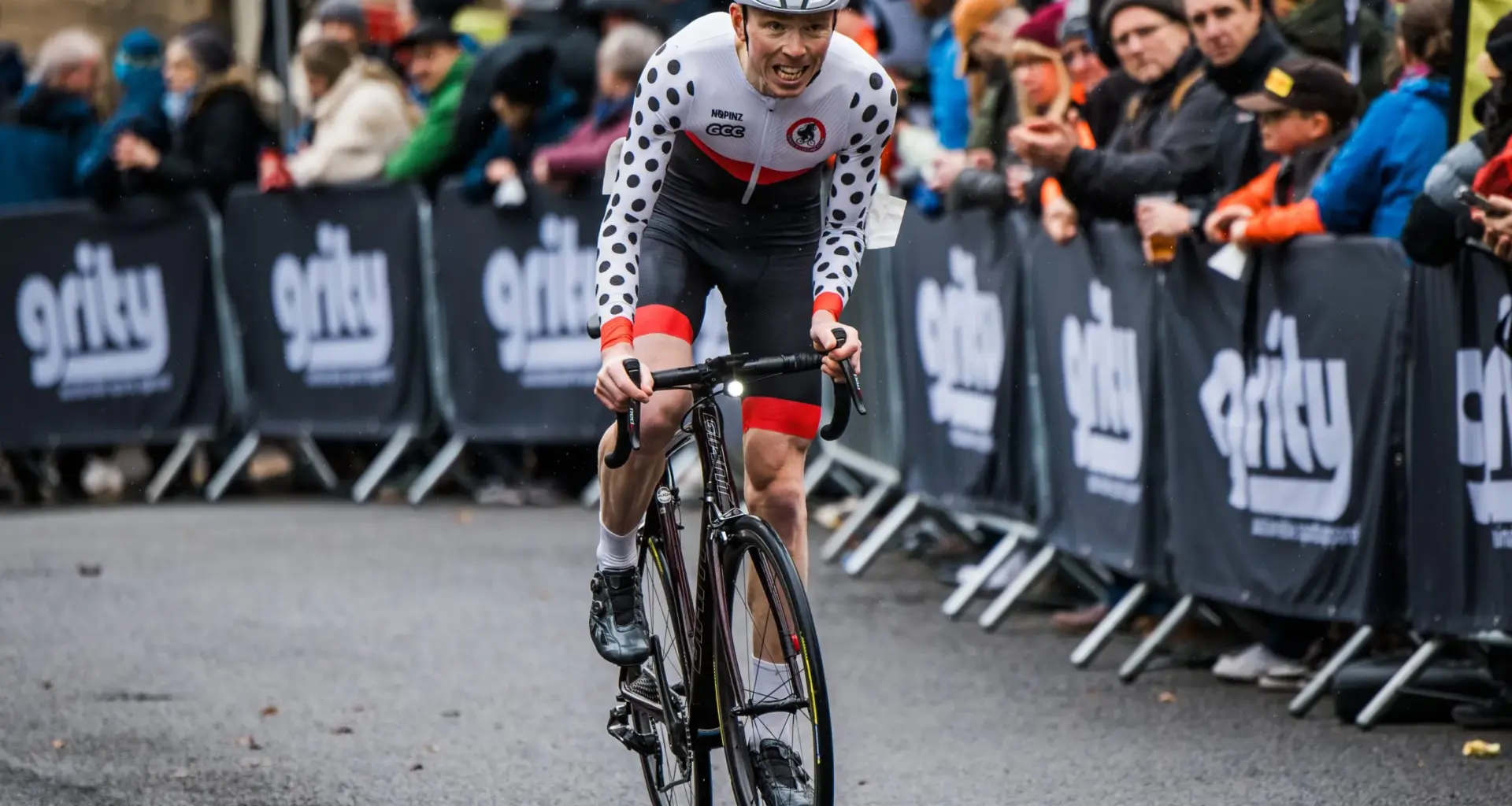
‘Why do we do this to ourselves?’ This was the question I heard a hill climber ask out loud on her way to the start of the Jackson Bridge race a few weeks ago. I paused for thought but was too immersed in my own race prep at the time to mull it over. Now, a day on from pushing myself to the lung- and leg-stinging limit up Bank Road’s 12% average gradient at the National Hill Climb Championships along with 459 others, I’ve returned to the question that puzzles hill climbers and non-adherents alike.
If you’re good, the answer is pretty simple. The best hill climbers vie for a prestigious place in the top 20 or 30 in the country. The very sharpest end of the race has been in flux lately, which must enhance the motivation of the top favourites. Three-time champion Illi Gardiner had looked unbeatable until this year when Rachel Haller pipped the Everesting World Record Holder by two seconds. Likewise, Harry MacFarlane ended Andrew Feather’s winning run last year and beat him again in Matlock for his second consecutive title. And many elite hill climbers participate at a high level in other cycling disciplines during the season, as junior boy’s hill climb champion Harry Hudson showed by winning the World Championships Junior Road Race in Rwanda. For these gifted athletes, their elite race programme logically flows into competitive hill climbing.
But what if your talents mean that only a top 50 or 100 is possible, or you’re looking at a mid-pack finish or lower? With outright glory a pipe-dream, at this level you’re largely competing against yourself – your previous best times and placings – as well as other racers of similar ability. As someone with four top 100 finishes since 2022, I fit into this category. But is the ambition to beat a few more fellow mid-packers what motivates me to dedicate months of the year to training for and racing gurn-inducingly painful hill climbs? Not really.
Related questions you can explore with Ask Cyclist, our AI search engine. If you would like to ask your own question you just need to , or subscribe.
 Andy Smith Photography
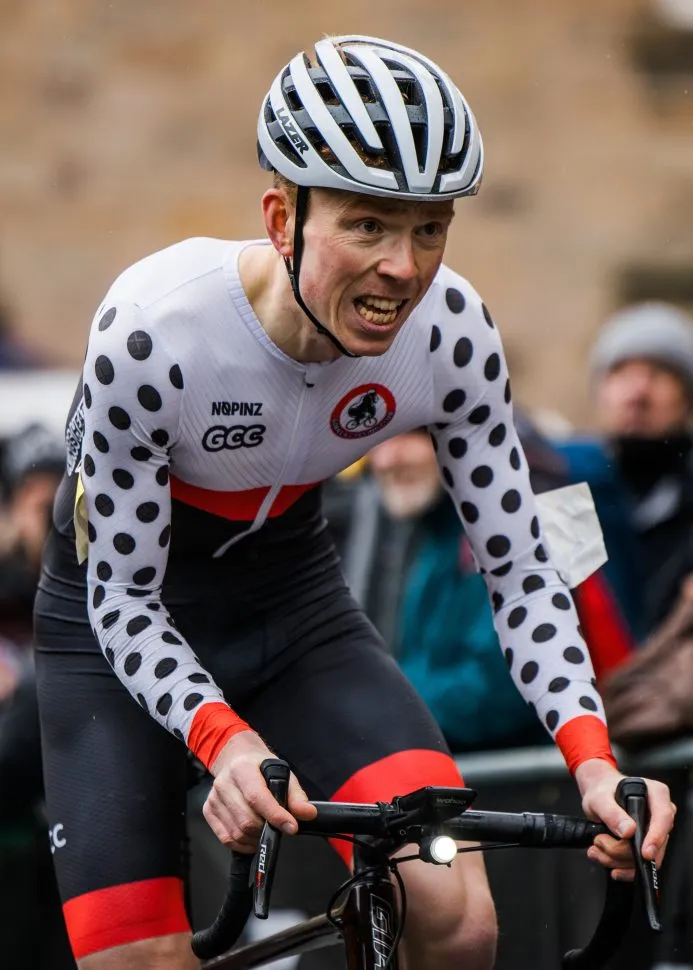
To get through the anaerobic capacity intervals (6x 1-minute @180% FTP with 5 minutes recovery), the shaving of weight off body and bike, the bicarb and caffeine-exacerbated race-day nerves, the physical and psychological demands of the racing itself and the travel (a four-hour round trip to a race is not uncommon), you need something else. As corny as it sounds, for me it’s the process that matters as much as – if not more than – the end result.
When you start training for hill climbs, the power you plan to hold for races seems unfeasibly hard. And the accompanying suffering shocks like an icy plunge pool. But after you’ve progressed from less awful to more awful intervals, test efforts are producing promising power and your weight is dropping, you know race shape is within reach. Because the top end fitness it develops comes (and goes) quickly, hill climb training provides a rare opportunity for even experienced cyclists to kick on in a short space of time. It’s hard work, but rewarding to pull off.
Then, due to the purity of hill climbing – it’s you, a clock and a hill – the onset of racing makes tracking progress easy. Many cyclists relish this but it’s complicated by the variables of the open road. Its lack of these variables makes indoor cycling popular, but it can’t match the stimulation of hill climbing. You race real crowd-lined climbs, and often iconic ones such as Winnats Pass, against real people who haven’t fudged their W/kg on Zwift.
While ‘honing‘ (a term used lightly in my case) your form, pacing, body composition and bike for such a specialist racing format, those this way inclined can hit a rich seam of nerdery. Being a bike tech and physiology geek, I find it very absorbing. Which intervals should you do? How hard and how long into the racing season to continue them? In terms of pacing in races, when you slow down, was it your legs and lungs or head that went first? Can you actually go harder than that Critical Power calculator estimates you can? As you strengthen mentally during the season, you satisfyingly get accustomed to ignoring your brain’s ‘easy off’ signal.
 Andy Smith Photography
When it comes to bikes, there are few metrics cyclists like to measure more obsessively than weight. For some weight weenies, cutting every last excess gram from their setup becomes an almost performative act, with tangible performance benefits by the by. For the less committed, the weight reduction quest throws up questions: what financial, practical and safety costs I am prepared to bear? Lightweight carbon components don’t come cheap, and if your bike is essentially unrideable outside of races, how can you become accustomed to it in training?
Nutrition is another absorbing balancing act: how many calories can I cut while staying fit and healthy? How miserable am I prepared to make myself by forgoing indulgences? Or should I go all in on the power side of the equation? Which supplements should I take? Beta Alanine, sodium bicarbonate, caffeine or all three at once? As amateurs without scientific support staff, no amount of trial and error can conclusively answer many of these questions, but sometimes you get tantalisingly close. The consideration of all these factors and the repeated maximal efforts makes hill climbing mentally as well as physically intense, so the end of the season brings relief… before inevitably evolving into anticipation as the following season draws nearer.
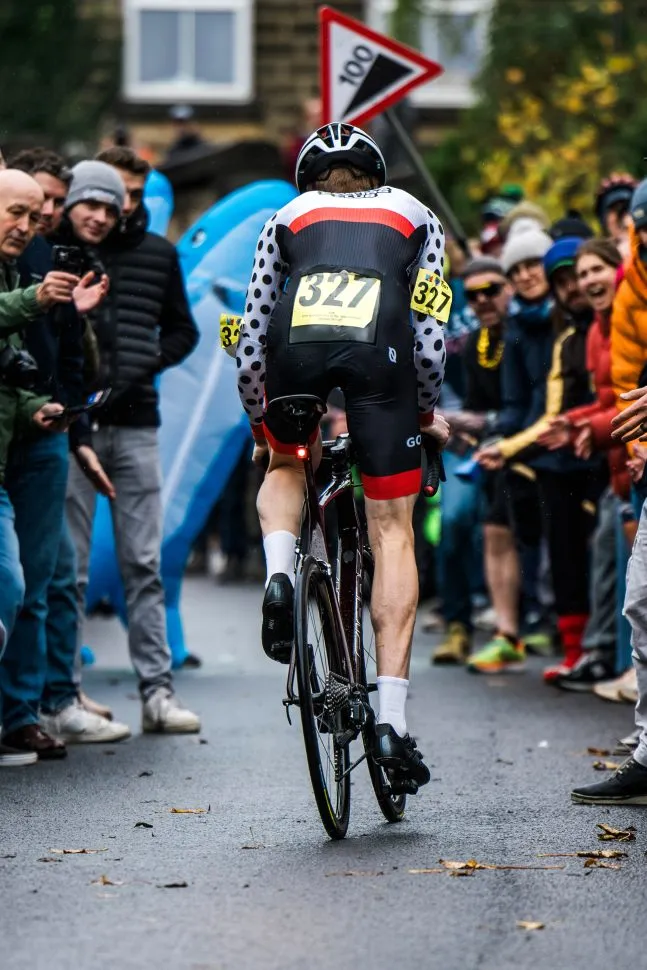
On top of this, you enter a supportive, inclusive, like-minded and light-hearted community for a frenetic two months. The fast racers are as welcoming as the slower ones, and once you’ve chatted to someone once, they’ll remember you, whether you next meet the following weekend or year. And Nationals stands apart and the experience of riding it is a draw in itself. The cliché that it’s the closest you or I will get to Tour de France-level support is true. Both the ricocheting roars from a tunnel of supporters or a lone shout of your name send adrenaline coursing through you, a sensation heightened by the delirium of discomfort and oxygen deficit. Flashbacks will bring me out in goosebumps for days.
With some regret, I won’t be racing next year’s championships, rumoured to be on Porlock Toll Road. So why don’t you take my spot in Somerset? Wherever you finish, you’ll enjoy the route and the supporters will make those Alpine-style switchbacks feel like Alpe d’Huez.
Jack Evans came 86th on Bank Road, with a time of 2min 58.9sec. Far from mediocre in our eyes.
