
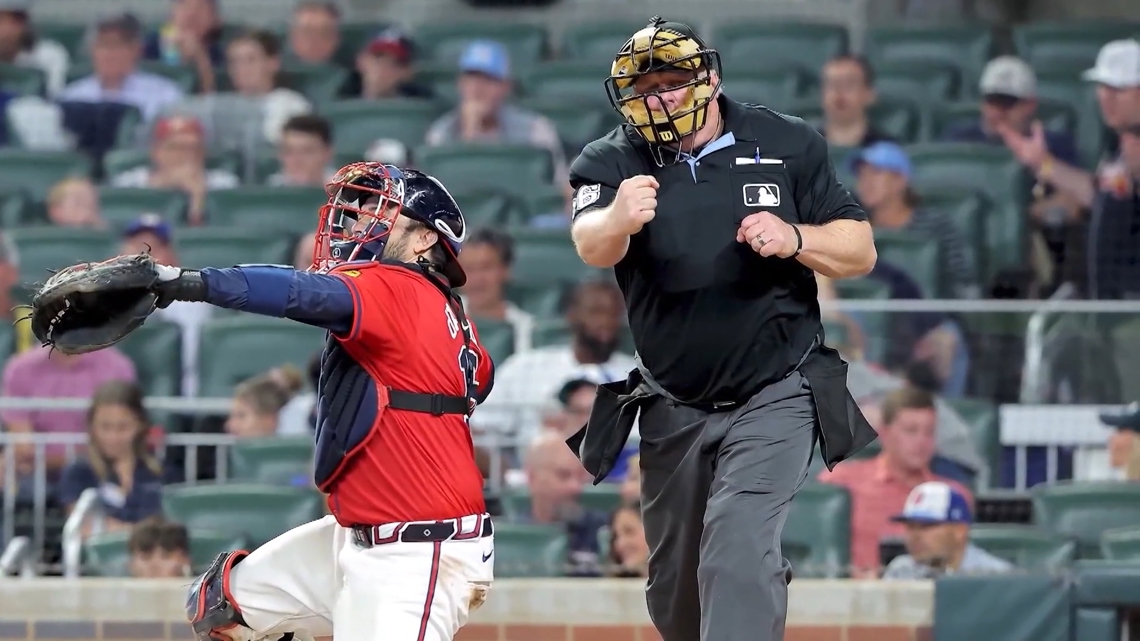
The age-old tradition of arguing balls and strikes may become a lost art, but the goal is to eliminate those frustrating moments when a call is wrong.
SEATTLE — Next year at T-Mobile Park, watching the Mariners will look a little different.
Major League Baseball (MLB) is rolling out an automated ball-strike challenge system.
Here’s how it works: When a batter, pitcher or catcher thinks the home plate umpire got it wrong, they can challenge the call by simply tapping their head. Within seconds, a series of cameras around the field analyzes exactly where the pitch crossed the plate in relation to the strike zone. The result pops up on the big screen for everyone to see.
“I think it’s going to add a really exciting part of the game to fans watching in the stadium, but also on TV,” broadcaster for the Tacoma Rainiers, Andy Helwig, said.
Helwig has watched the system evolve over the past couple of seasons as it was tested in the minors.
“There’s some palpable tension when that challenge is called, especially in big spots of the game,” Helwig said.
The technology looks almost video game-like, displaying a 3D rendering of the pitch path that can show whether a call was right — or just fractionally off.
“When the player challenges, everybody’s going to find out in real time,” Helwig said. “So in T-Mobile Park, it’ll be on that video board there. And so when the player starts to challenge, everybody on the field and in the stands is going to turn around and look at that video board, and they’re all going to find out together at the same time.”
Starting next spring, the challenge system will be used at every major league ballpark during the regular season. MLB already tested it during spring training and this year’s All-Star Game.
The system gives each team a limited number of challenges. If you get them right, you keep them but lose two and you’re done for the game.
The age-old tradition of arguing balls and strikes may become a lost art, but the goal is to eliminate those frustrating moments when the ump clearly got it wrong — without getting rid of umpires altogether.