
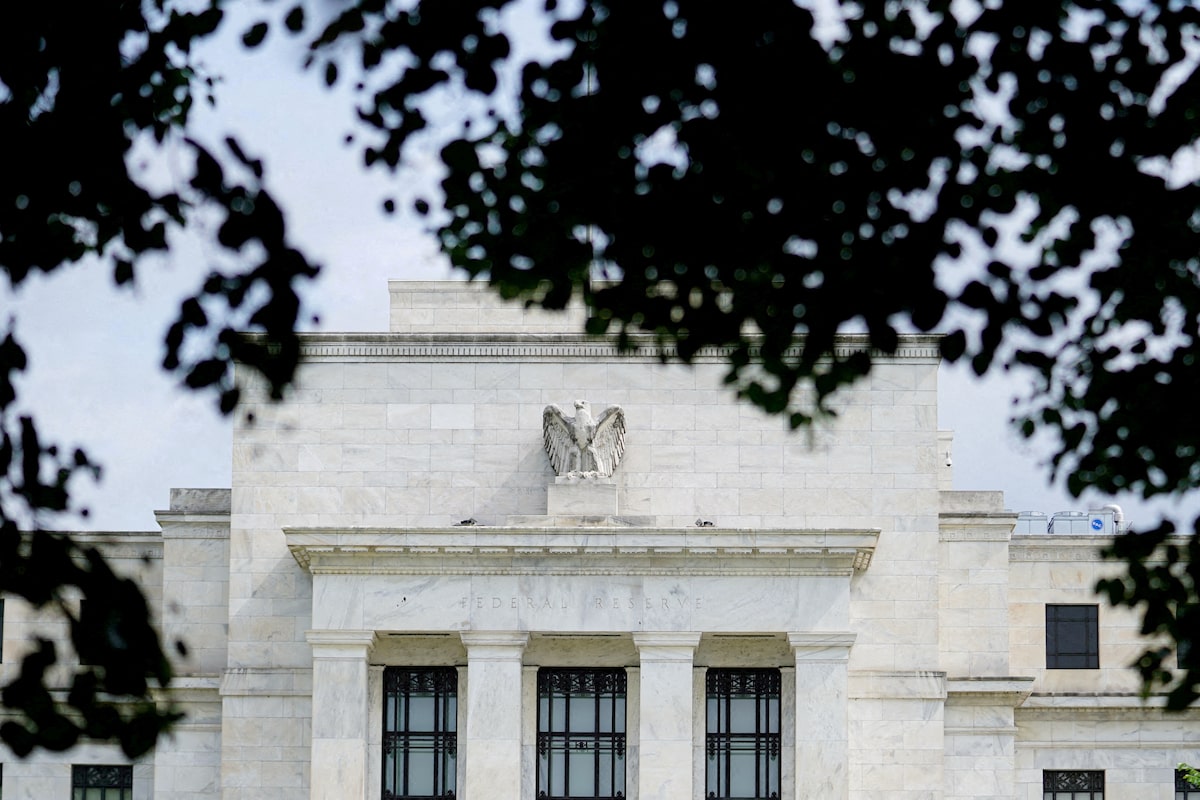
The Marriner S. Eccles Federal Reserve Board’s building in Washington, D.C. The Fed lowered its policy rate by quarter of a percentage point on Wednesday.Sarah Silbiger/Reuters
The U.S. central bank should not have cut interest rates this week and should not do so again in December, Dallas Federal Reserve President Lorie Logan said on Friday, citing a “balanced” labour market in no immediate need of support and inflation that looks likely to stay above policy-makers’ 2 per cent goal for too long.
“This economic outlook didn’t call for cutting rates,” Logan said in remarks prepared for delivery to a Dallas Fed banking conference. “I did not see a need to cut rates this week. And I’d find it difficult to cut rates again in December unless there is clear evidence that inflation will fall faster than expected or that the labour market will cool more rapidly.”
Logan’s remarks follow the Fed’s decision on Wednesday to lower its policy rate for a second time this year by a quarter of a percentage point to what is now a range of 3.75 to 4.00 per cent. Fed Chair Jerome Powell said the move was aimed at preventing the labour market from slowing further.
Another rate cut in December, he said, is not a foregone conclusion, particularly given the lack of official economic data including measures of inflation and unemployment while the federal government shutdown continues.
Logan, who does not have a vote on the Fed’s policy-setting committee this year, said that private-sector data, state-level unemployment claims, and the Fed’s own network of business and community contacts do give the central bank visibility into the economy, and the picture is far from troubling.
Federal Reserve Bank of Dallas President Lorie Logan speaks with students at the University of Texas on Oct. 2.Ann Saphir/Reuters
Consumer spending has slowed but still exceeds the longer-run trend; stock-market gains are fuelling demand from wealthier households; large companies are “enthusiastically” putting money into artificial intelligence and data centres; lower-income households and smaller companies are faring less well but still are stable, she said.
“The risks to the labour market do lie mainly to the downside,” Logan said, adding that she has a close eye on recent layoff announcements, and noting that a sudden drop in the stock market and a longer-than-expected government shutdown could pose risks to spending and economic activity. “The remaining risks to employment are ones we can monitor closely and respond to if they are becoming more likely to materialize, not ones that currently warrant further pre-emptive action.”
Opinion: Why the Fed may pause in December: the cuts don’t work
Meanwhile, she said, inflation – though not at an emergency level – is still too high and too slow to return to the Fed’s 2 per cent goal. “Our obligation to the public is to deliver on this commitment,” she said.
Logan said she supported the Fed’s decision this week to stop shrinking its balance sheet, saying that elevated money market rates show the balance sheet is much closer to its normal size. Indeed, she said, if the recent rise in rates on overnight repurchase agreements for Treasuries proves not to be temporary, the Fed will need to restart asset purchases to keep bank reserves ample.
She reiterated her view that the Fed should stop targeting the fed funds rate, an outdated target in her view, and should move to targeting a repo rate like the tri-party general collateral rate.