
Updated October 31, 2025 02:40PM
The high-profile doping case this week involving Oeir Lazkano is putting the athlete’s biological passport back into the headlines.
Lazkano is facing a two-year racing ban and has been provisionally suspended by the UCI for “abnormalities” in his biological passport during a three-year period from 2022-2024.
The Spanish star so far has not commented on the case, but Team Movistar — where he raced during that period — and Red Bull-Bora-Hansgrohe — where he was contracted since 2025 — have both made statements that provide an insight into how one of cycling’s most effective anti-doping tools is being used today in the elite men’s peloton.
Red Bull-Bora-Hansgrohe — which signed the 24-year-old Spanish rider to join in 2025 — said he’s been fired.
“We can confirm that Oier Lazkano will no longer be part of our team. This is due to the UCI’s decision to provisionally suspend him. The matter concerns the 2022–24 seasons, a period prior to his joining our team,” read a statement Friday from Red Bull-Bora-Hansgrohe.
The budding super-team didn’t take long to remove Lazkano from its website. Links to his rider profile and content about him have been removed as of Friday morning.
Unlike in the past, teams today rarely defend a rider when an anti-doping violation makes the headlines.
UCI confirms likely doping
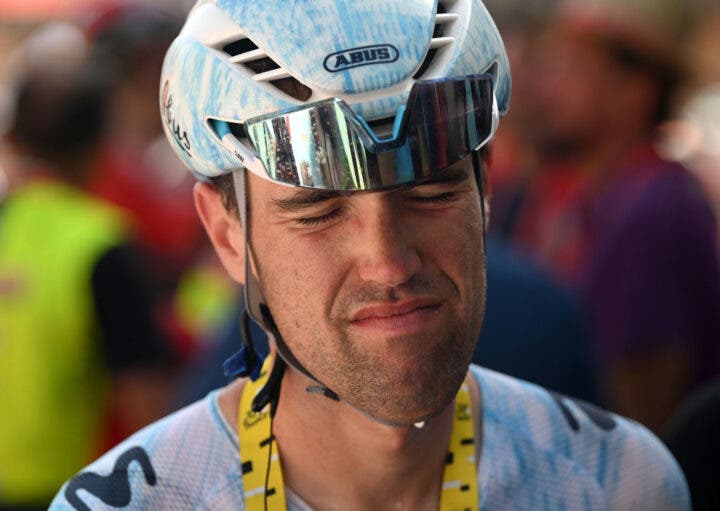 Oier Lazkano, shown here in 2024, has been provisionally suspended by the UCI. (Photo: Dario Belingheri/Getty Images)
Eyes turned naturally to Team Movistar, where Lazkano was contracted during the three years of the alleged biological passport anomalies.
In a telling statement released Friday, the team shared the full communication from the UCI, which typically is very guarded with its public statements on doping cases for fear of legal blowback.
Here is the full UCI text sent to Team Movistar:
“The Union Cycliste Internationale (UCI) hereby informs you that the UCI asserts that the Spanish rider, Mr. Oier Lazkano Lopez, has committed an Anti-Doping Rule Violation (ADRV) for Use of a Prohibited Substance and/or Prohibited Method under Article 2.2 of the UCI Anti-Doping Rules (UCI ADR). The assertion is grounded on the unanimous opinion rendered by a panel of three independent scientific experts (Expert Panel) on 23 October 2025 according to which the hematological profile composed of samples provided by the Rider between 7 January 2020 to 30 December 2024 establishes that:
“It is highly likely that a prohibited substance or prohibited method has been used and that it is unlikely that the passport is the result of any other cause.
“The Expert Panel reached their conclusion after the review of the Rider’s Athlete Biological Passport (ABP) as well as the explanation and supporting documentation provided by the Rider. Please note that this notice is sent to you as Mr. Lazkano Lopez was contracted to your Team at the time of the relevant offences identified in his ABP (i.e. 2022, 2023 and 2024).”
That confirms that anti-doping controls picked up what they believe is a banned substance or a prohibited method in the passport controls.
A second part of the message reveals that the UCI did not share the information with the team due to legal restraints.
Movistar continued to race Lazkano across the racing calendar even if the UCI had the rider on its radar.
“At this stage and until this notification, the UCI had to keep the matter confidential beyond the Anti-Doping Organizations as per the applicable regulations.
“After review of the Rider’s explanation and supporting documentation, the Expert Panel rendered a unanimous opinion confirming its previous assessment.
“The Rider was informed by letter of today that the ADRV is asserted pursuant to the UCI ADR.”
Team Movistar says it knew nothing
 Movistar officials said they knew nothing about it. (Photo: Tim de Waele/Getty Images)
Movistar team officials released a statement Friday, insisting that it knew nothing of the case until Thursday’s UCI press release.
The team, which also said it carried internal health controls along with the anti-doping controls at races and for surprise checks, said it found nothing irregular in Lazkano’s levels.
“During the three seasons of contractual relationship with Mr. Lazkano all the controls to which he was subjected by the different national and international organizations, as well as internal to the team itself, yielded a negative result,” a team statement read Friday. “By virtue of this, it was materially impossible to know, or even intuit, any anomaly such as the one now presented in the procedure opened by the International Cycling Union.”
After joining Red Bull-Bora-Hansgrohe this season, Lazkano did not race since Paris-Roubaix in April.
There was growing suspicion about why Lazkano was not racing without a public explanation of an injury or another kind of setback.
Red Bull officials did not reveal if they were told by the UCI that Lazkano was under the microscope.
Bio passport as a weapon in anti-doping
 The passport has had a rocky road since its inception in 2008. (Photo by ANDREJ IVANOV/AFP via Getty Images)
The case against Lazkano is the highest-profile case against a WorldTour-level rider in what appears to be a revival in the UCI chasing would-be cheaters with the Athlete Biological Passport (ABP).
The ABP, launched by WADA in 2008, changed the doping game by tracking an athlete’s markers instead of chasing specific drugs.
It builds a long-term blood and steroid profile for each rider, flagging suspicious swings that suggest EPO use, transfusions, or other manipulations.
The UCI was quick to adopt the program and even began prosecuting cases, but it quickly ran into legal speed bumps. The Court of Arbitration for Sport, cycling’s Supreme Court of sorts, upheld the ABP to early legal challenges.
The biological passport is viewed as an additional tool in the anti-doping arsenal, but not one without its limitations.
Unlike an anti-doping violation — which is a clear yes or no presence of a banned substance in a twice-tested sample — the biological passport is based on the opinion of a three-person panel.
Because cases were often litigated, the UCI also used the ABP as a data source to target test suspicious riders who often came up positive later for banned substances.
Are teams pulling back from the biological passport?
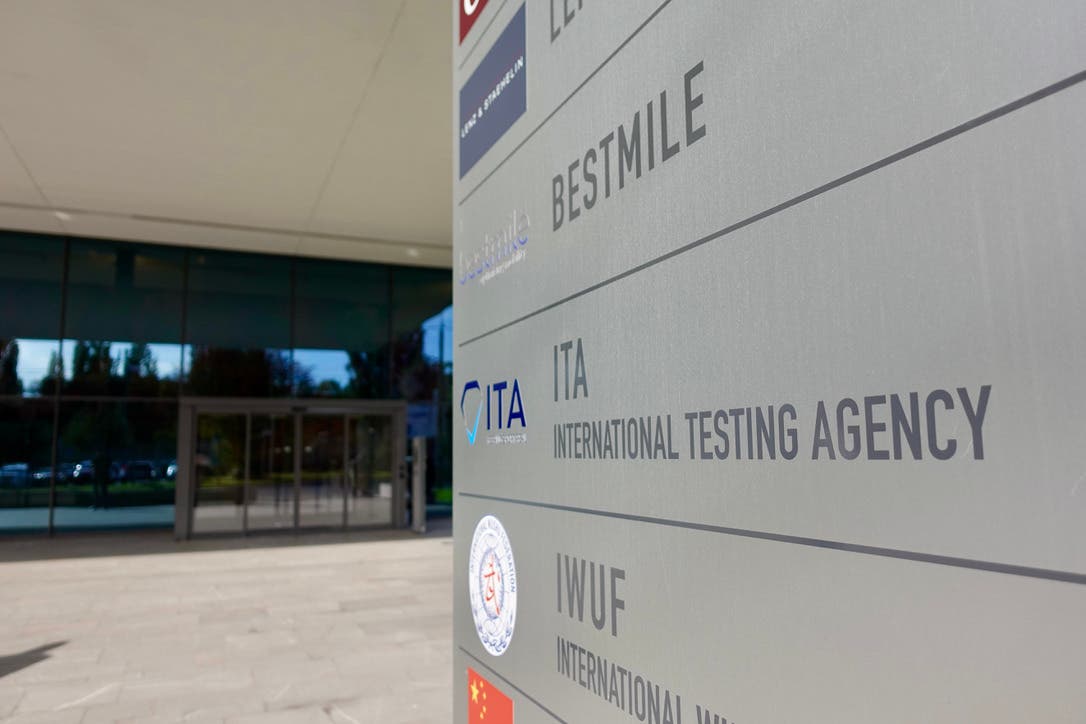 Cycling’s anti-doping protocols are now linked with the International Testing Agency since January 2021. (Getty Images/Velo)
Another plus is that teams would regularly check an athlete’s biological passport before signing them to contracts.
One source, however, told Velo this week that many teams have stopped checking bio passport data before closing deals.
Under the rules, a rider must sign off before allowing a team or anyone else access to their ABP data.
That appears to be happening less, according to the Velo source, who has been involved in deals worth millions of dollars for major riders without the passport data being checked by teams before signing.
Does that mean teams no longer view the ABP information as relevant, or perhaps there is less concern today about what’s perceived as a cleaner peloton?
Many will be watching the Lazkano case to see how it plays out and if the UCI will continue to push for more bans using one of cycling’s most effective but controversial anti-doping tools.