
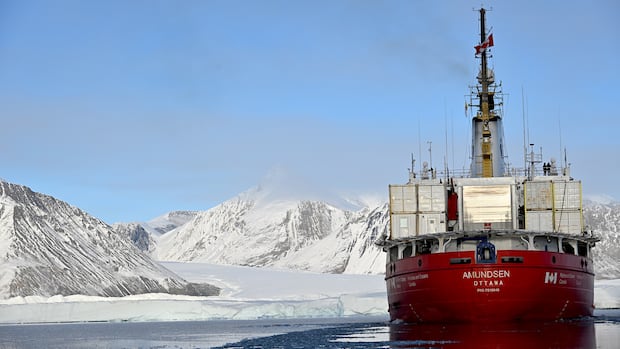
A University of New Brunswick researcher investigating how declining sea ice affects the entire ecosystem has recently returned from her first scientific expedition to the Queen Elizabeth Islands.
The Queen Elizabeth Islands are the northernmost group of islands in the Canadian Arctic Archipelago, which is home to about 14 per cent of the world’s glaciers and ice caps.
Audrey Limoges was on the Canadian Coast Guard icebreaker Amundsen, making its first trip to these islands. Limoges has been going to the Arctic since 2013 for research purposes.
She believes the changing sea ice in the Arctic is something everyone should care about.
“What is happening in the North will actually and is already impacting the system, the Earth system, as a whole,” said Limoges, a paleontology professor at UNB.
“What is happening in the North will actually and is already impacting the system, the Earth system, as a whole,” said Limoges, a paleontology professor at UNB.
Sea ice, she said, is frozen water but is different from glaciers or ice sheets.
WATCH | Audrey Limoges explains her research: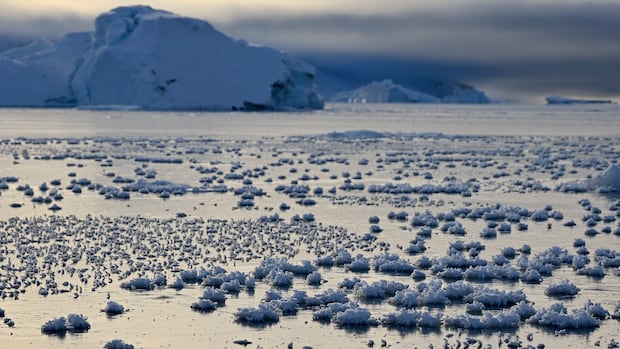
Journey to the Arctic: UNB researcher returns from rare scientific expedition
Audrey Limoges embarked in early September on a research expedition to the Queen Elizabeth Islands, the northernmost group of islands in the Canadian Arctic Archipelago.
The surface layer of the Arctic Ocean that freezes every year is called first-year sea ice. In the past, sea ice had a better chance of surviving the summer, becoming known as multi-year sea ice.
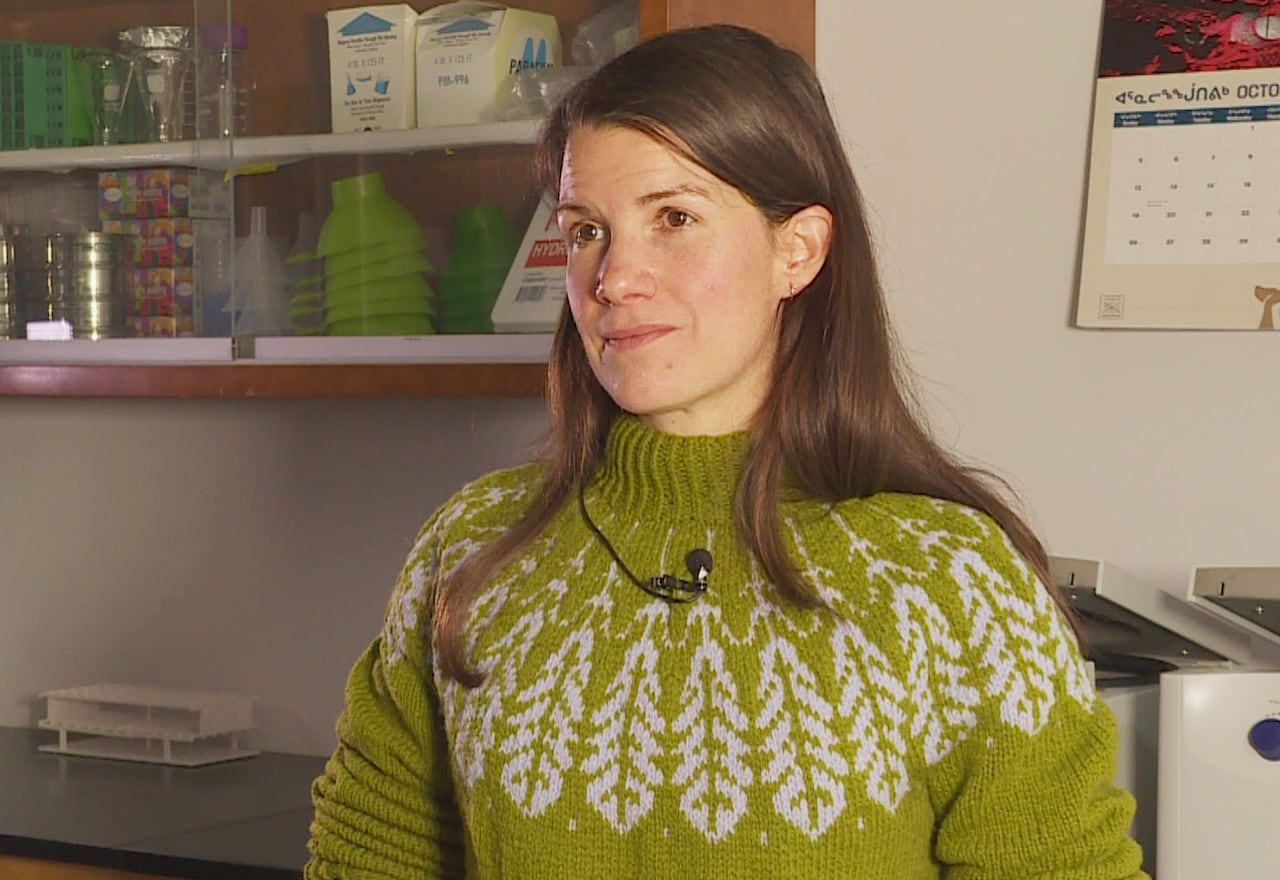 Audrey Limoges, a paleontology professor at UNB, recently went to the Queen Elizabeth Islands on the icebreaker Amundsen and helped with mapping the seabed. (Ben Ford/CBC)
But now, because of the warming climate, sea ice in most regions of the Arctic is first-year only, Limoges said.
Her research specifically focuses on the influence of sea ice on phytoplankton, also known as micro-algae, a key part of the ocean ecosystem.
Sea ice is “actually full of brines, full of channels, full of pores in which organisms can live,” Limoges said.
“Those algae are also known to contain a lot of lipids, so it means that they are very nutritious for organisms. And there [are] also marine mammals, there is also the iconic polar bear, who needs sea ice for hunting, as a platform.”
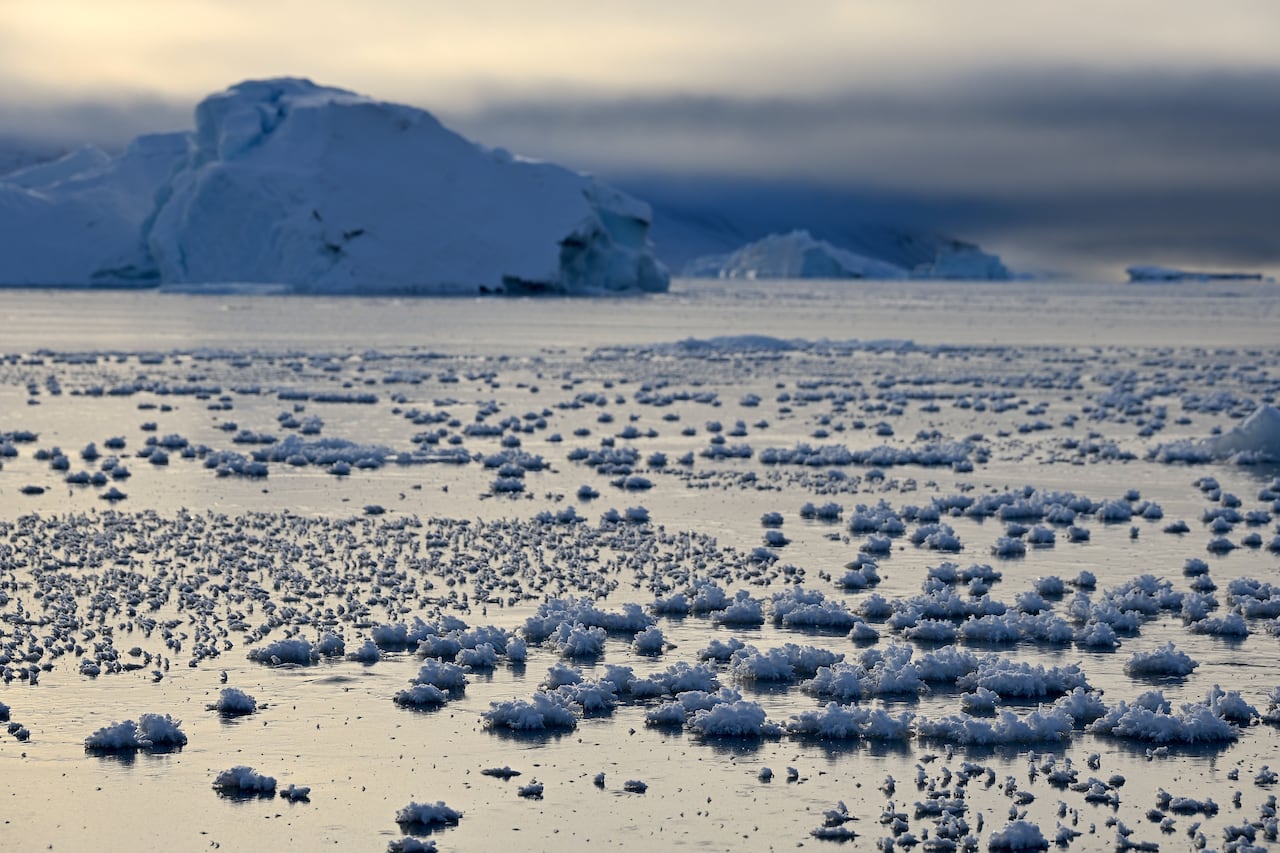 Limoges took this photo of first-year sea ice covered with delicate frost flowers while in the Canadian Arctic Archipelago. Frost flowers are crystalline structures that form as the sea ice develops. (Submitted by Audrey Limoges)
Limoges said if sea ice melts, it influences the structure of the water column, bringing in a lot of fresh water instead of salt water into the ocean, impacting ocean circulation — a major regulator of the global climate system.
This year, Limoges was part of the group with the Geological Survey of Canada responsible for mapping the seabed and collecting information about the structure of the sediment under the seabed’s surface.
“The sediment is actually full of tiny microfossils, full of molecules that have retained very key information about the ecosystem.”
The sediment also contains information about past sea-ice conditions, playing into Limoges’s research.
The research expedition this year had to happen over a very short window, 28 days in September and October.
The Queen Elizabeth sector is a challenging region because sea ice covers most of the area, said Limoges, making it only navigable for a short period.
It also hasn’t been mapped very precisely, she said, and the Amundsen was navigating in regions that haven’t been mapped.
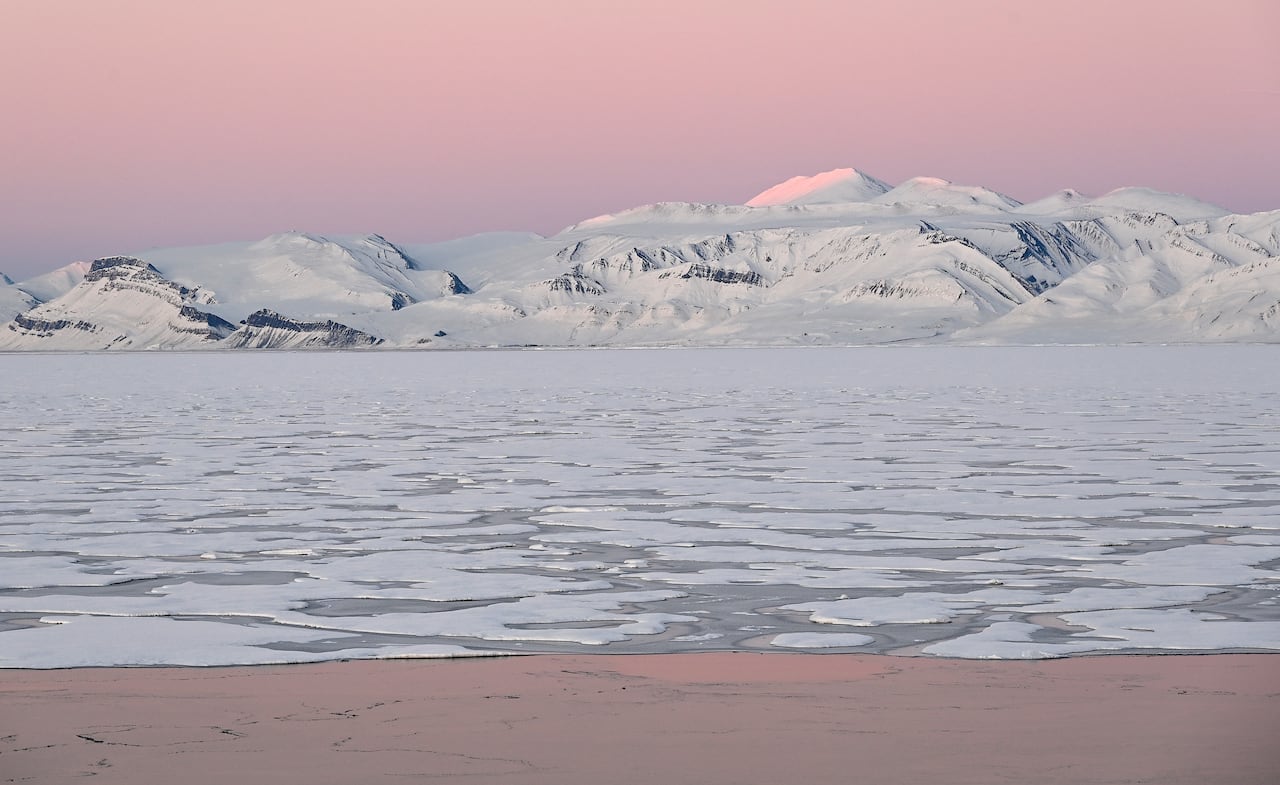 In the foreground, freshly formed sea ice gives way to slightly older young ice. Limoges says sea ice is mainly first-year in most regions of the Arctic now because of the warming climate. (Submitted by Audrey Limoges)
Because of the short trip, Limoges said, the time on the expedition had to be optimized. Research and deployments of equipment happened all week, 24 hours a day
“There is always someone working,” she said. “There is always someone sleeping as well.
“The rhythm is dictated by the stations … where we are sampling. So you could have to take your sample at 2 a.m. and then 3 p.m. You always have to be ready for when it’s your time.”
Limoges said everyone on the trip and on her team are aware of the immense privilege of being able to do research in the Canadian Arctic.
She said it’s important to acknowledge the northern communities who care for and depend on the ecosystems.
“Studying them is actually something that is not given,” Limoges said. “So we have to make sure that we also do it in a very respectful way, and I think this is what we did as a team.”