
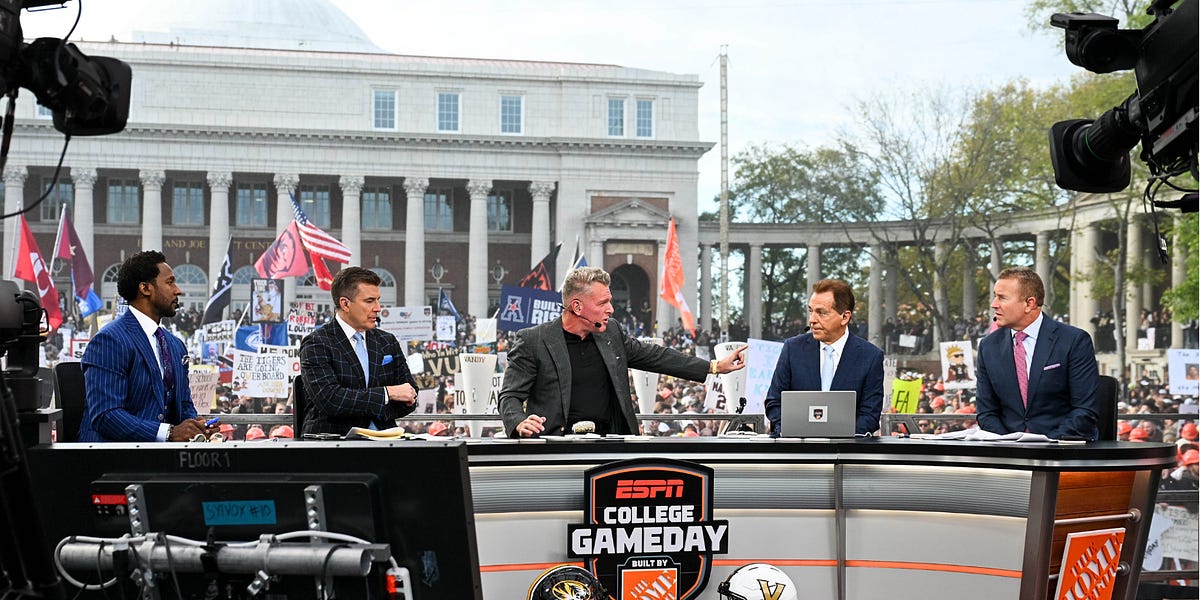
 (ESPN’s College GameDay via Carly Mackler/Getty Images)
At 11:30 pm ET on October 30, 2025 — 30 minutes before the contract officially expired — YouTube TV pulled the plug on all Disney-owned channels, leaving approximately 10 million subscribers without access to ESPN, ESPN2, ABC, SEC Network, FX, National Geographic, Disney Channel, and 14 other networks.
The timing couldn’t have been worse: ESPN was experiencing its best college football season in 16 years, with ABC averaging 7.1 million viewers per game and posting record-breaking numbers. But without access to Disney-owned networks, YouTube TV subscribers were unable to watch College Gameday and several of the weekend’s most popular college football games, including Vanderbilt at Texas, Georgia at Florida, and Oklahoma at Tennessee. Those three games alone were expected to attract more than 20 million viewers combined and millions in advertising revenue.
So why are YouTube TV and Disney sacrificing viewers and advertising revenue due to a contractual dispute? The most popular explanation (on social media, at least) is that ESPN is playing 4D chess. By holding the line against YouTube TV, sports fans had to sign up for ESPN’s new streaming service to watch this weekend’s games. Add in a strategically timed free trial, and ESPN could steal subscribers from YouTube TV.
However, that’s not what is happening here. This dispute has nothing to do with ESPN’s new streaming app, nor did it materially impact subscriber growth. Instead, this negotiation exposes a much larger shift — one that’s quietly reshaping the entire television industry. What’s really playing out between YouTube TV and Disney isn’t just a disagreement; it’s a battle over the future of live sports, cable, and how billions of dollars in media rights will be distributed for decades to come. Let me explain.