
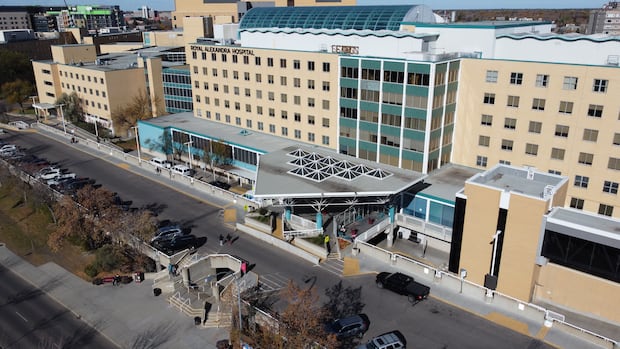
A new weapons detection system aimed at reducing violence in hospital emergency departments is set to be trialled at an Edmonton hospital and, if successful, could be rolled out across other health-care facilities in Alberta.
A request for proposal issued by Alberta Health Services in October is looking to test technology at the Royal Alexandra Hospital (RAH) emergency department as part of a two-year pilot project.
The move has been welcomed by associations and unions for health-care workers who say the move to bring more security measures to Alberta hospitals is good news for an industry that’s seen a steady rise in violence towards workers.
A survey this year from the Canadian Federation of Nurses Unions said six in 10 nurses reported experiencing violence over a one-year period.
A previous report from CFNU suggested lost-time injuries related to violence among health-care workers rose by 66 per cent between 2006 and 2015.
“This is not a new problem,” said Dr. Warren Thirsk, an emergency physician at the Royal Alexandra Hospital and president for the section of emergency physicians for the Alberta Medical Association.
Thirsk said the issue of violence in emergency departments has been on the rise for more than 25 years.
Often patients in the emergency department are dealing with disorientation due to medication, illness and sometimes dementia. Thirsk said in some circumstances that can lead people to react violently.
“So it’s understandable, but it is also something that we should do our best to prevent and mitigate and make as safe as possible for everyone who is in the emergency department.”
Pending a review, the technology could become permanent and adopted at other AHS facilities, said Kristi Bland, an AHS spokesperson.
Bland said the provincial health agency wants to reduce the number of weapons entering the hospital’s emergency department.
Bland said the Royal Alexandra Hospital was chosen because of its higher-security needs.
The Health Sciences Association of Alberta, a union representing many frontline health-care workers, also agrees that safety has been a growing concern in hospitals.
Over the past five years incidents of harassment and violence against health-care workers are on the rise, HSAA spokesperson Matt Dykstra said in an emailed response to questions.
He added that the union hears about violence against clinical staff at the RAH on a monthly basis.
“That is unacceptable in any workplace,” Dykstra said.
The request for proposal documents says selected systems must be designed to use technologies like AI and scripts — programs that automate tasks through a sequence of commands — and establish algorithms for detecting specific weapons.
The system is designed to detect weapons such as knives and firearms and will be similar to technology already used in other Canadian hospitals like the Winnipeg Health Sciences Centre and the London Health Sciences Centre in Ontario.
These types of weapons detection systems rely on sensors, cameras and an AI program trained and tested on a large data-set of weapons, to distinguish weapons from everyday items such as phones and keys.
David Harrigan, director of labour relations with the United Nurses of Alberta told CBC News the UNA has been asking for something like this since it reviewed a similar system at the Windsor Regional Hospital in Ontario.
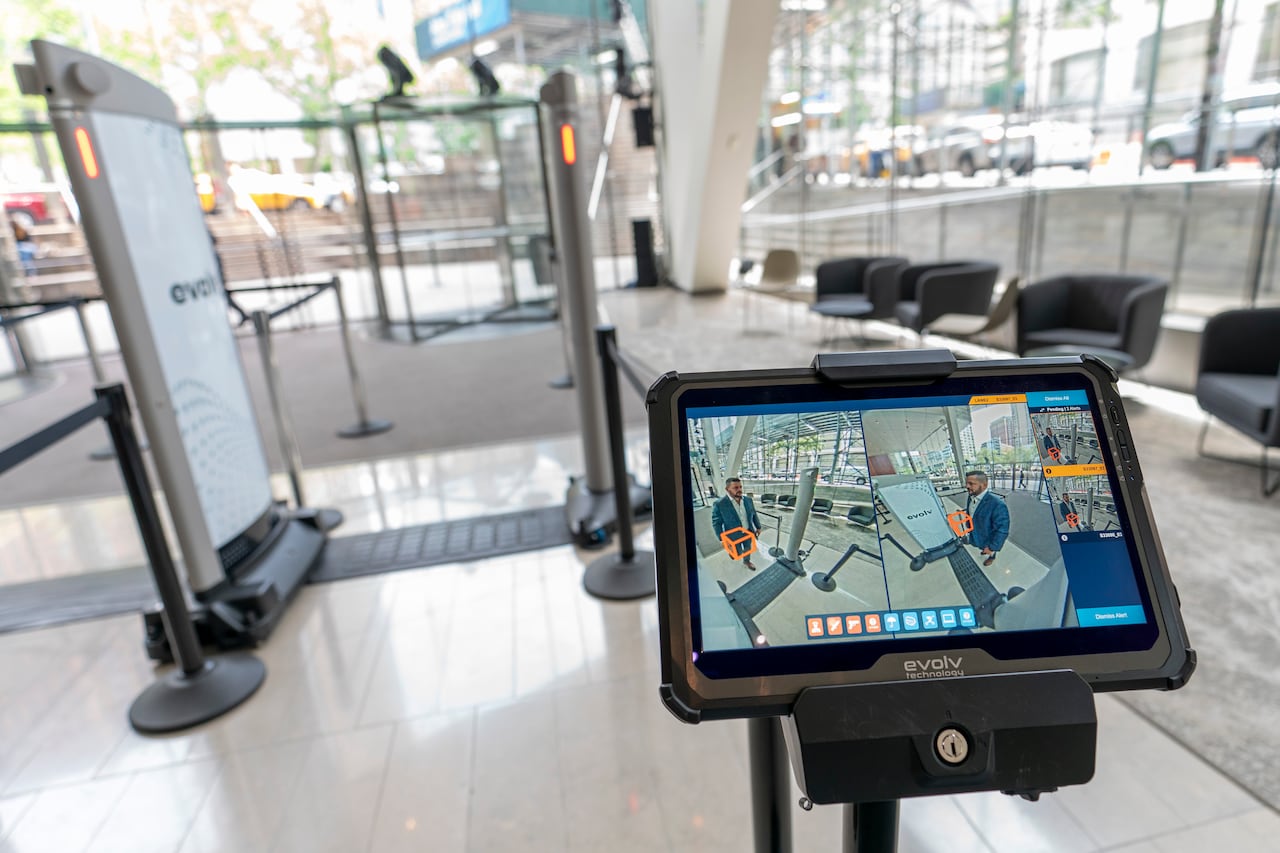 AI-powered weapons detections systems like this one, pictured in New York, are becoming commonplace at hospitals across Canada. (Mary Altaffer/AP Photo)
Windsor Regional Hospital said it has seen a decline in threats since the system was installed. In the first month the system clocked 515 threats. In two years that number dropped by more than half, down to 198 threats this past September.
Michael Broderick, manager for employee health, safety and security with WRH said the system helps give staff more assurance on safety and he credits it with helping lower staff vacancy rates.
“Given the demands of a busy emergency department, having one less thing to worry about with respect to their safety is a welcome safety layer,” Broderick said.
However, some aspects of the technology’s efficacy have come into question due to increased rates of false-positives.
When asked about false positives, Broderick said the system at WRH has a slim margin of error, and he’d rather the system err on the side of caution. He said when the alarm goes off, it gives security the chance to investigate.
Currently the emergency department at the RAH only verbally screens for weapons. Bland said while verbal screening has reduced the number of weapons, not all patients declare.
She said the technology would help enhance the screening process.
Thirsk said the biggest benefit of the system is just flagging potential threats.
“It’s one of the few proactive things we can actually do ahead of violence happening.”