
Prime Tire Newsletter | This is The Athletic’s twice-weekly F1 newsletter. Sign up here to receive Prime Tire directly in your inbox on Tuesday and Friday.
Welcome back to Prime Tire, where today I’m thoroughly looking forward to this weekend’s Sao Paulo Brazilian Grand Prix being as wet as forecast.
There’s just something about Interlagos in the rain: all those crashes in 2003, Lewis Hamilton dramatically denying Felipe Massa the 2008 title, Max Verstappen’s wet-weather masterclasses in 2016 and 2024.
He couldn’t do it again, could he? Of course he could, he’s Max Verstappen …
I’m Alex, and Madeline Coleman will be along later.
The Double Points MistakeNASCAR’s season ending evokes F1 2014
Formula One has arrived on the verge of a “winner takes all” finale thanks to the season’s two main narratives combining.
A perfect season from either McLaren driver would’ve wrapped the championship up already. But they’ve both made many errors. And Verstappen has brilliantly got himself back into contention with Red Bull’s upgraded car.
But fans don’t like it when motorsport championships try and achieve such a showdown artificially. NASCAR has provided a handy reminder only this past week.
In the final example of its contrived one-race championship format, long-time title favorite Denny Hamlin was agonizingly denied a maiden Cup crown.
His dream was dashed, yet again. And he’s done everything right.
As Jeff Gluck eloquently pointed out in this column on what unfolded at Phoenix Raceway on Sunday, the result “found a way to make everyone feel bad about a worthy season champion” in Kyle Larson.
Here’s another excellent point from Jeff: “Former (NASCAR) CEO Brian France’s misguided thirst for (MLB) ‘Game 7 moments’ has backfired spectacularly. NASCAR’s television viewership for many playoff races sank to record lows as fans became exhausted by a forced gimmick.”
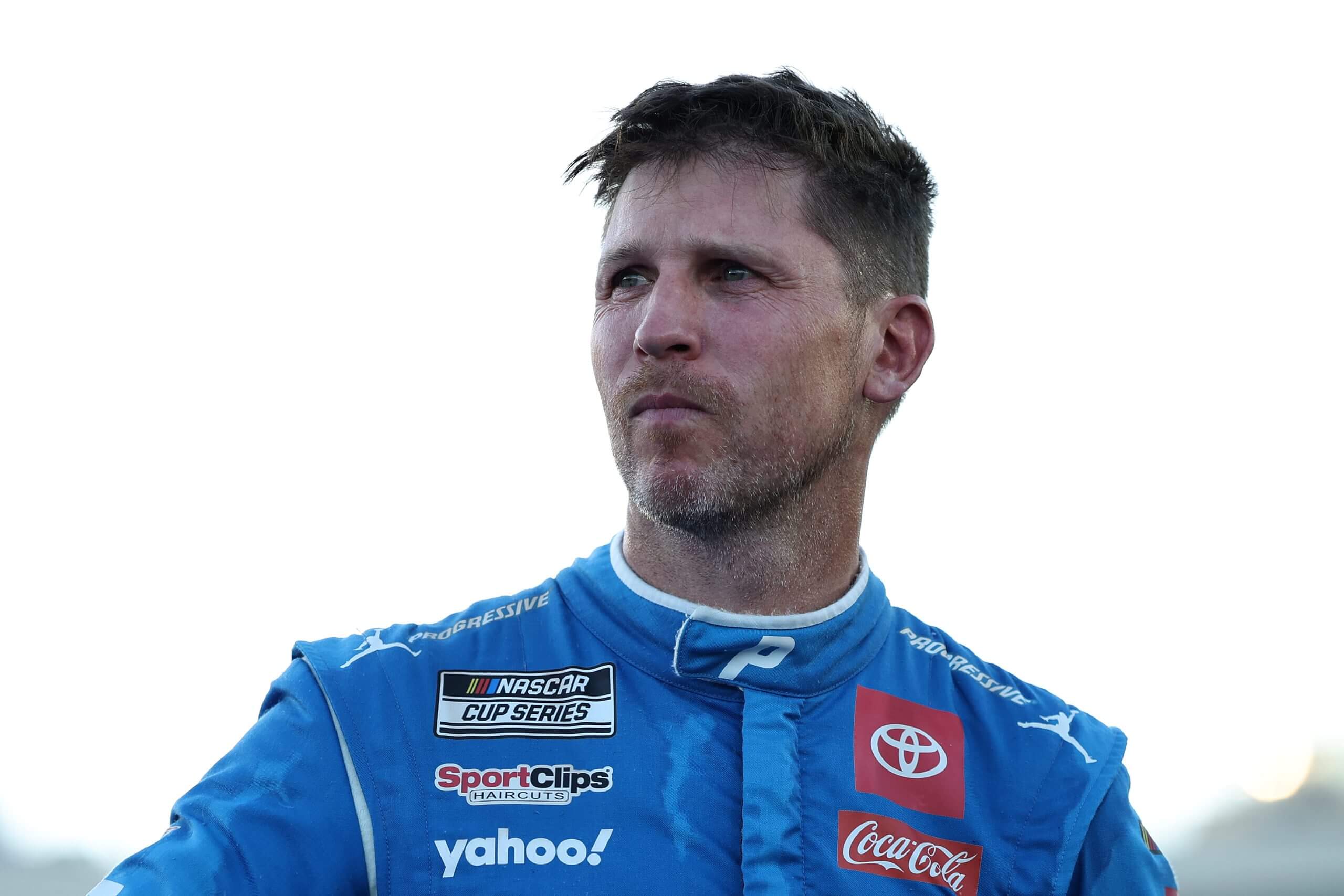
Denny Hamlin immediately after the 2025 NASCAR season finale (James Gilbert/Getty Images)
And this got me thinking … all the way back to 2014, when F1 tried something similar.
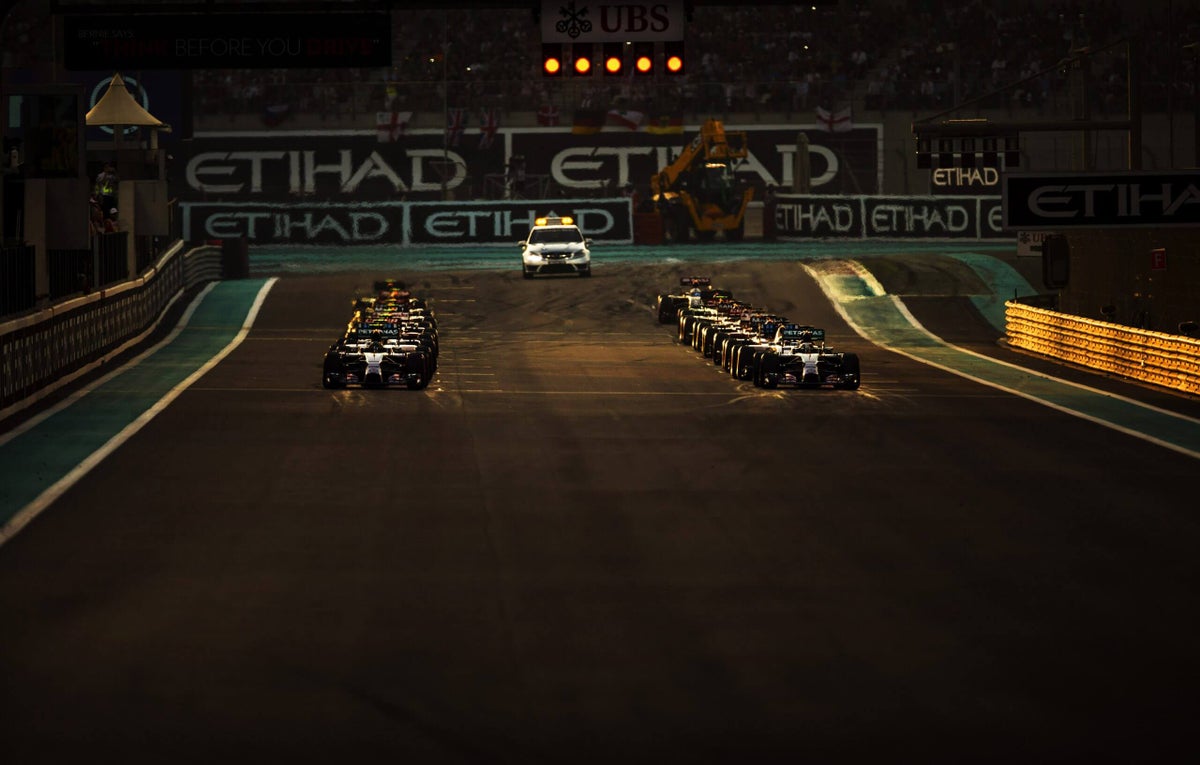
In that case, rather than a season-ending decider where four drivers could take the title if they beat the rest around a regular race, F1 chose to make the season finale in Abu Dhabi pay out twice the points as the other 18 races held that year.
So 50 points for first, 36 for second and so on.
It was a direct reaction to the 2013 season — where Red Bull’s Sebastian Vettel wrapped up the title with three races left, two years after he’d done it with four races remaining in 2011. Either side of these seasons, the 2010 and 2012 campaigns went to nail-bitingly close ends in Abu Dhabi.
Fan reaction was near universal. They despised the double points plan.
F1 had it differently to NASCAR. Early season successes would boost a driver around the double-points pay off, while the reverse would keep them from competing for the title prize even with the late points bonanza in play.
But this was a time where car reliability was nothing like it is in 2025 — in what was then the first year of the V6 turbo hybrid engine technology.
There was therefore a very real possibility the otherwise memorable battle between title protagonists and Mercedes drivers Lewis Hamilton and Nico Rosberg would be blighted by a mechanical malady.
Hamilton had worked his way to a 17-point lead heading to Abu Dhabi — a gap that would’ve ensured the title be decided only on the final day anyway, even with F1’s regular points rules staying in place.
Other than being regularly outpaced in qualifying that year, Hamilton had the measure of Rosberg when it mattered in the races and he’d long looked a worthy champion.
But, like Hamlin, he could still lose a title through no fault of his own, right at the death.
In the end, it was Rosberg who suffered an engine energy recovery system issue while running second, after Hamilton had blasted by his pole-sitting teammate at Abu Dhabi’s Turn 1. Hamilton was crowned (with the second of his seven F1 world titles) and the double points rule was then hurriedly dropped, not to be repeated in 2015 or onward.
F1 realized it’d made a mistake.
What makes the 2025 title fight now so compelling is that it’s a rare story in F1. This is the first time since 2010 that more than two drivers are even in the hunt for the ultimate prize.
As Jeff noted, “Actual Game 7 moments, like the one we saw in the World Series on Saturday night, are special because they don’t happen every year.”
Hear, hear.
Inside the Paddock with Madeline ColemanWhy Brazil’s latest F1 star loves sim racing
One of the reasons why Gabriel Bortoleto loves motorsport is because of the required perfection needed to succeed in this complex sport. But it’s also the adrenaline rush that comes with it and how drivers “are always risking our lives gives me a little bit of an emotion.”
Ahead of his first home F1 race in Brazil, he described the feeling of being in the cockpit as “the only moment in my life that I’m able to be fully focused on and my mind so concentrated that everything that is around disappears.”
F1 is one of the rare sports where you (largely) can’t practice where you compete. With real-world testing so restricted these days, the majority of practice for the drivers takes place on simulators.
“Sim racing is extremely important,” Bortoleto told The Athletic in an interview. “It’s becoming something that in 10-15 years, there will be no drivers in the grid that are not doing it. I think it’s a generational shift.”
Sim racing wasn’t a hobby Bortoleto picked up because it was critical for his career development, though he said it does help him maximize his results. Rather it was something he “always loved to do because it was racing,” and it could fit around his real-life schedule, day or night.
Bortoleto is part of Team Redline, Verstappen’s sim racing team, which he joined in 2023. Luke Browning, a Williams junior driver, told Bortoleto to join its Discord server one day, and different members of Team Redline were on the feed. From there, it became part of Bortoleto’s routine. While he does “more free play,” in the online racing world Bortoleto is “scheduling more what I want to drive, and when do I want to drive — what races I want to do.”
Keep an eye out for our profile on Bortoleto and his journey to F1 that’ll run later this week ahead of his home race at Interlagos.
How F1 Team Radio Works …… and why Fernando Alonso hates it
So far this week, I’ve spent more time delving into the subject of F1 broadcasting following my visit to F1’s Media and Technology Center near London last week for last Friday’s edition of PT.
Specifically, to explain how the championship selects what radio messages you hear played out between drivers and teams when the cars are on track.
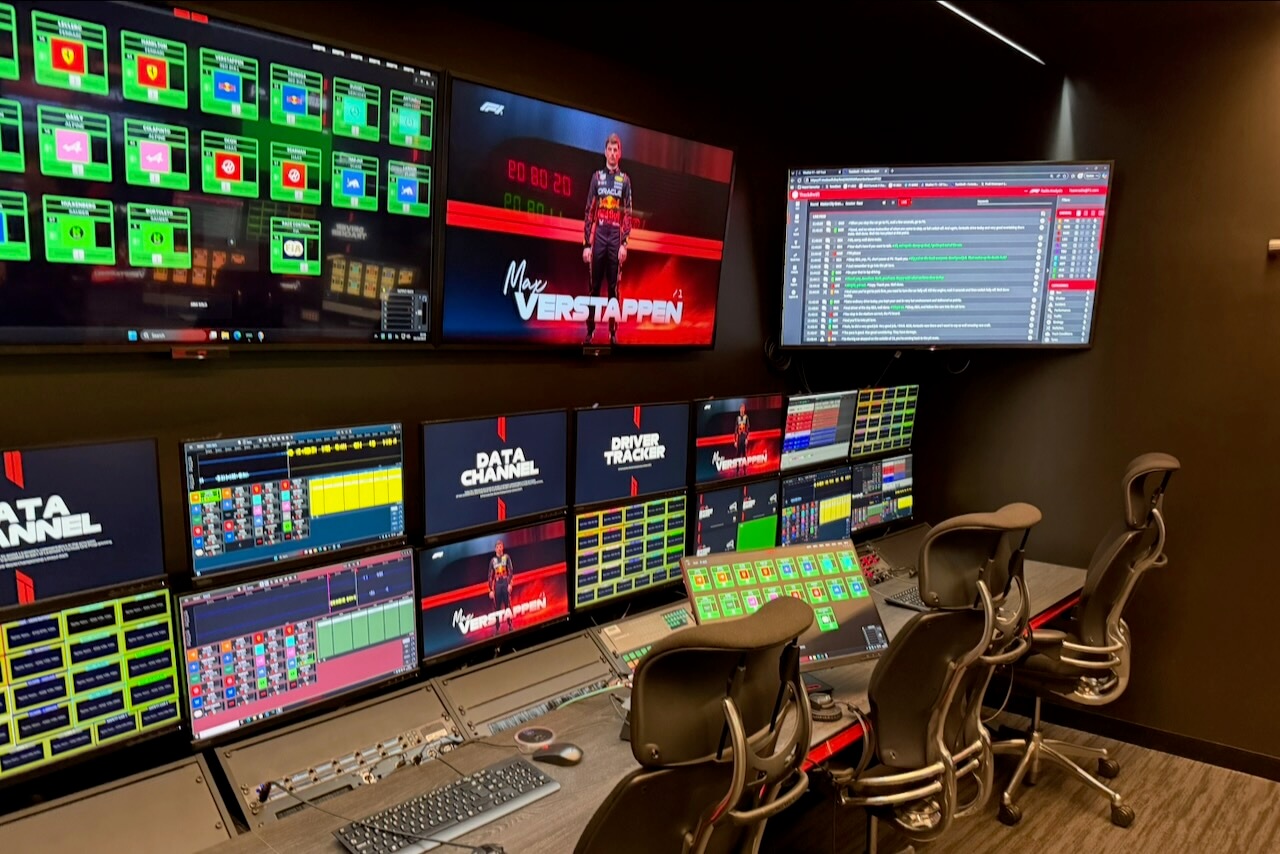
The team radio editing suite at F1’s Media and Technology Centre (Alex Kalinauckas/The Athletic)
It’s been a controversial topic of late in F1, with Fernando Alonso even sending a broadside at this part of F1’s TV offering while racing two cars at last month’s Mexico City GP. F1 drivers, honestly …
If you want to hear how a team of eight editors and producers can get a message uttered at 200 mph from a track around the world played out in your living room in just 15 seconds, head here.
Outside the points
🤷♂️ Atlassian Williams Racing decided it would be called Atlassian Williams F1 Team for 2026 and felt the need to send out a press release about it on Monday.
👏 Bringing back Williams’ original logo is a nice touch, to be fair.
📫 Love Prime Tire? Check out The Athletic’s other newsletters.