
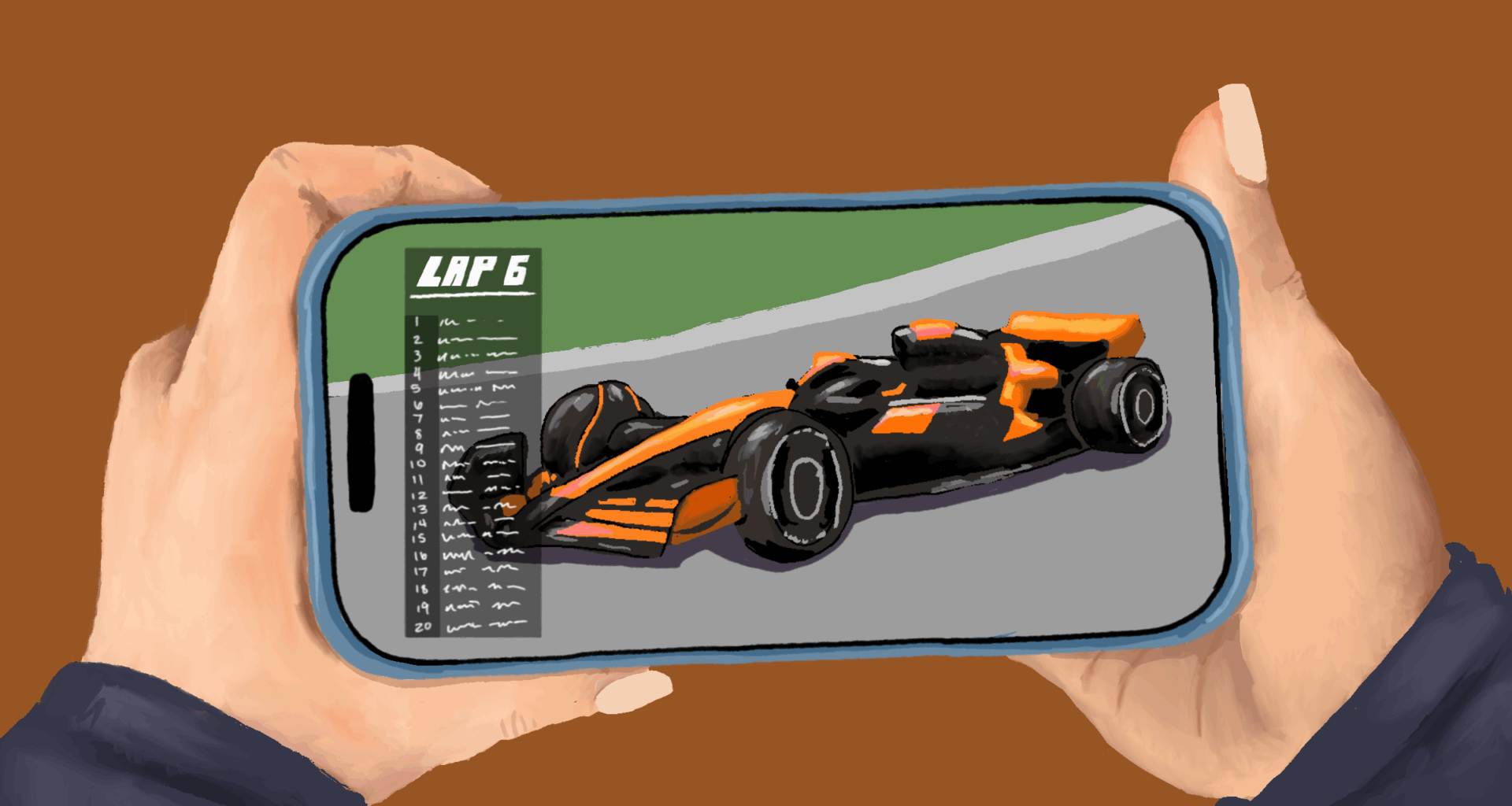
In the past five years since I started watching Formula 1, the most surprising thing I’ve seen hasn’t been drivers Lewis Hamilton and Max Verstappen’s exciting 2021 championship battle, the McLaren team’s 2024 reemergence as a title contender or even Hamilton’s move to the Ferrari team. By far, it has been the massive amount of women I encounter following the sport. Especially as a longtime football fan, I have always expected most of the people I see at sporting events or talking about sports to be men. For centuries, sports fandom has been a cultural opportunity reserved almost entirely for men, yet women are now powering a new wave of growth for F1. By decisively expanding and changing the way that the sport reaches fans, F1 has been able to dramatically expand its reach with women. These changes emphasize the business potential of female sports fans, but also prove their deserved place in sports culture.
F1 is a global racing series where drivers and teams design cutting-edge, 200+ miles per hour race cars according to a strict set of regulations, and compete in races at historic circuits and city centers all over the world. It generates billions of dollars in revenue every season, dominating all other motorsports while falling among the world’s biggest sports leagues annually. However, for its entire history, the spectacle, skill and heroism of this sport have been nearly entirely reserved for men. Women have always been severely underrepresented as crew, officials and drivers, but we often forget that this extends to fandom too. From young ages, we often don’t expect or encourage girls to become sports fans just as we do for boys. Just 10 years ago in F1, those attending races, watching broadcasts and chatting about the sport at work were mostly men.
Despite F1’s deep patriarchal roots, some began recognizing the business growth that could be found if F1 could bring in more female fans. In 2017, the American entertainment conglomerate Liberty Media completed an acquisition of F1 and quickly began a complete revitalization. Years of antiquated leadership meant that the way the sport reached fans had not evolved meaningfully for decades, especially as the previous leadership did not recognize the value of the internet and new media engagement.
Within their first year of ownership, they restructured the sports production and management, dialed up the volume of social media content, refreshed the branding and commissioned Netflix to film a documentary series following the entire 2018 season. In the years since, they have eliminated certain sexist representations of women within the sport and launched efforts to develop female driver talent. With these changes, F1’s new media team hoped to attract new fans in new ways, especially women.
In the seven seasons since the Liberty acquisition — with the exception of 2020 — F1 has had strong revenue growth. Expanding its media footprint across streaming platforms and social media has brought new fans into the sport that might not have been exposed to it otherwise. While the Netflix docuseries continues to grow every year in viewership, social media may play an even greater role in F1’s success. Besides the content on apps like YouTube, Instagram and TikTok produced by F1, teams, sponsors and drivers, popular fan-made content creates compounding returns on digital engagement. As a result, among the Gen Z fans fueling this surge, 90% have an emotional stake in race outcomes, while 70% report that they engage with F1-related content daily. Merchandise sales and TV numbers are all also experiencing strong improvements.
In 2015, only about 8% of global fans reported as female, a number that has now increased to more than 40%. This demographic has possibly been even more influential to F1’s renaissance than Gen Z, with women currently composing the majority of new fans. However, some participants, organizers and fans continue to diminish the place of women within the F1 fandom. A long-running narrative has been that many women watch F1 primarily because they find the drivers attractive. Similarly, another feeling common among many longtime fans is that the Drive to Survive docuseries — immensely popular among new fans — warps reality to make the drama and storylines of an F1 season more entertaining for viewers.
However, these narratives are reductive to the dedication and passion of F1’s female fanbase. From social media to the grandstands, women are just as passionate about both the intricate, technical aspects of the sport and its broader storylines and drama, regardless of how they first gain interest in it. At the same time, the Netflix series indeed does amplify and tweak flashy moments, just as any reality TV show would. Yet, the way that this can make this complex and expansive sport more understandable and interesting is its main strength in bringing in new fans who might not have become interested in the sport otherwise.
We all need to recognize that women can be fans that are just as passionate, devoted and knowledgeable towards the sport as men. Bringing in more female fans into sports isn’t just good business, it’s extremely conducive towards gender equality. As long as sports remain a staple of human society, supporting the presence of women both in and around them helps to strengthen their cultural and social status. Crucially, this also extends beyond women to Queer people, marginalized ethnic groups and others often shunned from sporting culture as both competitors and fans. Sports culture bears such a significant influence on society, a fact we must be mindful of.
Formula 1 remains one of the few premier sports leagues in the world focused intently on bringing women into its fanbase. Even though it has made so much progress, I urge Formula 1 and its management to keep working towards equality across fans, competitors and all other parties involved. At the same time, much of the sports world continues to disregard female fans. The governing and managing bodies of the world’s sports should push harder and harder for the inclusion of women, and embrace the power of making sports culture more accessible and welcoming. As men, we need to actively encourage ourselves to embrace the presence of female sports fans just as devoted and excited as we are.
Willem DeGood is an Opinion Analyst from Traverse City, MI who writes about American social and cultural issues. He can be reached at whdegood@umich.edu.
Related articles