
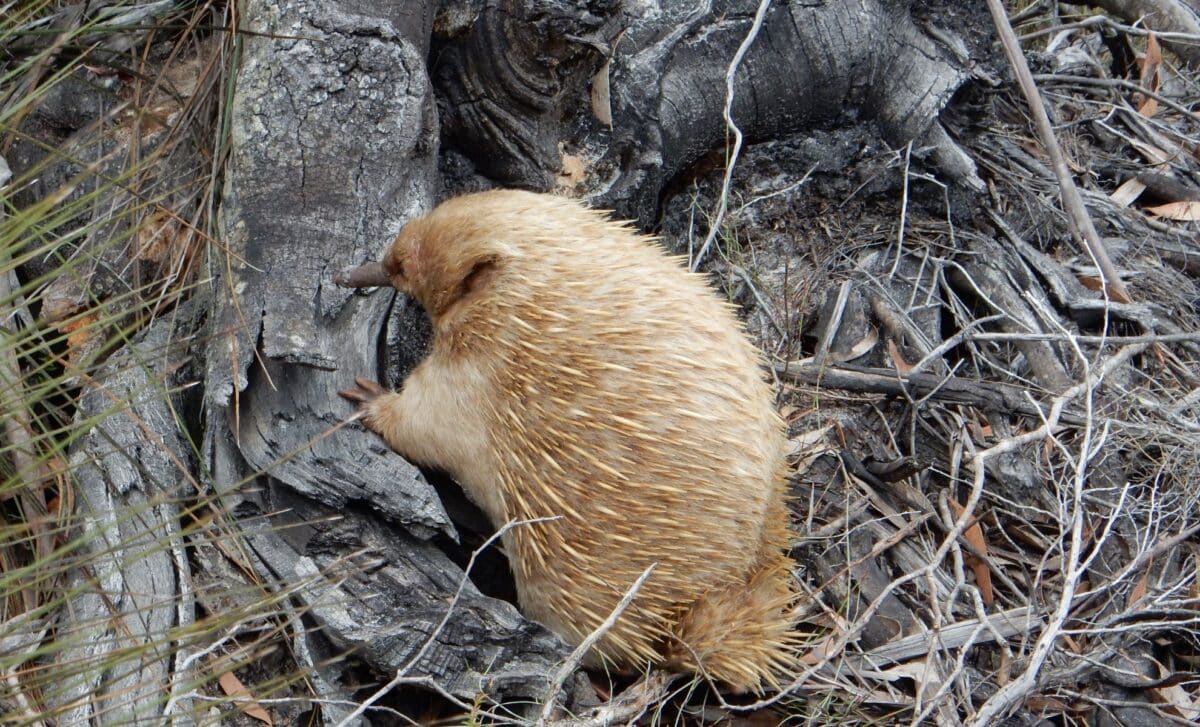
A rare and remarkable sighting has captured the attention of wildlife enthusiasts around the world: a blonde albino echidna spotted in the wild. Filmed by a wildlife filmmaker in Tasmania’s Cradle Mountain National Park, this striking creature stood out due to its pale fur and bright blonde spines, a phenomenon caused by genetic conditions. According to filmmaker Taylor Jamii, the discovery was so unexpected that it felt akin to finding a “rare Pokémon“.
Echidnas, typically known for their brown fur and spiky appearance, are already fascinating creatures, but this albino variant adds an extraordinary layer of intrigue. The sighting comes as part of a growing fascination with Australia’s unique wildlife, drawing attention to the region’s biodiversity and the rare genetic anomalies that occasionally occur within it.
A Rare Discovery in Tasmania’s Wild
The blonde echidna was filmed during a wildlife shoot in Cradle Mountain National Park, a place known for its stunning natural beauty and biodiversity. According to Taylor Jamii, the team had spent over six hours searching for echidnas before finally stumbling upon the rare animal as they were about to leave the park.
“Just as we left the national park feeling defeated by these elusive little creatures, we spotted none other than a rare blonde echidna,” Jamii shared in her Instagram post.
Echidnas, which are solitary, shy creatures, are difficult to spot in the wild. Normally, their spiny coats are brown with lighter hues, but this albino individual was a pale version. According to the filmmaker, capturing footage of such an unusual creature was a once-in-a-lifetime opportunity.
“I’ve never played Pokémon but if I did, I imagine this is what finding a Mew feels like.” She added. “Needless to say, I whipped out my zoom lens faster than I ever have in my life, to film this little one rolling around the scrub and eating his dinner. What. A. Day.”
Australia’s Egg-Laying Mammals
Echidnas belong to a rare group of egg-laying mammals known as monotremes, a classification they share with the platypus. These creatures are fascinating because, unlike most mammals, they lay eggs instead of giving birth to live young. The monotreme group is unique to Australia and New Guinea, where these animals have preserved their unusual traits in isolation from the rest of the world for millions of years.
In the wild, echidnas are known for their reclusive nature, spending much of their time underground in burrows to avoid predators. Despite lacking sharp claws for defense, they are adept at digging into the ground to protect themselves from danger.
“We’re finding that people are becoming more responsible around native wildlife,” John Grant, a representative from the local wildlife rescue organization WIRES, told the ABC. “They know to keep their distance … and keep any animals you have contained. It’s best just to leave them alone.”
A Deep Dive into Its Genetics
The albino or blonde coloration of the echidna is likely the result of albinism or leucism, both genetic conditions that cause a reduction in pigmentation. Albinism leads to a complete lack of melanin, resulting in an entirely white or pale creature, while leucism causes a partial loss of pigmentation, which can lead to lighter fur or spines.
Such genetic conditions are rare among echidnas, with only a handful of albino or leucistic individuals documented in the past. According to researchers, these variations are particularly striking given the monotreme’s typical brown and spiky appearance.