
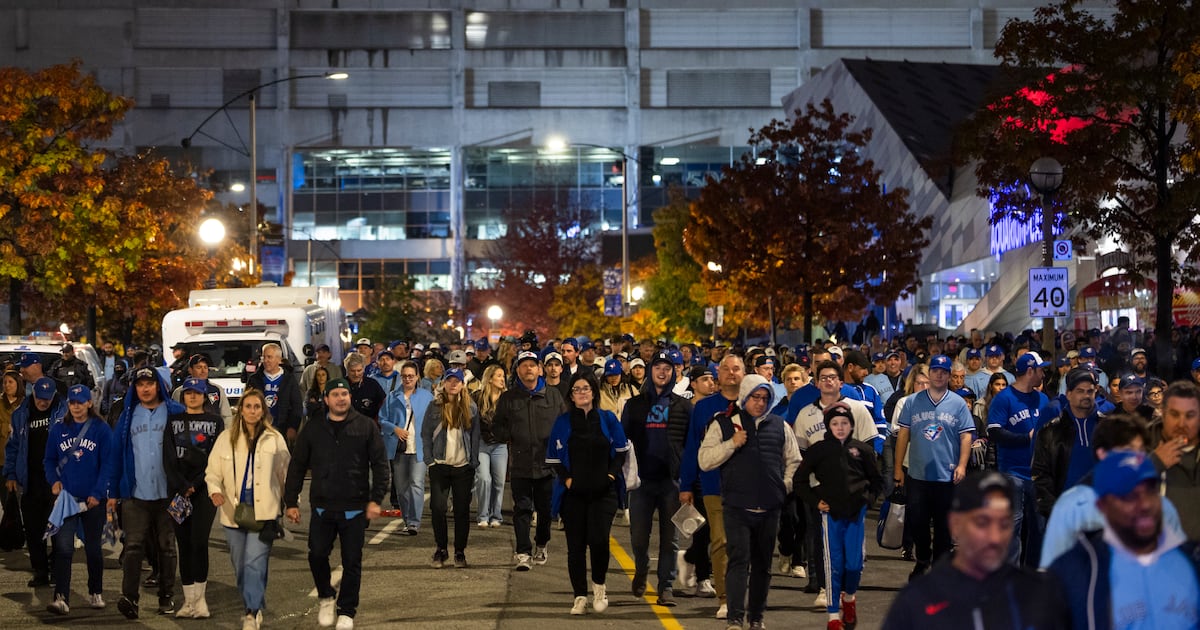
Toronto transit goers left stranded during the Blue Jays’ final World Series game have experts and riders questioning whether the city can handle the transit needs for the FIFA World Cup this summer.
The Toronto Transit Commission (TTC) was in hot water during Game 7 of the World Series after it threatened on social media to leave Blue Jays fans without transit services – a move that Coun. Josh Matlow called it “dismissive and patronizing.”
“The message they were hearing from their city was that we’re not going to make the changes necessary to address one of the biggest events that we’ve hosted in the city,” he told CTV News Toronto on Thursday.
“I was really pissed off with the dismissive and patronizing tone of the communications that came out of the city. I don’t like residents being treated that way by their own government.”
“If we can’t even handle Game 7, what confidence do we have that the city and the TTC is ready for FIFA? And that’s the question that I’ve been raising.”
The TTC has since apologized, and its board passed a motion to establish “predictable late-night transit service” for major special events following the backlash.
Concerns, however, remain about how the city will manage transit for the FIFA World Cup. Starting on June 12, Toronto will host six FIFA World Cup matches at the Toronto Stadium.
“The World Cup will be a literally different ball game,” August Pantitlan Puranauth, a member of transit advocacy group TTCRiders, told CTV News Toronto on Thursday.
“People will be relying on buses, streetcars and trains. Over 300,000 are going to descend on Toronto for the World Cup, and it’s important they choose transit if we are to avoid massive gridlock.”
Matlow said during the World Series, the TTC based its decision on not extending subway service past 1:30 a.m. on the fact that the games were not “an emergency.”
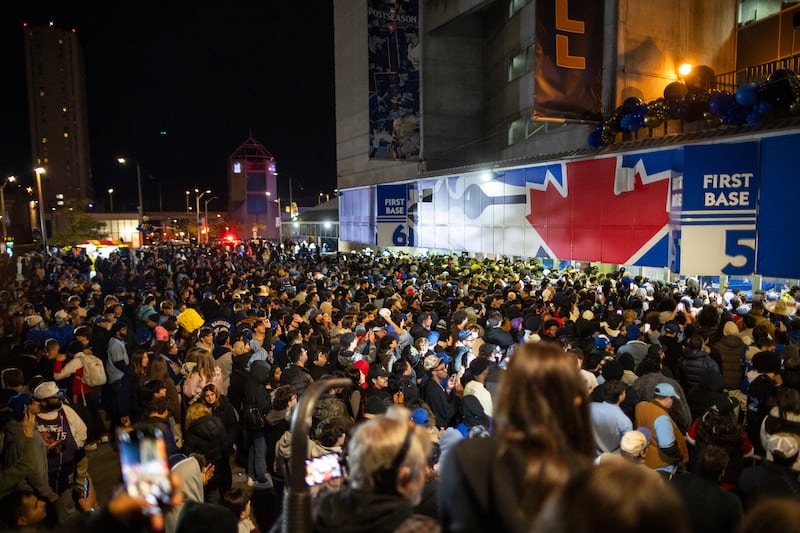 World Series crowd Baseball fans gather outside the Rogers Centre during World Series Game 7 between the Toronto Blue Jays and Los Angeles Dodgers in Toronto on Sunday, November 2, 2025. THE CANADIAN PRESS/Nick Iwanyshyn
“The test should not have been this is an emergency. The test should have been what kind of service should we provide people. How are they going to get home and how are they going to get there safely?”
He added that GO Transit also failed riders and left people stranded. He said people waited in line for long periods of time at Union Station to get on a train and were eventually told, once they got to the front of the line, that their train was gone.
“These were people trying to go to Burlington and Hamilton. They were stuck,” he said.
“The city and the TTC and Metrolinx, for the FIFA World Cup, they need to start working now on a coordinated approach to make sure that there’s a seamless way to get around the region with extended and expanded service, because the volume is going to be enormous,” Matlow said.
“I think many would say that they don’t do a good enough job even with the people that they have now.”
In an email to CTV News Toronto, the TTC wrote that it is working in collaboration with multiple partners to ensure they are “delivering excellent service during the World Cup.”
GO Transit also wrote to CTV News Toronto in an email that the World Series was a “unique event due to the fluid nature of the Jays playoff schedule, unlike FIFA, which is an event planned years in advance with match schedules released with months’ notice.”
“Metrolinx and the City of Toronto FIFA Secretariat are working diligently to ensure robust crowd and platform management plans are in place to keep everyone safe throughout the tournament.”
Matlow said that the city and transit agencies need to remember that Toronto will not just be “a stage for the FIFA World Cup.”
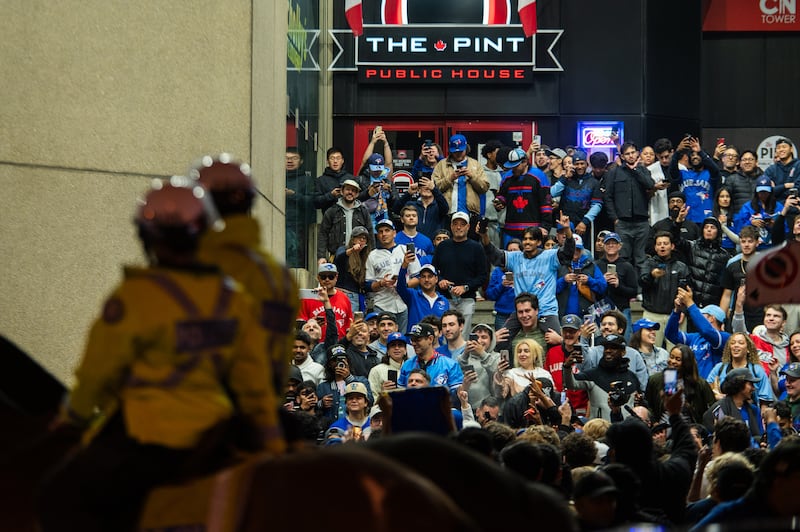 Toronto City Hall preparing for ‘very large crowds’ ahead of World Series Game 1 Toronto Blue Jays fans celebrate after the team beat the Seattle Mariners to win the American League Championship Series, in Toronto, Tuesday, Oct. 21, 2025. THE CANADIAN PRESS/Laura Proctor (Laura Proctor/THE CANADIAN PRESS)
“This is also going to be, even during the games, a live city where people still live and work, and so what I’m what I’m asking for, is for the TTC and Metrolinx, the city, to be prepared to keep the city functional for people who still need to move around while the games are happening,” he said.
Matti Siemiatycki, director of the Infrastructure Institute and professor of geography and planning at the University of Toronto, told CTV News Toronto that it’s vital that the transit agencies work together to ensure people aren’t left behind.
“This is mass transportation. Like, you know, we’ve had events where there have been tens of thousands, even millions of people, and it takes preplanning and takes the right number of resources,” he said.
“Part of the failure of the World Series was just very poor communication that came across as a blip and uncaring.”
Related Stories