
I’m a senior who flies to Mexico every winter from January to March. I drive a 2015 Toyota RAV4 that I bought new with all-season and winter tires. I usually get my winter tires put on every year, but this year I forgot to book early enough, so my appointment isn’t until December. Is there any point in switching (and spending $40 now and again in March) for less than a month? I don’t even know how much snow we’ll have by then. Another shop can fit me in earlier, but it’s more than double the cost and I’m on a budget. – Judy, Calgary
If you’re thinking about skipping winter tires, tread carefully, experts said.
“If you know you’re actually going to be driving [on winter roads], whether it’s for a month or a month and a half … it’s probably still a good idea to make the switch,” said Chad Brinston, manager of fleet performance for the Alberta Motor Association (AMA). “A lot of our extraction calls [to tow stuck vehicles] are scenarios where the vehicle doesn’t have winter tires and they’re struggling with the road conditions.”
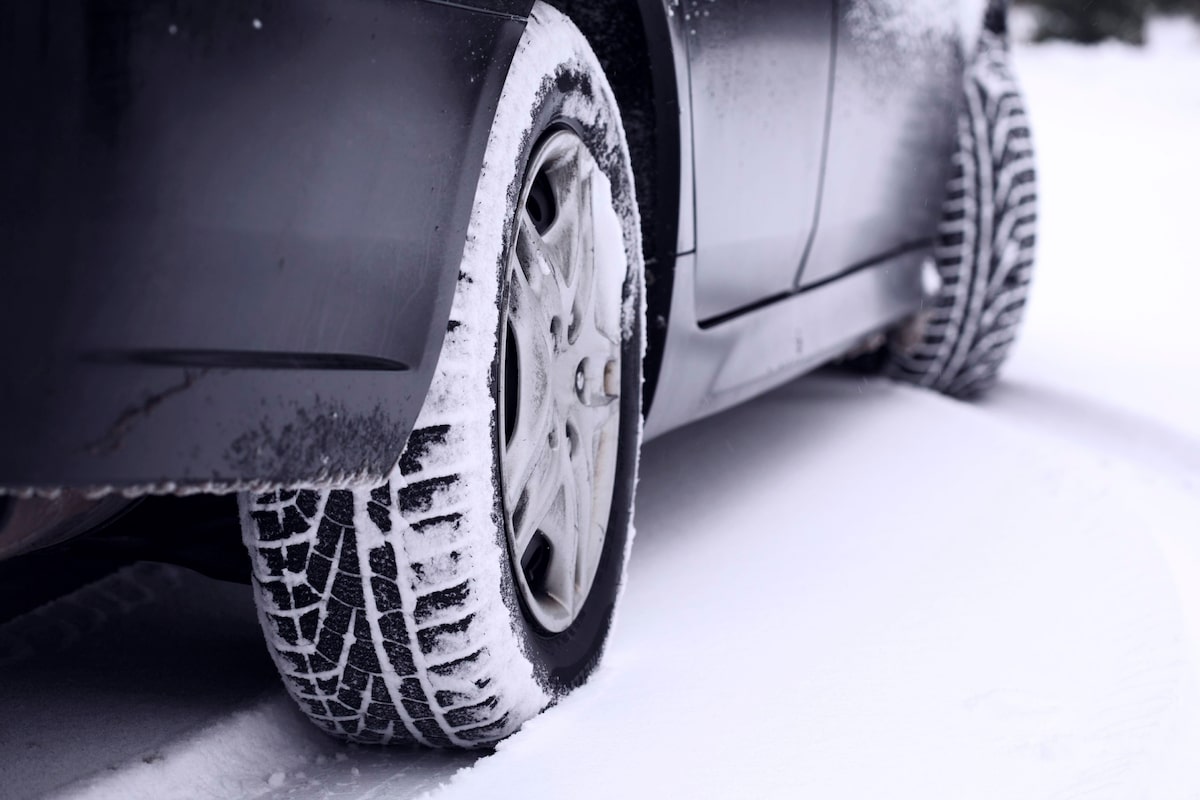
You’ve probably heard this before, but winter tires aren’t just for snow – they’re made with a rubber compound that stays soft when temperatures drop below 7 degrees Celsius.
That means they grip the road instead of sliding like a hockey puck. In Consumer Reports tests using a front-wheel-drive Toyota Camry, winter tires beat all-seasons in braking tests on snow and ice.
In tests at 10 miles an hour (about 16 kilometres an hour) winter tires outperformed all-seasons, taking less distance – an average of 1.8 metres, about half a car length, less – to come to a complete stop. That could mean the difference between hitting the car in front of you and stopping in time.
At normal driving speeds, a car with winter tires needs about 6.4 metres to stop compared with 12.1 metres for a car with all-season tires, according to the Traffic Injury Research Foundation (TIRF), an Ottawa-based not-for-profit focused on road safety.
While winter tires, which have a mountain snowflake symbol, also have treads that help them dig through snow and grip ice, they’re often better than all-seasons even on dry winter roads, Brinston said.
That’s true even if you have all-wheel drive. While AWD can help you get moving, it won’t help you stop faster or handle better on slippery roads, experts said.
“I have four other drivers in my household – we switch all our vehicles over to winter tires,” he said. “It’s an added layer of security for [my] teenage kids that are out there driving.”
A 2020 study by Manitoba Public Insurance (MPI) looked at nearly 112,000 vehicles and found there were more than 4,000 fewer winter collisions after cars switched to winter tires – a 6.3 per cent drop.
Winter tired?
If you want to keep the same tires on year-round, you could consider switching to all-weather tires.
While they have the mountain snowflake symbol, they typically don’t handle winter roads as well as dedicated winter tires – but they’re usually better than all-seasons.
Both the Canadian Automobile Association (CAA) and Automobile Protection Association (APA), a subscription-based industry watchdog, recommend all-weather tires only for drivers on the west coast of B.C., which typically sees warmer winters than the rest of Canada.
“The Nokian all-weather tire was the top performer [in tests of all-weather tires], but it is expensive,” APA president George Iny said in an e-mail. “Some consumers considered their new all-weather tires inferior to the used winter tires they just replaced.”
While top-rated winter tires are generally superior to all-season or all-weather tires on winter roads, you could probably get away with sticking to all-seasons for a short stretch before you leave for the winter – as long as they have “a decent amount of tread left,” Iny said.
“At home, the vehicle owner could leave their vehicle in the garage until roads are cleared [and sanded],” he said.
But you might face unexpected snow and ice when you’re out on the road before you leave – and if you drive south instead of flying, you could face it on the way to your destination, Iny said.
“There is also the possibility of a snowstorm [when you get back] in March,” he said.
Quebec, which requires winter tires from Dec. 1 until March 15, lets you drive for a week on all-seasons if you’re using your vehicle “to leave Quebec or return to Quebec.”
Switching tires every year has another safety benefit, Iny said.
“It ensures that the tires are being checked for wear and damage,” he said.
Warming up to winter tires?
In a new Probe Research survey commissioned by the Tire and Rubber Association of Canada (TRAC), an industry group, 84 per cent of respondents who use winter tires said they’ve saved them from losing control on the road and getting in a crash.
“You only [have] to need them once for them to pay off,” said TRAC spokesman Michal Majernik. Generally, the number of Canadians who use winter tires has been growing every year. Outside Quebec, where adoption is 100 per cent, 80 per cent of respondents said they drive on winter tires – up 2 per cent from last year and up 12 per cent over the last decade, the survey showed.
Looking at each province, the numbers decrease from east to west, from 95 per cent in Atlantic Canada to 64 per cent in British Columbia.
In Ontario, 77 per cent of respondents said they use winter tires. In Alberta, Saskatchewan and Manitoba, it dropped to 70 per cent.
The numbers are likely lowest in B.C. because the majority of the province’s population lives near the coast, Majernik said.
B.C. requires winter tires or all-season tires with the M+S (mud and snow) symbol on most mountain highways from Oct. 1 to March 31.
We asked the province’s transportation ministry why it allows all-season tires on those highways and didn’t get an immediate answer. In Alberta, AMA has been getting fewer calls for stuck vehicles each year as more drivers switch to winter tires, Brinston said.
“[Still], when I’m out on the side of the road doing an extraction call, I notice that there’s [an all-season] tire on, and I have that little aha moment,” he said.
But, even if you do have winter tires, you shouldn’t be too chill on winter roads, Brinston said.
“There’s always the likelihood that you could still slip and slide,” he said, adding that drivers with winter tires need to slow down and keep a safe distance from other vehicles. “You still need to create enough buffer space so you can stop when you need to.”
Have a driving question? Send it to globedrive@globeandmail.com and put ‘Driving Concerns’ in your subject line. Emails without the correct subject line may not be answered. Canada’s a big place, so let us know where you are so we can find the answer for your city and province.