
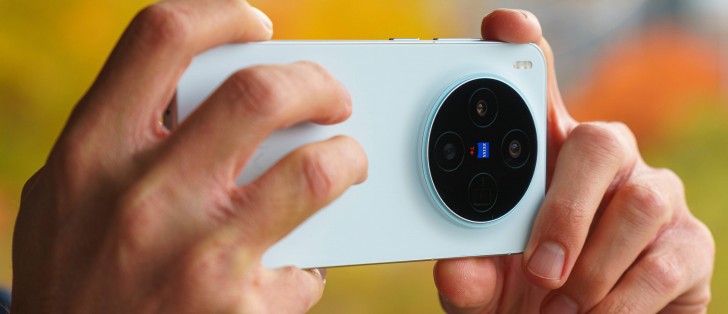
Display
The vivo X300 borrows its display from the X200 Pro mini – it’s a 6.31-inch screen with 1,216×2,640px resolution and a 460ppi pixel density. The panel is an LTPO OLED with 10-bit color depth, a 120Hz maximum refresh rate, 2160Hz PWM and DC dimming, and HDR10+ support.
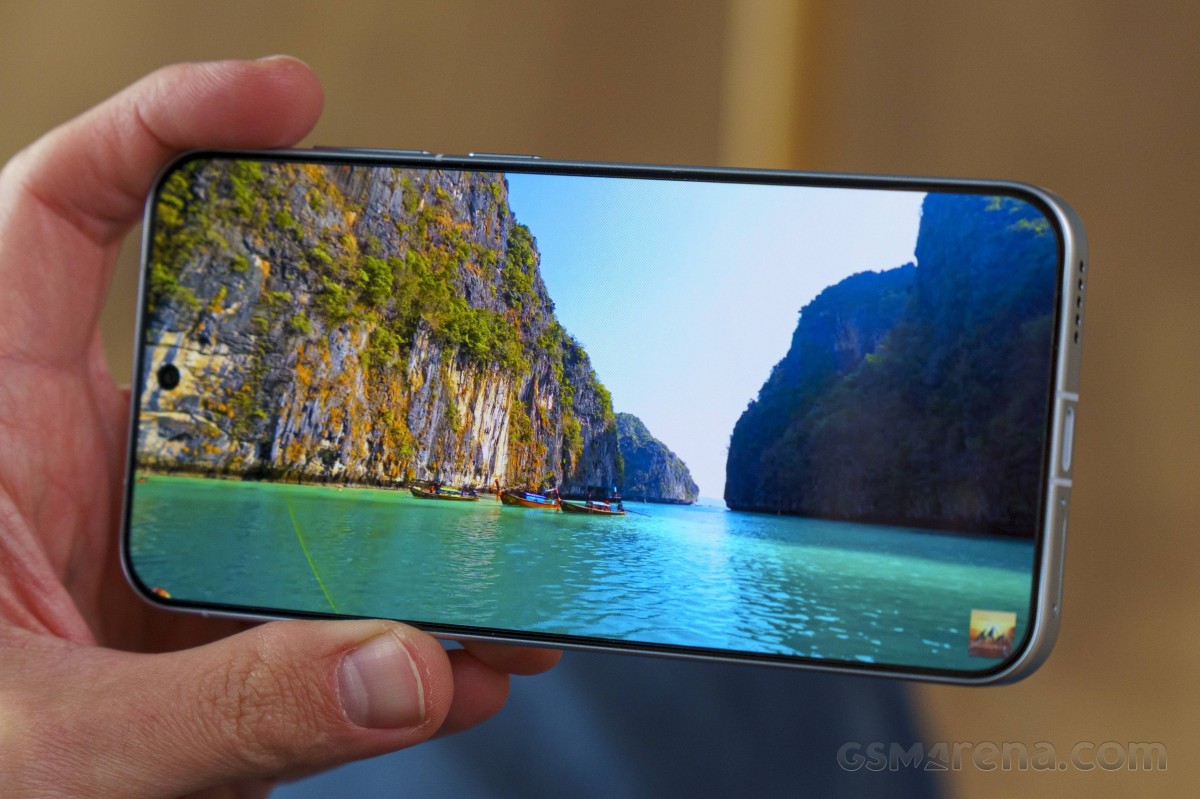
Vivo promises up to 4,500 nits of peak brightness (in unspecified conditions).
In our standardized testing routine, we measured about 2,000nits for a 75% swatch of white with the adaptive brightness enabled and a little over 2,650nits for a 10% white window – impressively bright we’d say.
The manual brightness results vary – we captured a notch under 600nits in the web browser, but we got a 200nit higher reading in the phone’s Albums gallery app (both for 75% swatches).
Minimum brightness was just under 2 nits, like on most flagship screens nowadays.
Refresh rate
The vivo X300 screen supports dynamic refresh rate between 1Hz and 120Hz. There are three options in settings – Smart, Standard, and High. All three of these options use dynamic switching and dial down to 1Hz for when the screen is idling. It’s just that the Standard caps the refresh rate to 60Hz, while Smart uses 90Hz and even 60Hz instead of 120Hz for some apps.
The screen supports all sorts of refresh rate steps and switches on the go to match the content. And it does it proficiently.
Finally, 120Hz is available in some games, but not all.
HDR
The X300 supports HDR10 and HDR10+ standards. The Netflix app reports capability for HDR10 and is happy to play HDR content in FullHD, thanks to the Widevine L1 DRM support. YouTube also serves HDR clips where available.
Battery life
The vivo X300 is powered by a 6,040mAh battery (as reviewed) across the world except in Europe, where it has a lower 5360mAh capacity, which is admittedly, a somewhat contentious topic.
The European models most likely use the same battery, but it’s probably programmed for a lower charge voltage ceiling and a higher discharge voltage threshold, resulting in a narrower operating voltage range and a lower rated capacity overall. The silver lining in this case is that lowering the max cell voltage should improve cycle life and thermal headroom, which can be beneficial for smartphones. Still, we reckon that having a smaller battery with better preserved capacity throughout its life doesn’t bring notable advantages over a battery that has a higher capacity to begin with.
Lithium-ion cells above 20Wh are considered, according to a global standard called UN 38.3. Carriers in Europe are obliged to follow stricter rules for the transportation of these “dangerous goods”, which in turn creates additional costs and complications for shipping any smartphone with a larger battery due to the extra paperwork, hazard labeling, and special packaging requirements. As a result, smartphone manufacturers often choose to reduce battery capacity in the European market to avoid the additional costs. At 3.7V, a 20Wh battery equals approximately 5400mAh, so this is generally the maximum you can expect in these cases (the rated voltage may vary slightly from one implementation to another). In contrast, Asian carriers readily accept the higher battery capacities without extra requirements, so for these markets, manufacturers can ship larger batteries with less overhead even though, according to UN 38.3, these batteries are still classified as dangerous goods there as well.
As we already mentioned, our review unit comes from the Asian market and has the larger, 6,040mAh battery capacity.
With it, the vivo X300 scored an impressive Active Use Score of 17 hours and 31 minutes. It performed marvelously on the call, web, video stream, and even the game tests.
Charging speed
The vivo X300 supports up to 90W wired and up to 40W wireless charging. Reverse wired and wireless charging are supported as well.
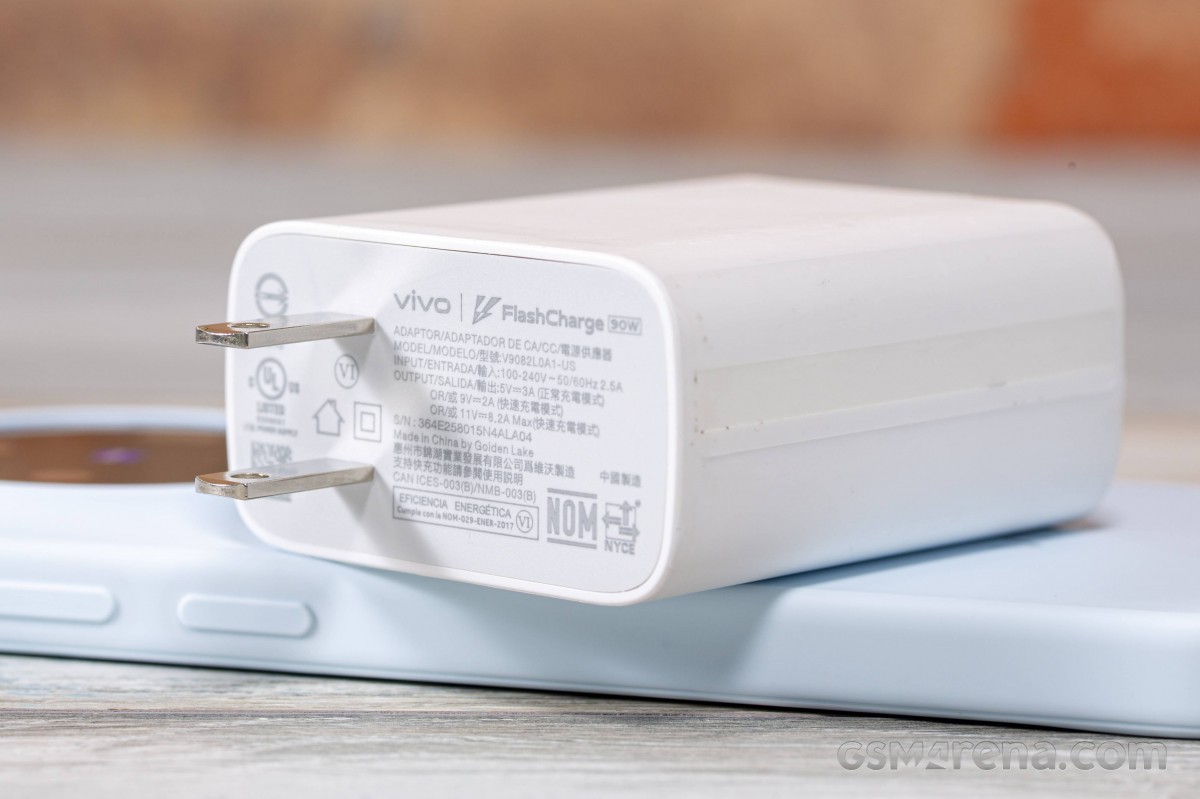
Vivo X300 ships with the proprietary 90W FlashCharge power adapter, and that’s the one we used for the following test.
The 90W vivo adapter takes the X300 battery from 0% to 37% in 15mins, another 15mins and we clocked 67% of charge. Finally, the full charge took exactly 48 minutes, which is plenty fast, especially given the large battery capacity.
We also tested with a run-of-the-mill USB PD charger, a 67W Baseus in this case, and the performance was quite similar – 35% in 15 minutes, 63% in 30 minutes, and 100% in 50 minutes.
There are some useful battery charging options on the vivo X300. The first one is rather popular – charging limit, where you set the cap between 70% and 100% to prolong the battery lifespan by reducing the charging cycles.
Bypass charging is also available – when recharging after 20%, the system takes priority and gets its power immediately, while the battery recharges more slowly, if at all, in order to reduce the heat generation which might hamper performance.
And the final option is to turn on/off the fast charging, which will reduce the battery temperature.
Speakers – loudness and quality
The vivo X300 has a pair of stereo speakers with a larger one at the bottom, and the earpiece is pulling a double duty.
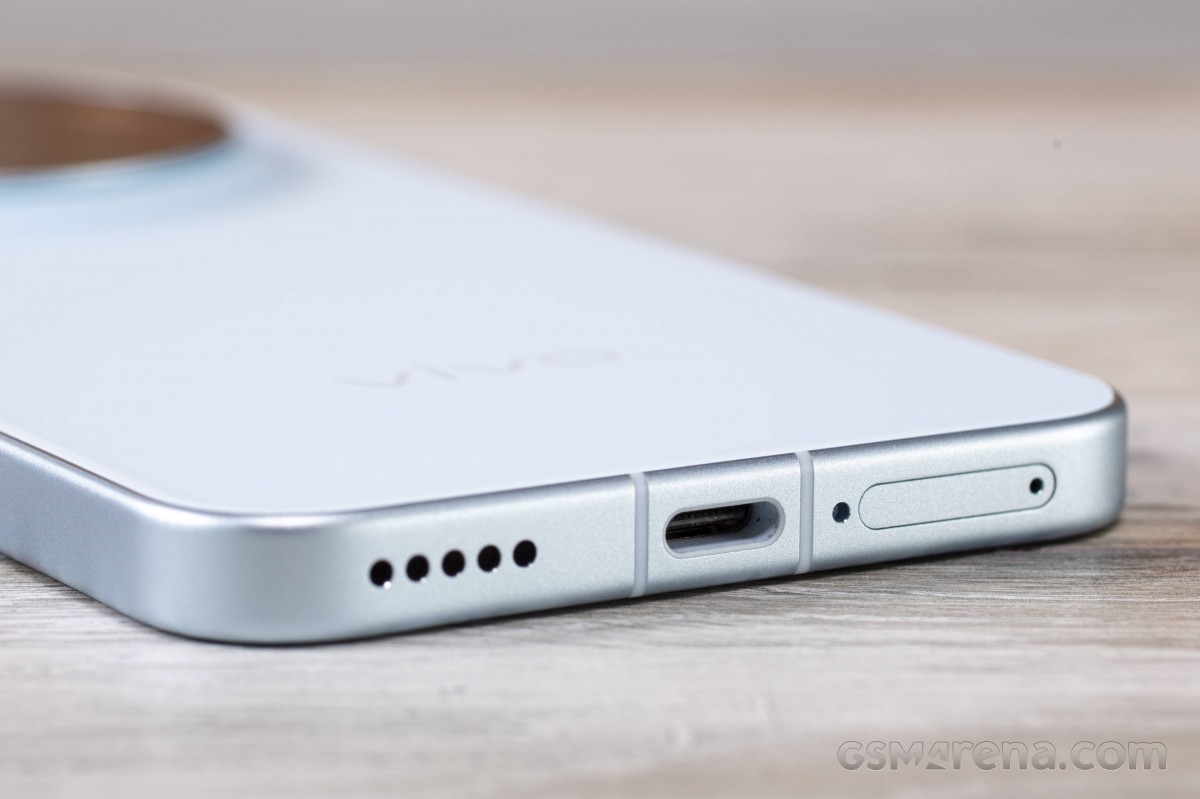
The speakers scored a Very Good mark on our loudness test. Unfortunately, the sound quality is only average – the vocals are alright, the bass is there, even if not deep, while the high frequency range is lacking.
The stereo effect is properly good, with each speaker playing its respective channel and quickly swapping it depending on the orientation.
Use the Playback controls to listen to the phone sample recordings (best use headphones). We measure the average loudness of the speakers in LUFS. A lower absolute value means a louder sound. A look at the frequency response chart will tell you how far off the ideal “0db” flat line is the reproduction of the bass, treble, and mid frequencies. You can add more phones to compare how they differ. The scores and ratings are not comparable with our older loudspeaker test. Learn more about how we test here.