
Key Points
Dish soap and warm water are the best combination for cleaning grease in the kitchen. This simple method is effective on a variety of kitchen surfaces.The best way to apply the solution changes depending on the surface.
Nothing is quite as challenging to clean in the kitchen as grease. Caked-on grease stains can be difficult to avoid, and just as tricky to remove once they’ve set in. That’s why there are so many degreasing products available—but do they really work? According to cleaning experts, the best way to cut through grease stains in the kitchen is actually the simplest, and you probably have everything you need to do it in your cupboard already.
Here’s the best one-size-fits-all solution for cleaning grease stains in the kitchen, no matter the surface.
Meet the Expert
Karina Toner is the operations manager at Spekless Cleaning, a home cleaning and maid service with locations in Arlington, Austin, Dallas, and Washington.
The Best Ways to Cut Through Grease in the Kitchen
From all-purpose cleaners to specialty degreasers, we’ve covered a lot of methods for cleaning grease from kitchen surfaces here at The Spruce. However, the experts agree that the best method for cutting through grease stains in the kitchen is also the easiest: dish soap and warm water.
“It sounds simple, but don’t underestimate it. A few drops of a degreasing dish soap (like Dawn or Palmolive) mixed with warm water can break down kitchen grease with ease,” says Karina Toner, cleaning expert and operations manager at Spekless Cleaning.
The key to making this method work is to ensure you’re using warm water—not cold, not lukewarm, not scalding, but warm to the touch. According to Toner, that bit of heat is crucial to helping soften and loosen the grease buildup, making it easier for the soap to do its job and emulsify the oil.
“I simply mix a few drops of Dawn dish soap into a bowl or in a spray bottle of warm water, spritz the greasy surface, or dip a microfiber cloth in the bowl, and start wiping. You can literally feel the grease loosen as you go,” she says.
Once everything has been wiped down, use a clean, damp cloth to remove any remaining residue, leaving the surface sparkling and streak-free.
Want more cleaning and organizing tips? Sign up for our free daily newsletter for the latest hacks, expert advice, and more!
How to Clean Grease From Common Kitchen Surfaces
Credit:
Carlina Teteris / Getty Images
If you’re feeling a little skeptical that soap and warm water together can really tackle grease stains from all kitchen surfaces, Toner assures us it can. However, she says that the best way to use these simple ingredients varies depending on the surface being cleaned. Here’s how to figure out what to use and where to use it.
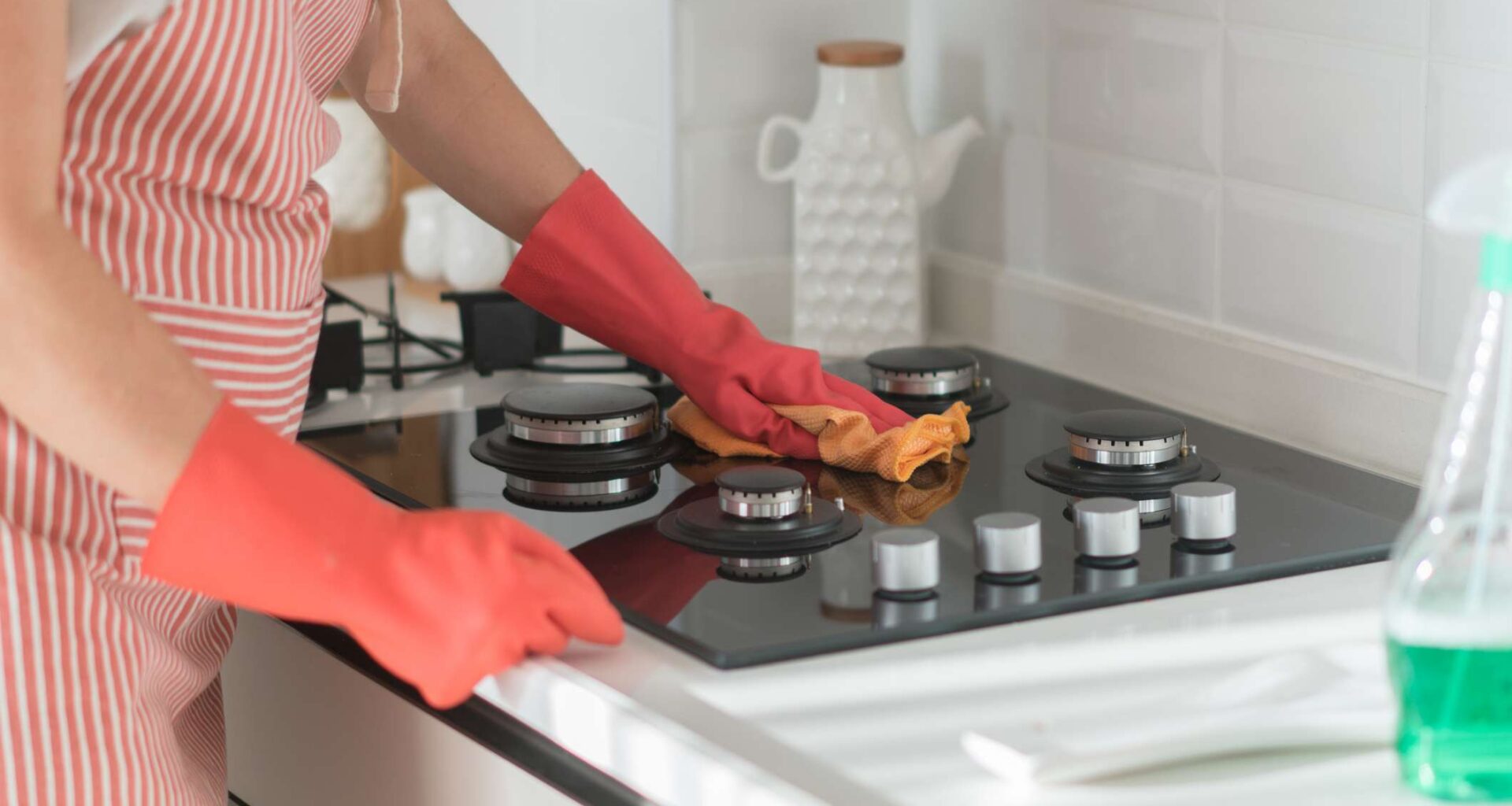
Stovetop
Stovetops are ground zero for grease. Nonetheless, dish soap and warm water can still do the trick, Toner says. Start by wiping down the surface to remove any crumbs, and then use a spray bottle filled with warm water and dish soap to spritz the greasy areas. Allow the solution to sit for a few minutes before using a microfiber cloth or non-scratch sponge to lift it off.
“For really stubborn spots (like around the burners), sprinkle a bit of baking soda on the area, spritz with your dish soap and water mix, and let it fizz before scrubbing gently,” Toner says.
Baking Dishes
For baking dishes with caked-on grease, Toner says that soaking them in warm water and soap is key. Simply fill the dish with hot water, add a few drops of dish soap, and let it soak for at least 15-20 minutes.
“If it’s really bad, pop the dish back into the (just-turned-off) oven for a few minutes while soaking. The residual warmth helps everything lift faster,” she says.
Backsplash
Backsplashes are meant to catch grease and prevent damage to your walls, so it’s no surprise they get dirty quickly. A spray bottle filled with warm water and dish soap is your best friend when tackling this vertical surface.
Toner recommends allowing the mixture to sit for a few minutes before wiping it off. For tile or glass, a soft scrub brush can work wonders, but for painted walls or delicate surfaces, it’s best to stick to gentle microfiber cloths.
Walls by the Stove
When you’re cleaning the backsplash, don’t forget about the walls around the stove. “Grease mist tends to float up higher than most people realize. Wipe down the area above your stove weekly with a damp cloth dipped in warm, soapy water,” Toner says.
Just be careful not to overdo it on the paint, especially if it has a matte or flat finish. Glossy surfaces can withstand regular wiping down, while more matte finishes require more care. Ensure your cloth is well wrung out and avoid excessive scrubbing to prevent streaks.
Cabinet Fronts
Don’t forget about your cabinets. “These quietly collect a shocking amount of grease over time,” says Toner. To tackle greasy cabinet fronts, she mixes a small bowl of warm water with a few drops of dish soap and uses a microfiber cloth to wipe them down. Wipe in circular motions, focusing on handles and edges.
“If they’re really sticky, a spritz of vinegar also helps, followed by a damp cloth to rinse it off,” she says.
Range Hood and Filters
Your range hood and filters also need to be cleaned of grease. The range hood itself can simply be wiped down with a warm water and dish soap solution, followed by a quick polish with a dry cloth. For stubborn grease spots, allow the solution to soak for a few minutes before wiping away.
For filters, Toner recommends popping them out and allowing them to soak in warm, soapy water for about 20 minutes. If needed, a toothbrush is a great tool for scrubbing stubborn spots out of the mesh.
How to Prevent Grease Stains Long-term
When it comes to tackling grease in the kitchen, prevention is key. “My best tip would be to never give it time to sit. Once it’s had time to cool, settle, and collect dust, you’re in for a fight,” Toner says.
Here are a few simple ways you can help prevent grease from building up in the kitchen (your future self will thank you):
Wipe as you cook. Use a warm, soapy cloth to wipe down surfaces immediately after sautéing or frying—grease is easiest to remove when it’s still fresh.Use splatter guards or lids to help keep the grease contained as you cook. Keep your vent hood running. Toner recommends turning it on before you start cooking and allowing it to run for a few minutes afterwards to help pull grease particles out of the air before they settle. Choose easy-clean finishes where possible. If you’re renovating or updating your kitchen, opt for semi-gloss paint or sealed surfaces near cooking areas to make cleanup a breeze.