
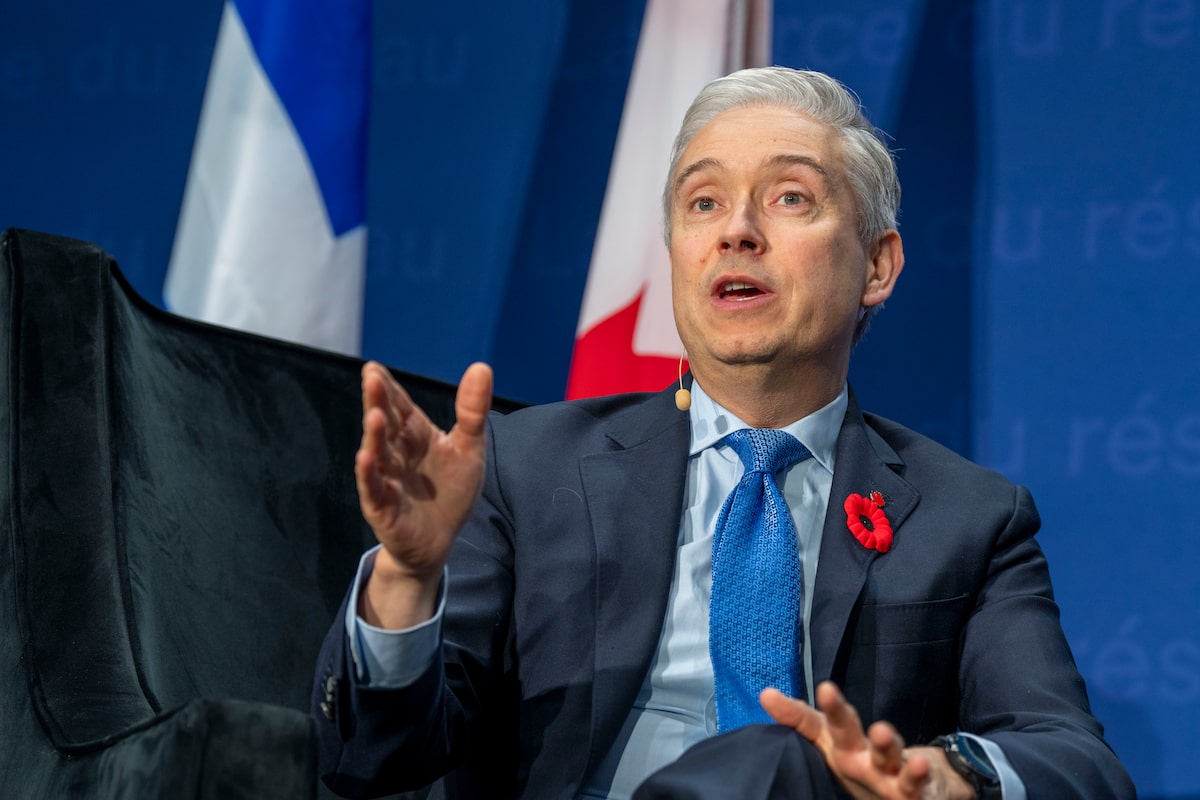
Finance Minister François-Philippe Champagne in Montreal on Nov. 5. He said the expansion of LNG Canada, a liquefied natural gas export terminal in B.C., is a ‘game changer’ for Canada.Christinne Muschi/The Canadian Press
The second phase of LNG Canada is a “game changer” for Canada and underscores how attitudes to energy have changed in recent months, the federal Finance Minister says.
François-Philippe Champagne said Monday that Canadians today understand “the nexus between economic security, energy security and national security” – a vast change from the general view across the country six or nine months ago.
“I think that there’s more openness to an Energy Corridor than before,” Mr. Champagne told an afternoon Calgary Chamber of Commerce event.
“I think people understand that the natural resources sector is key to national prosperity, to investment in the country, to who we are as Canadians in many ways.”
Next round of major projects to be named Thursday, Carney says
Quebec looking to Caisse investments, data centres to boost economy amid trade turmoil
Take LNG Canada, a liquefied natural gas export terminal in Kitimat, B.C., he said. The facility’s co-owners are expected to make a final investment decision in 2026 on whether to forge ahead with a Phase 2 expansion, which would double the plant’s total capacity to 28 million tonnes a year.
“LNG Phase 2 is a game changer,” Mr. Champagne said. “People see that we can play a key role in India, in the Pacific. If you want to be at the big table, you have to talk about energy.”
Global uncertainty and the trade war with the United States has been something of a “wake-up call” for Canada to get its house in order, he said, including around energy security.
Last week’s federal budget did not answer all of the regulatory questions hovering over Canada’s energy sector. That includes the end of the oil and gas emissions cap, which was floated – but never implemented – by former prime minister Justin Trudeau. Instead, the budget said the cap wouldn’t be needed if the sector takes other measures to cut pollution.
Mr. Champagne said he believes it provided some of the certainty that the energy sector needs to make investment decisions, but he acknowledged there is still more to do on the regulatory front.
It’s a challenge, he said, but “this is not the time for half measures. This is not the time to think on the margins.”
Mr. Champagne was set to speak with Alberta Premier Danielle Smith on Monday evening, as Alberta and Ottawa work to repair their fractured relationship.
Pointing to Western Canada’s ambition and economic success, Mr. Champagne said the Calgary-based Major Projects Office sends a message to Alberta – and the world – that Canada means business.
However, he declined to comment on what will be in the next tranche of projects to be referred to the office. That list is slated to be released Thursday by Prime Minister Mark Carney in Prince Rupert, B.C.
“We already have a number of natural resource projects to build our country, whether it’s in the mining sector, whether it’s in port expansion,” he told media after the event.
Mr. Champagne’s message to the audience Monday was light on climate, though he doubled down on the importance of trade corridors, saying the budget’s trade corridor infrastructure fund will be key to ensuring products from Alberta – including oil and gas – can have access to markets.
He also said it was important for Canada to embrace the opportunity to develop its critical-minerals sector.
Very few countries have a critical-minerals mining industry or an oil and gas sector the size of Canada’s, he said. Now, it’s just a matter of “reaching our full potential.”
When it comes to critical minerals specifically, he said, it’s important for government to work alongside the private sector to ensure products make it to market. Oil and gas are the same, he told media after the event, adding that Ottawa aims to attract much-needed investment.
“Western Canada has been building for decades,” he said. “My aim in this budget is really to put the framework for these companies to say, ‘Yes, we’re going to invest again in Canada, bring our products to market and make sure that at the same time, we create the great jobs.’”