
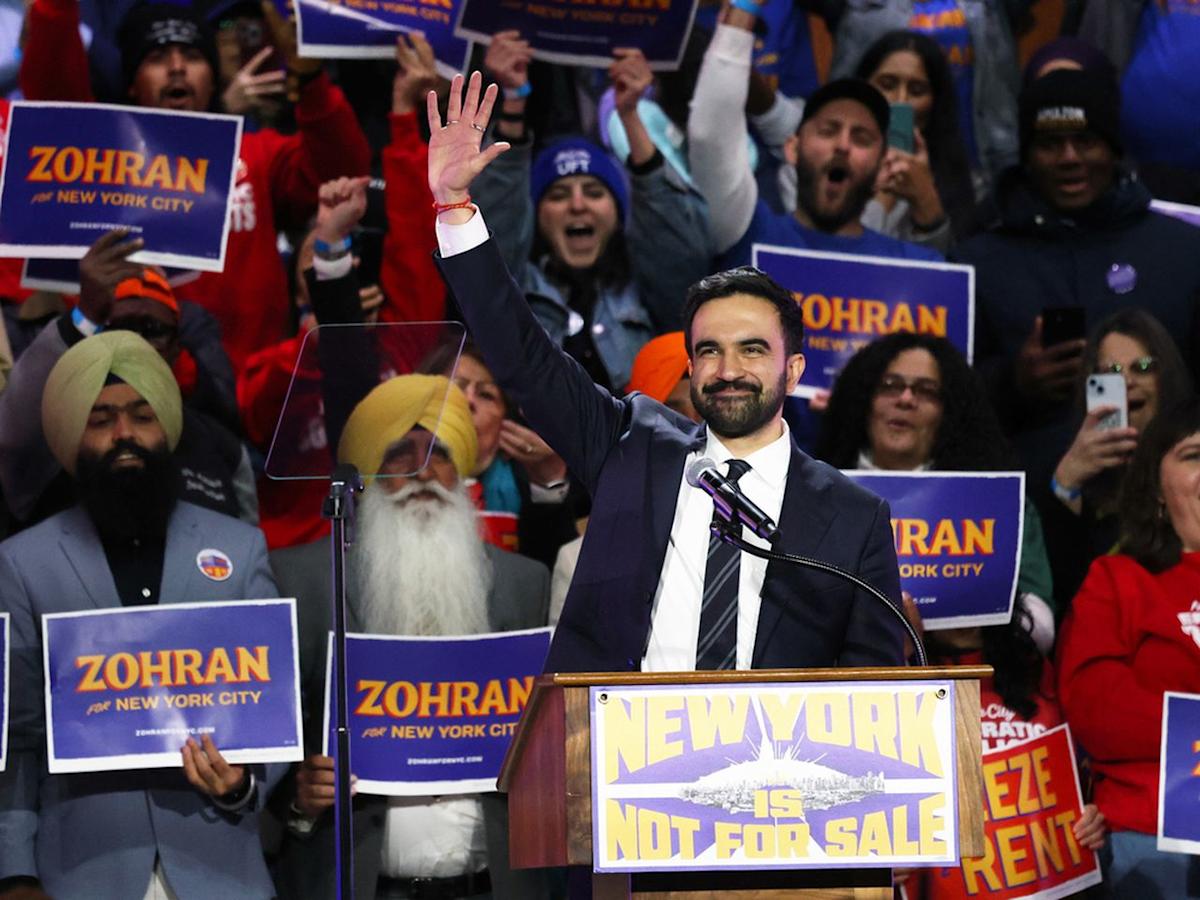
Are voters tired of failed progressive policies and turning away from left-wing mayors? Not in New York City, evidently. But in Canada there is hope of a return to some degree of sanity at city hall.
Montreal has just replaced retiring two-term mayor Valerie Plante with former federal cabinet minister Soraya Martinez Ferrada, widely regarded as more centrist. And on Oct. 20, Calgary mayor Jyoti Gondek was roundly defeated in her re-election bid, finishing a distant third and becoming the first incumbent mayor to be defeated in Calgary since 1980. She tallied only 71,466 votes, or 20 per cent. Four years earlier, 176,344 Calgarians, 45 per cent of those who turned out, had voted for her.
What happened? Among other things, Gondek declared a “climate emergency,” said the city should “move past” oil and gas, spent more than $200 million of taxpayers’ money on the alleged emergency, defended a later-reversed 2023 decision by city staff to cancel Canada Day fireworks thought to be racist or culturally insensitive, and significantly raised property taxes, including by 7.8 per cent in 2024 and 6.4 per cent this year. Calgary homeowners were in for another 5.4 per cent property tax hike in 2026 but newly elected mayor Jeromy Farkas says that number must come down.
Discontent with left-wing mayors can also be seen in Toronto, where the next municipal election is in just under a year. A new One Persuasion poll commissioned by A Better City (ABC) Toronto suggests that in a mayoral race between incumbent Olivia Chow and Coun. Brad Bradford, who has already declared his candidacy, Bradford would win 40 per cent to 32 per cent. Former mayor John Tory has not yet entered the race but according to the poll would win a three-way contest with 36 per cent support compared with 33 per cent for Chow and 29 per cent for Bradford. Approximately 70 per cent of Toronto voters believe the city is going in the wrong direction and even one-third of those who voted for Chow in 2023 now say it is time for a new mayor.
A recent Canada Pulse Insights survey suggested Chow would actually be a slight favourite in a crowded mayoral race but, like One Persuasion, found 64 per cent of Torontonians believe the city is on the wrong track, 51 per cent say Chow is doing a poor job and 65 per cent want new leadership. A Leger poll published last week also shows growing dissatisfaction with Chow. According to Leger, her approval rating fell to 43 per cent in October and those who “strongly disapprove” jumped to 27 per cent from 17 per cent previously. Only nine per cent “strongly approve” of the job she’s doing as mayor.
There is good reason for Torontonians to be discontented with Chow. In her first two budgets, she outdid even Gondek’s property tax hikes, whacking Toronto homeowners with a 9.5 per cent increase in 2024 and piling on another 6.9 per cent this year. Important city services such as public transit and snow removal have performed miserably in recent years. From April 2021 to October 2024, the city’s homeless population more than doubled. And although city hall obviously isn’t the only influence on Toronto’s broader economy, poor municipal management has clearly not helped.
A recent TD Economics report highlights that while the unemployment rate in April 2023 was only 5.6 per cent in the larger Toronto Census Metropolitan Area (CMA), by September 2025 it had risen to 8.9 per cent — close to its highest level since 2012, not counting the pandemic. Toronto’s unemployment is fourth worst of Canada’s 41 major CMAs, while its unemployment rate has risen faster than in the rest of the province since the beginning of 2024. Toronto’s youth unemployment rate currently sits at around 20 per cent.
Moreover, despite a housing crisis “construction hiring has been a multi-year sore spot.” The TD report includes a line chart whose title reads simply: “Toronto’s Homebuilding Industry Depressed.” It shows housing starts falling approximately in half since mid-2023, a decline markedly steeper than in the rest of Ontario. Employment in the construction sector is well below what it was two years ago.
Thanks to democracy, Torontonians do not have to put up with worsening municipal services and declining economic prospects. Next year, they can do as Calgarians have done and dispense with their poorly performing mayor and move on from repeating the mistakes of the past.
Matthew Lau is a Toronto writer.