
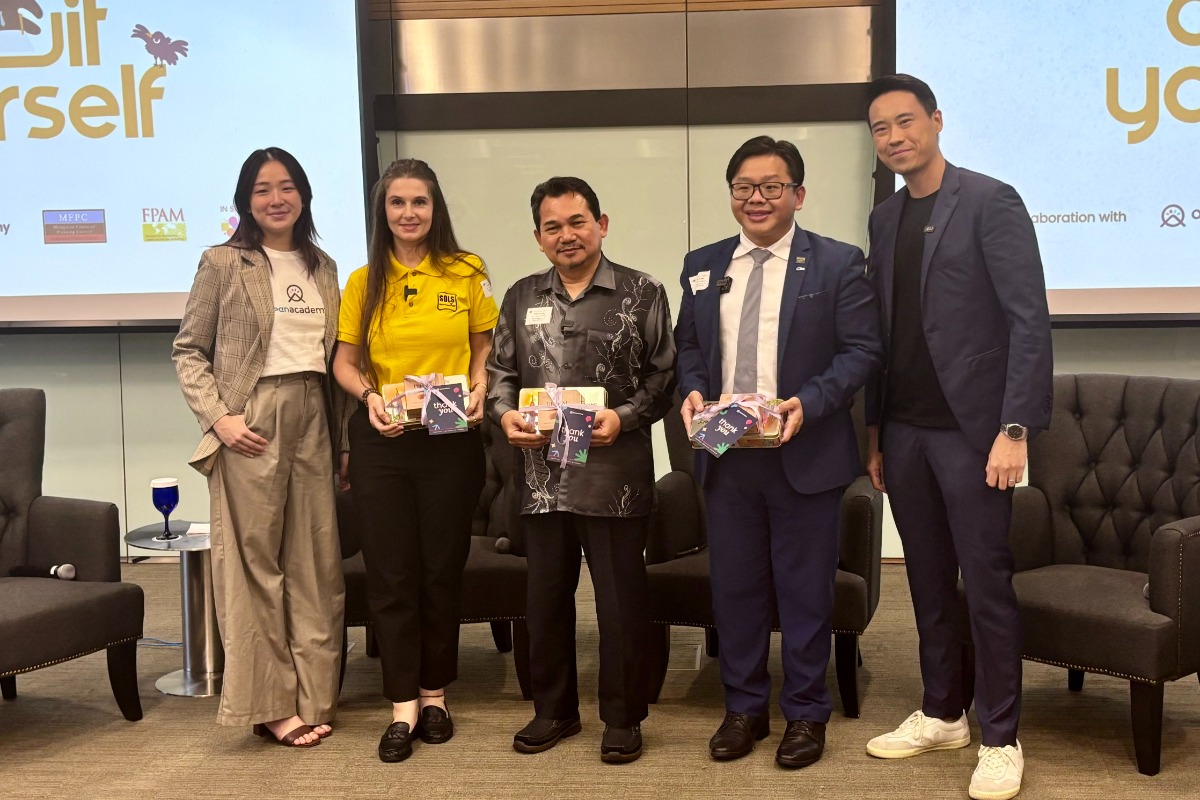
KUALA LUMPUR (Nov 14): Malaysian ed-tech platform OpenAcademy launched a free financial literacy education series, called “Duit Yourself”, aimed at making financial literacy more relatable and actionable for youths to take charge of their personal finances nationwide.
The series, featuring 11 lessons, will be rolled out digitally through the OpenAcademy platform and will cover topics such as understanding payslips, Employees’ Provident Fund (EPF) and Social Security Organisation (Socso) contributions, budgeting, debt management, saving, investing and long-term financing.
Celine Ting, co-founder and managing director of OpenAcademy, said that while financial education is becoming more accessible through information from podcasts, articles and online influences, the knowledge is not being translated into action.
Additionally, she shared that six in 10 Malaysians struggle to pull RM1,000 in moments of emergencies, and only 17.6% of students demonstrate strong financial behaviour.
“It’s not just about what people know, it’s about what they do with what they know, and the gap between knowing and doing is where a lot of people struggle financially. That’s exactly what this Duit Yourself content series is designed to address. We want to be able to help Malaysians turn their knowledge into action, because at the end of the day, confidence beats complexity,” said Ting at the launch, held in Sasana Kijang.
“This series that we have launched is all about these real life steps and local financial learning for anyone, from students all the way to working adults that can be applied right away, in everyday life,” she added.
Duit Yourself was developed in partnership with Bank Negara Malaysia’s Financial Education Network (FEN) platform and joined by key members of the Malaysian Financial Planning Council (MFPC) and the Financial Planning Association of Malaysia (FPAM).
Raising financial literacy
Setting a financial target and building discipline through a goal will be important in motivating people to take action to secure their finances.
Kevin Neoh, head of financial planning at VKA Wealth Management and certified financial coach, said that goal setting can set a clearer path for individuals to build good financial habits, and to have an influence in achieving one’s targets.
“One thing we can do is evaluate our lives across multiple areas today, for example, health, relationships and career… You might have a few areas that aren’t doing well, so the question is, how do you move from your current situation to a better one, and then immediately you have a shorter goal created from here,” he said.
Daniela Strîmbei, executive director of the SOLS Foundation, an educational non-profit organisation, added that having a proper financial mindset must be cultivated, not just for consistent behaviour, but to help those who are underprivileged especially, be resilient in achieving financial stability.
“When we change the mindset that says we’re stuck and that there’s no point in looking for a solution, then we will truly believe [that thought process]. But if we believe there is a way. then we can look for options to [succeed], and I do believe that this is a learnable mindset,” said Strîmbei.
It is crucial that Malaysians are aware of the misinformation overload with the rise of social media influencers, especially those without proper credentials.
“I believe the effort [should come] from the regulators and authorities to make sure that whoever is coming into this area of giving advice about personal finance or financial management, they need to be licensed or they need to be approved by the regulators to prevent them from giving the wrong advice to the public,” said Anuar Shuib, CEO of VKA Islamic Wealth Management and a fellow of the MFPC.