
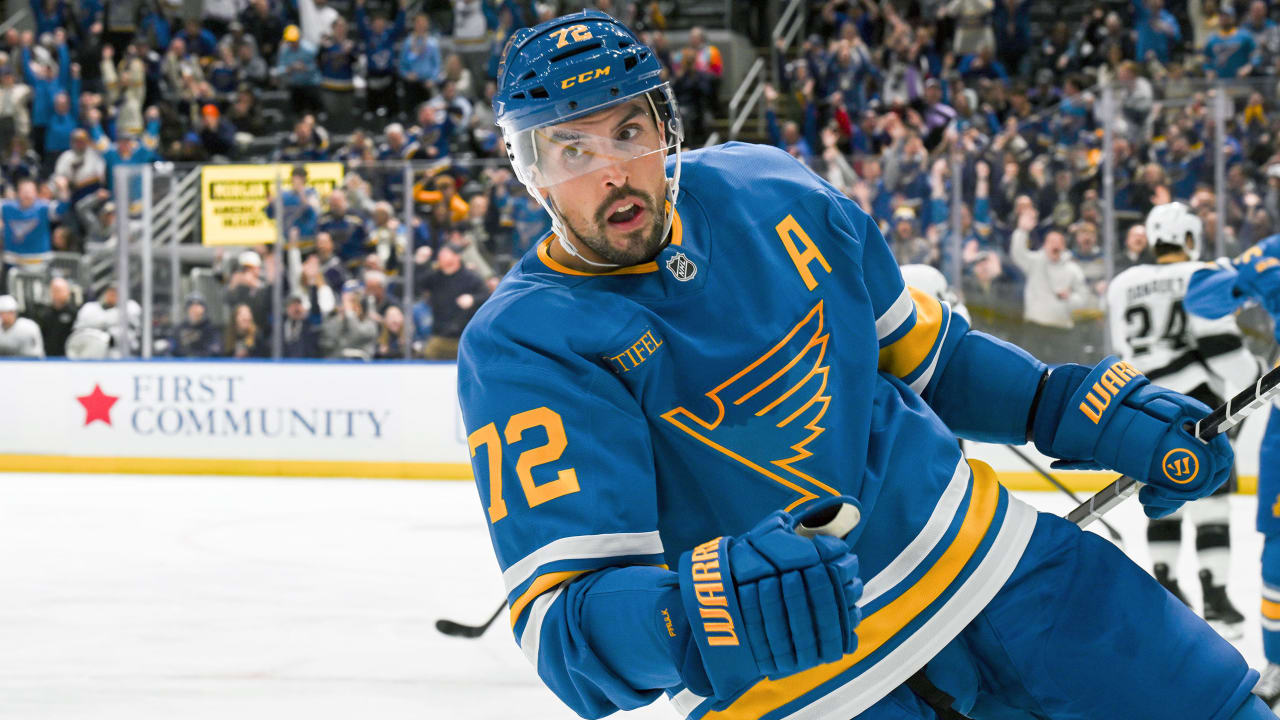
By his mid-teens, Faulk’s drive was turning heads. After starring at South St. Paul High School, he joined the U.S. National Team Development Program, where he began sharpening the offensive instincts that would later define his game. Two seasons in Ann Arbor led him to the University of Minnesota-Duluth, where he set a school record for goals by a freshman defenseman and helped deliver the 2011 national championship. Months later, he was signing his first NHL contract with the Carolina Hurricanes.
Faulk arrived in the NHL at 19 — wide-eyed, eager, and, by his own admission, not quite ready.
“My first three games I was horrible,” he said with a laugh. “I got sent down after that…but honestly, I wouldn’t change a thing. It taught me to relax. When I came back up, Paul Maurice told me ‘Just relax and play. Don’t worry about that stuff.’ It taught me a lot for the future — when things go wrong, it’s okay. You can get through it.”
From there, he carved out what would become his trademark style: unassuming success. He made the NHL All-Rookie Team, became an All-Star at 20, an Olympian at 21, and a steadying presence for Team USA multiple times.
Ask anyone who’s shared a locker room with him, and they’ll tell you it’s not just the stat line — though 1,000 games and 468 career points, nearly a half-point-per-game pace for a defenseman, is no small feat. It’s the calm, the humor, the way he never seems rattled.
When he was traded to St. Louis in 2019, the Blues weren’t just getting a right-shot defenseman — they were getting a leader. One who could balance the room, eat big minutes and never make a fuss about it. A seven-year contract extension followed almost immediately, cementing him as part of the team’s core. Since then, he’s become one of the Blues’ most consistent players — now an alternate captain — and a quiet force whose presence anchors the group.
Yet behind the quiet confidence is a player who knows how much work it takes to get here.
“The physical part takes a toll,” he admitted. “I’m not the most physical guy in the world, but I like to play that way. It’s hard, but it’s rewarding. You show up, put in the work and the rewards happen later.”
He’s also seen what longevity looks like — and what it costs.