
What to know
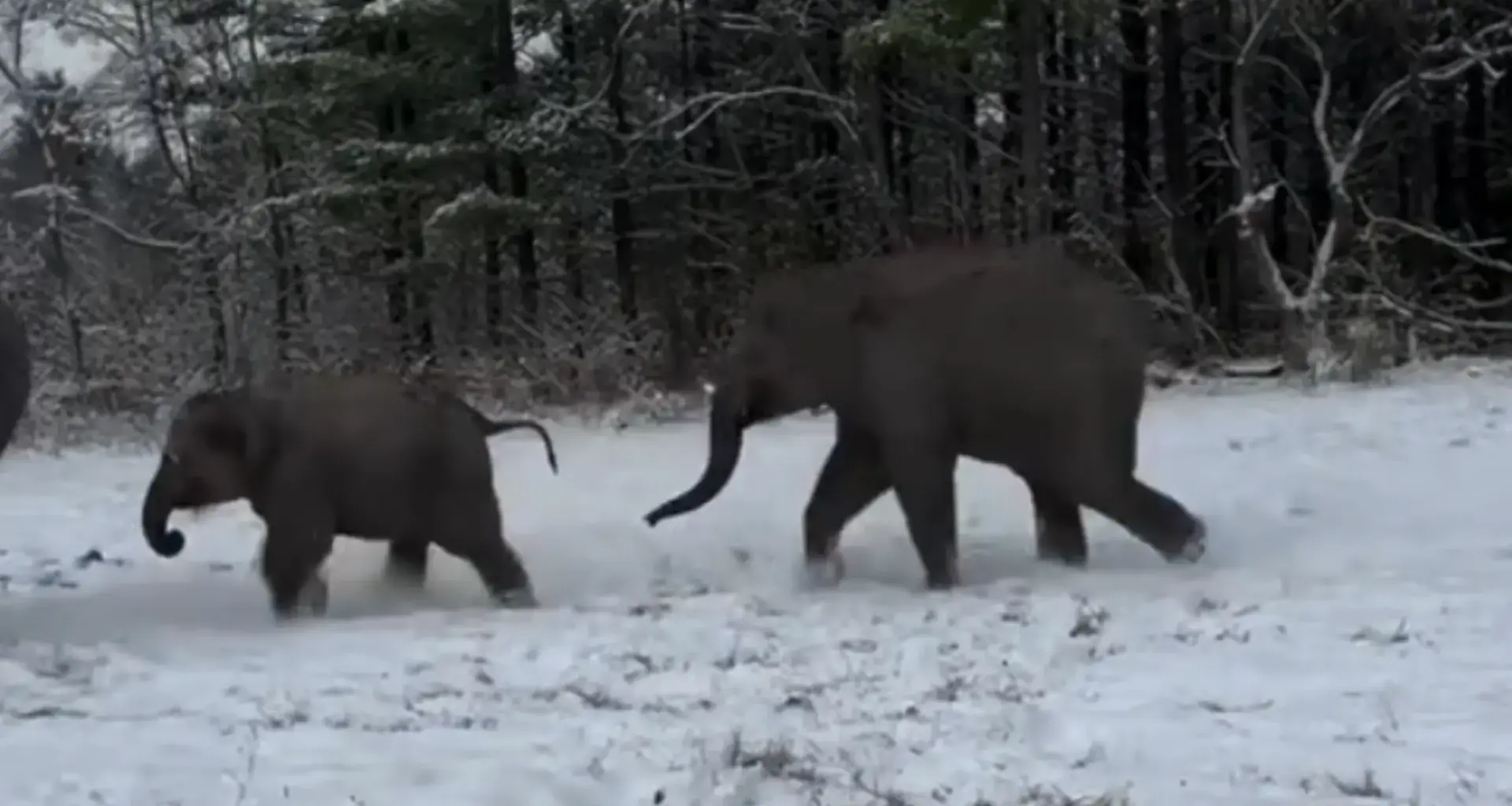
A viral video of African Lion Safari elephants walking in the snow has sparked widespread public concern about the welfare of captive elephants in Canada.
Multiple animal-welfare organizations say the concern is justified, arguing that Canada’s climate and captive environments cannot meet elephants’ socio-biological needs.
Advocates are calling on the federal government to revive legislation that would end elephant captivity in Canada, stressing that elephants do not belong in the country’s climate or entertainment facilities.
African Lion Safari defends its practices, saying its elephants are well-adapted, receive specialized care, and have access to large outdoor spaces and heated indoor facilities.
A video of African Lion Safari’s elephants seemingly playing in last week’s snowfall has ignited a wave of public concern over animals in captivity, and many advocacy groups are speaking out.
The video, posted by the Hamilton safari park last Wednesday, shows multiple elephants trudging back and forth in the snow.
@africanlionsafari1969 Enjoy 30 seconds of joy as our Asian elephants play in this week’s fresh snowfall! ❄️ Did you know our elephants enjoy spending time outside year-round? They love a good snow day! #AfricanLionSafari #AsianElephants #Elephants #SnowDay #Snow ♬ original sound – African Lion Safari
But what was intended to be a lighthearted video of their playtime session has drawn scrutiny from viewers on the elephants’ welfare needs in the frigid Canadian climate.
“It looks soooo unnatural to see elephants in snow,” one person commented.
“Imagine going from the beautiful deciduous forests of Borneo to end up in Hamilton, Ontario,” another commenter said.
ANIMAL WELFARE GROUPS SAY CONCERNS ARE JUSTIFIED
Animal-welfare organizations are responding to the video, many agreeing that the video is alarming.
“People are right to be concerned – the climate in Canada is nothing like the home range of wild elephants,” Wildlife Campaign Manager for World Animal Protection Erin Ryan told Now Toronto in an email statement. “They should be enjoying home ranges of tens of thousands of kilometres, all year long.”
Ryan noted that Canada’s leading zoos have already phased out elephant exhibits, citing a lack of conservation benefit and growing scientific evidence that captive environments can’t meet elephants’ physical, social, and psychological needs.
The Toronto Zoo, for example, no longer hosts elephants, after moving its remaining three African elephants to a California sanctuary in late 2013. According to Ryan, Canada’s cold temperatures force elephants indoors for prolonged periods, limiting movement and putting them at risk for frostbite on trunks, tails, and ears. Younger and older elephants, she added, are particularly vulnerable.
The wildlife advocate also pointed to the now-defunct federal bill S-241 inspired by late anthropologist Dr. Jane Goodall that would have ended elephant captivity in Canada, which didn’t move forward after Parliament prorogued earlier this year in January.
“We encourage the Canadian government to reintroduce it,” Ryan said. “This would be a great way to honour Dr. Goodall’s advocacy for animal welfare and wildlife protection given her recent passing.”
She also reiterated that in order for the animals to have the greatest chance of a good life, they shouldn’t be here at all.
Rebecca Aldworth, the Executive Director of Humane World for Animals Canada, echoed these sentiments.
“Highly intelligent, complex, and social animals such as elephants suffer intensively in captivity, in profit-driven facilities that cannot begin to replicate wild habitats,” she said. “Elephants don’t belong in Canada, and there is simply no justification to subject them to a lifetime of deprivation for the amusement of onlookers.”
Aldworth called on the federal government to follow through on its commitment to end the captivity of great apes, elephants, and big cats for entertainment purposes. “It is time for the Canadian government to bring its policy in line with public values,” she said.
AFRICAN LION SAFARI DEFENDS ITS PRACTICES
African Lion Safari rejected the criticism, saying the online reaction overlooks decades of specialized care and research at the park.
“Our herd of Asian elephants live in a very natural social structure with a large, cohesive, multi-generational family—much like elephants in the wild, without the threats posed by poachers and habitat loss,” the park said in a statement to Now Toronto.
African Lion Safari also emphasized that the majority of its elephants were born on-site and have adapted to Ontario’s seasonal climate.
According to the park, the elephants have year-round access to more than 200 acres of woodlands, fields, ponds, and streams, as well as a large heated indoor facility during colder weather. The park cited its research on elephant thermoregulation using infrared thermography, saying thermal imaging shows that the animals “effectively regulate their temperature and remain comfortable in cooler conditions.”
“We are extremely proud of our decades of commitment to caring for elephants and ensuring their survival for future generations,” the statement said.
EXPERT SAYS COLD WEATHER IS JUST PART OF THE PROBLEM
While the Canadian climate has dominated much of the public conversation, biologist and Co-Founder/Director of ElephantVoices Dr. Joyce Poole argues that the issue goes far beyond temperature.
“There are so many reasons why elephants should not be held in captivity – a cold climate being only one of many,” Poole said. “Elephants need space to roam and a large social network to thrive. They can’t have either in captivity. Their well-being is especially compromised in cold climates when they are often kept indoors in tiny cages.”