
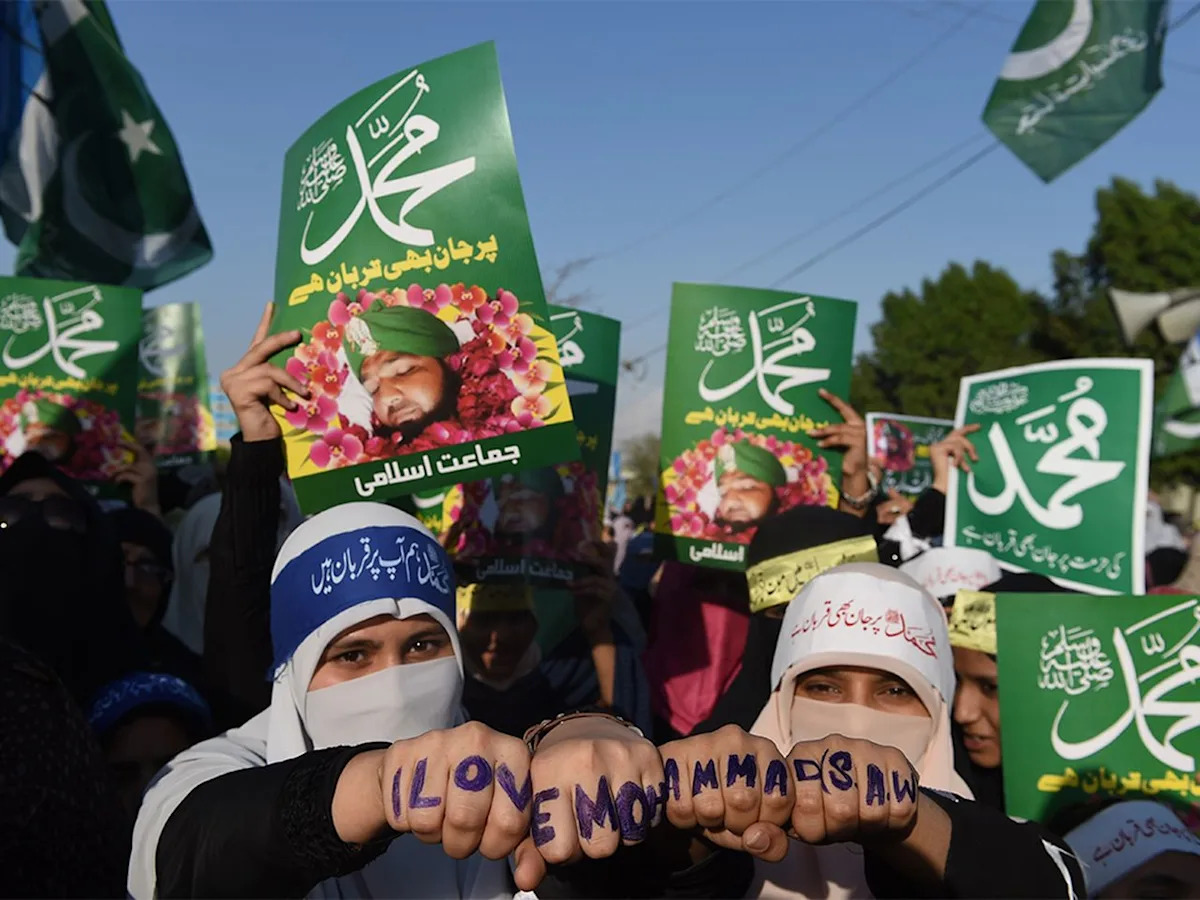
In a development that went largely unnoticed, Liberal MP Salma Zahid recently tabled a petition in the House of Commons urging the federal government to admit members of Jamaat-e-Islami — Bangladesh’s largest Islamist party. The petition noted that in the past, some members of Jamaat-e-Islami had been deemed inadmissible to Canada on security grounds. However, it argued that the group “has engaged in democratic processes and governance in Bangladesh” and that members seeking asylum in Canada are “law-abiding citizens who uphold democratic values.” It urged the government to ensure they receive “fair and just treatment.”
What Zahid and the petitioners conveniently overlooked, however, is that Jamaat-e-Islami is inseparable from a long history of Islamist extremism, terror-financing, and some of the worst mass atrocities committed in modern history. So brutal were the group’s crimes during the 1971 Bangladesh Liberation War that it became only the second political organization after Adolf Hitler’s Nazi party to face an international tribunal for war crimes. Although Jamaat-e-Islami was outlawed in Bangladesh in 2013, the ban was lifted following last year’s ouster of prime minister Sheikh Hasina. Russia remains the only country to ban the group as a whole, while India has only proscribed its branch in the disputed state of Kashmir.
Jamaat-e-Islami traces its ideological roots to British India in 1941. Founded by Maulana Syed Abul Ala Maududi — an Islamic cleric inspired by the Muslim Brotherhood, the world’s most influential Sunni Islamist group — the movement rejected Western and liberal democratic values in favour of a rigidly conservative, pan-Islamist project. Its ideological similarities to the Brotherhood are so striking that it is commonly viewed as the group’s “sub-continental cousin.” Maududi opposed the creation of Pakistan on the grounds that it would divide Muslims, insisting instead that all of India should eventually be reclaimed for Islam.
Following the partition of India in 1947, the movement splintered into national branches. When East Pakistan became Bangladesh in 1971, the East Pakistan faction reconstituted itself as Jamaat-e-Islami Bangladesh.
Its role in the 1971 war remains one of the darkest chapters in the country’s history. Determined to prevent the Bangladeshi independence movement from succeeding, the group formed pro-Pakistani militias that worked hand-in-glove with the Pakistani military to crush Bengali freedom fighters. These militias participated in killing hundreds of thousands of civilians, abducting and murdering intellectuals, and orchestrating one of the largest campaigns of mass rape of the 20th century. Between 200,000 and 400,000 Bengali women — many held as sex slaves in Pakistani military camps — were assaulted over the course of the conflict. While non-Muslim women were specifically targeted, Muslim women were not spared either. According to official estimates, up to three million people were killed during the course of the war.
However, the group’s tryst with extremism did not end in 1971. Individuals and offshoots associated with Jamaat-e-Islami have seeded or supported some of the region’s most violent terrorist groups, including Jaish-e-Mohammed, Jamaat-ul-Mujahideen Bangladesh, Harkat-ul-Mujahideen, and Tehrik-i-Taliban Pakistan. Jamaat-e-Islami’s militant arm in Pakistan, Hizbul Mujahideen, is a designated terrorist organization in both Canada and the United States.
Just last week, alleged terror modules linked to Jamaat-e-Islami and Jaish-e-Mohammed were targeted by Indian authorities investigating a deadly car blast in Delhi that killed 13 and injured more than two dozen others — the Indian capital’s deadliest terror attack in over a decade. The alleged perpetrators, including the driver of the car, were a group of radicalized medical doctors.
The group’s terror-financing allegations are similarly well-documented. Muslim Aid, a U.K.-based charity founded by Jamaat-e-Islami activists, was investigated by the U.S. Treasury Department in 2015 for its ties to extremist financing. In 2010, it was revealed to have funnelled money to eight organizations connected to Hamas and Palestinian Islamic Jihad.
With Canadian intelligence agencies warning that the terrorism threat environment has significantly worsened, Zahid’s endorsement of a petition whitewashing an Islamist extremist group raises troubling questions about her values, judgment, and use of public office. The move appears transparently aimed at appeasing elements within her Muslim vote-rich riding of Scarborough Centre–Don Valley East, regardless of the national security implications. This isn’t her first rodeo though. Zahid has previously criticized delays in bringing Gazans to Canada, despite the obvious security risks.
It would be naïve to assume that our allies, particularly the United States, are not paying attention to these political antics that undermine North American security.
A senior U.S. official familiar with bilateral security discussions told me last month that Washington has long established that Canada has admitted “way more undesirables than we’d have liked.” This assessment, the official cautioned, could lead to tighter screening or travel restrictions for Canadians entering the United States — a consequence the current government seems determined to ignore.
With Canada’s economy sputtering and the Trump administration demanding greater accountability from Ottawa on border and security matters, this U.S. assessment is a damning indictment of the Liberal government’s lax immigration and security posture.
Concerns about poorly vetted arrivals from Gaza continue to mount, especially in light of last year’s “summer of terror,” when five terrorism-related arrests occurred in the span of six weeks. Yet, instead of recalibrating, the government appears determined to double down.
The Carney government cannot continue compromising Canadian security by catering to Islamist pressure groups at home or extending safe passage to their ideological allies abroad. The pattern is unmistakable: a reflexive willingness to placate organized Islamist activism even when it collides head-on with the country’s security interests, social cohesion, and international credibility.
This cannot continue. It is not compassionate, prudent, or morally defensible to open Canada’s door to groups with documented histories of mass atrocities, terrorism and radicalization — no matter how politically convenient it may be in a handful of ridings.
The madness has to stop now.
National Post