
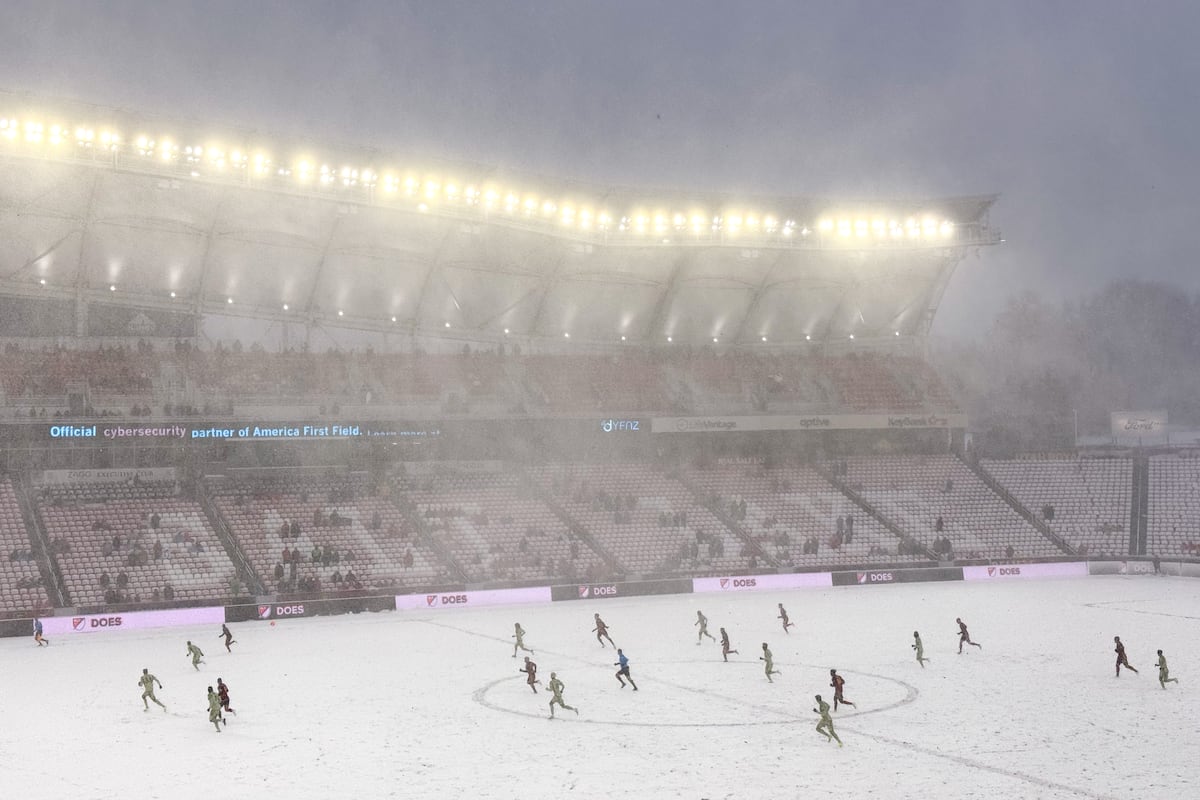
Major League Soccer has made what commissioner Don Garber called “one of the most important decisions in our league’s history” — to flip its calendar, begin the season in the summer rather than the winter and conclude with the playoffs in the spring rather than the fall.
The move breaks from three decades of precedent. But it aligns MLS, the top-flight North American men’s soccer league, with many other top leagues around the world, which generally run from August through May.
It is significant for several reasons, and also complex. The following is an attempt to explain the basics — the what, when and why, and how the league will cope with winter weather.
What is the MLS calendar change?
Ever since the league’s inception in 1996, MLS seasons have run in line with calendar years. They began somewhere between late February and early April. They concluded in the fall. The 2025 campaign, for example, opened on Feb. 22; an eight-month regular season gave way to playoffs in mid-October; and MLS Cup, the league’s championship, is slated for Dec. 6.
Under the new format, the season will kick off in “mid-to-late July,” the league announced last week. They’ll run for five months, then break from “mid-December through early February.” The regular season will resume in February and conclude in April. The playoffs will be in May.
When and how is the calendar change happening?
MLS will make the switch in 2027.
To bridge the gap between its 2026 season and its new “2027-28” season, it will play a truncated “transition season” in early 2027, with a 14-game regular season beginning in February and an MLS Cup in May. (So, there’ll be a 2026 MLS champion, a 2027 MLS champion and then a 2027-28 MLS champion.)
Why is MLS doing this?
The rationale boils down to two points:
Aligning with top leagues will help MLS teams sign (and keep) good players.
May is a much better window for the playoffs than October-December.
The latter point is easier to understand. The current calendar posed two main problems:
Playoffs are overshadowed by American football in the fall, with college games on Saturdays and the NFL on Sundays.
The international soccer calendar — imposed by the sport’s global governing body, FIFA — forces clubs (i.e., Los Angeles FC) to release their best players to national teams (i.e., the U.S. or Mexico) in three distinct windows in September, October and November. These so-called FIFA windows interrupt the playoffs and kill buzz. The only way to avoid an interruption would have been to A) cram the playoffs into three weeks, or B) force teams to play their most consequential games without stars. Neither solution made sense. The only one that did make sense was flipping the calendar.
The first point, on the other hand — the sporting benefit of the new calendar — is a bit finer.
How does flipping the calendar help MLS teams get better?
General managers and sporting directors around MLS were near-unanimous in their support for the calendar flip because their winter offseason — the optimal time to sign and sell players — doesn’t currently align with European offseasons in June, July and August, when the world’s best clubs typically sign and sell players.
The misalignment has hindered MLS clubs in two corollary ways:
When European clubs want to pay MLS teams millions of dollars for players in August, they are preparing for a playoff push. So, they have two unsavory options: A) lose a key player midseason; B) turn down lucrative, financially attractive offers to avoid losing key players midseason.
In January, the inverse is true. European clubs don’t like losing players midseason. To pry those players away, MLS clubs sometimes must pay premiums — or wait until the summer to make their moves, and spend the first half of a season undermanned.
The calendar shift will align MLS’s primary transfer window with Europe’s primary transfer window in the summer, and “improv(e) opportunities to acquire and sell top talent,” MLS said in a news release.
What about winter weather? Is it a problem?
The strongest opposition to the calendar change came from clubs in northern cities who worried about ticket sales in frigid weather. Eighteen of the league’s 30 teams play in markets where the average December high is between 28 and 49 degrees Fahrenheit.
There are workarounds, though. The winter break, from mid-December to early February, is one. Also, schedules can be front- and back-loaded so that clubs like the Chicago Fire, Minnesota United, CF Montreal, Toronto FC, the Columbus Crew and others play a disproportionate number of their home games in July, August, September and April.
MLS also noted in the announcement that the league’s calendar footprint actually isn’t changing all that much. It will pause for the new winter break, roughly a week after the current date for MLS Cup. It will resume in February for only a few weeks (or less) before the start of the current season.
It is adding full slates of games in November and early December, of course, and subtracting a chunk in June and July. But overall, “initial projections for the 2027–28 season indicate that 91% of matches will fall within the current MLS season window,” the league said.
How will the calendar change (and cold weather) impact players and fans?
The two biggest pitfalls of the change are:
A likely hit to ticket sales in cold-weather markets
Some miserably cold — and sometimes snowy or icy — training sessions in those same markets. Although the league can weigh the schedule to avoid playing games in Toronto in February, for example, Toronto FC players will (probably) still be based in the city in February — rather than in Florida or California for preseason. In this sense, the new calendar comes with slight competitive disadvantages.
But MLS owners, after two years of talks and research, decided that the pros outweigh the cons.
Many players, in fact, would rather train and play in 20-degree Chicago in February than in swampy 95-degree Houston in July.
And perhaps more importantly, the northern fans turned off by cold weather will be replaced and surpassed by the fans who latch onto the league, whether on TV or in person, because they are no longer consumed by American football during MLS’s most dramatic games.
Overall and long term, the calendar flip could change the league’s trajectory for the better.
This article originally appeared in The Athletic.