
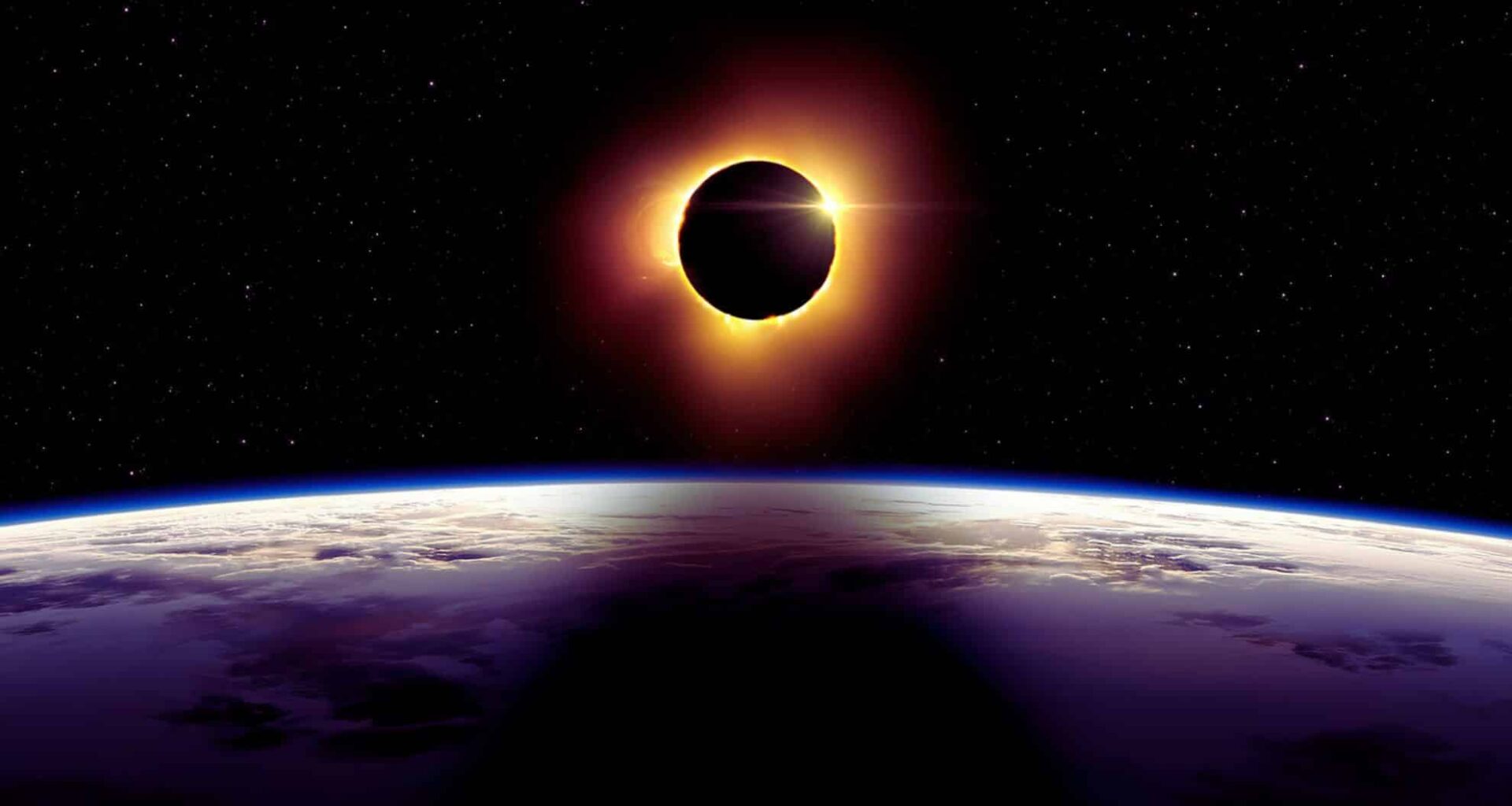
On August 2, 2027, an extraordinary event will unfold in the sky, captivating observers across parts of Europe, North Africa, and the Middle East. This event—dubbed the eclipse of the century—will be the longest total solar eclipse of the 21st century, lasting up to 6 minutes and 22 seconds in certain places. Despite what you might have seen on social media, it’s important to clarify: not the entire world will go dark, but the people in the path of totality will experience something truly spectacular.
The Path of Totality: Where to Be for the Best View
While this eclipse will be awe-inspiring, only those in specific areas will witness the full totality, where the Moon will completely block the Sun. The path of totality—which spans across a narrow band about 258 kilometers wide—will stretch across 15,227 kilometers on Earth’s surface, covering parts of Spain, Morocco, Egypt, and Tunisia, among other countries.
If you’re lucky enough to be in one of these spots, the sky will grow eerily dark for over six minutes, making it the longest total solar eclipse visible from land in nearly a century. For the rest of the world, however, life will continue as normal. Regions outside the path of totality will experience a partial eclipse, where only a portion of the Sun will be obscured.
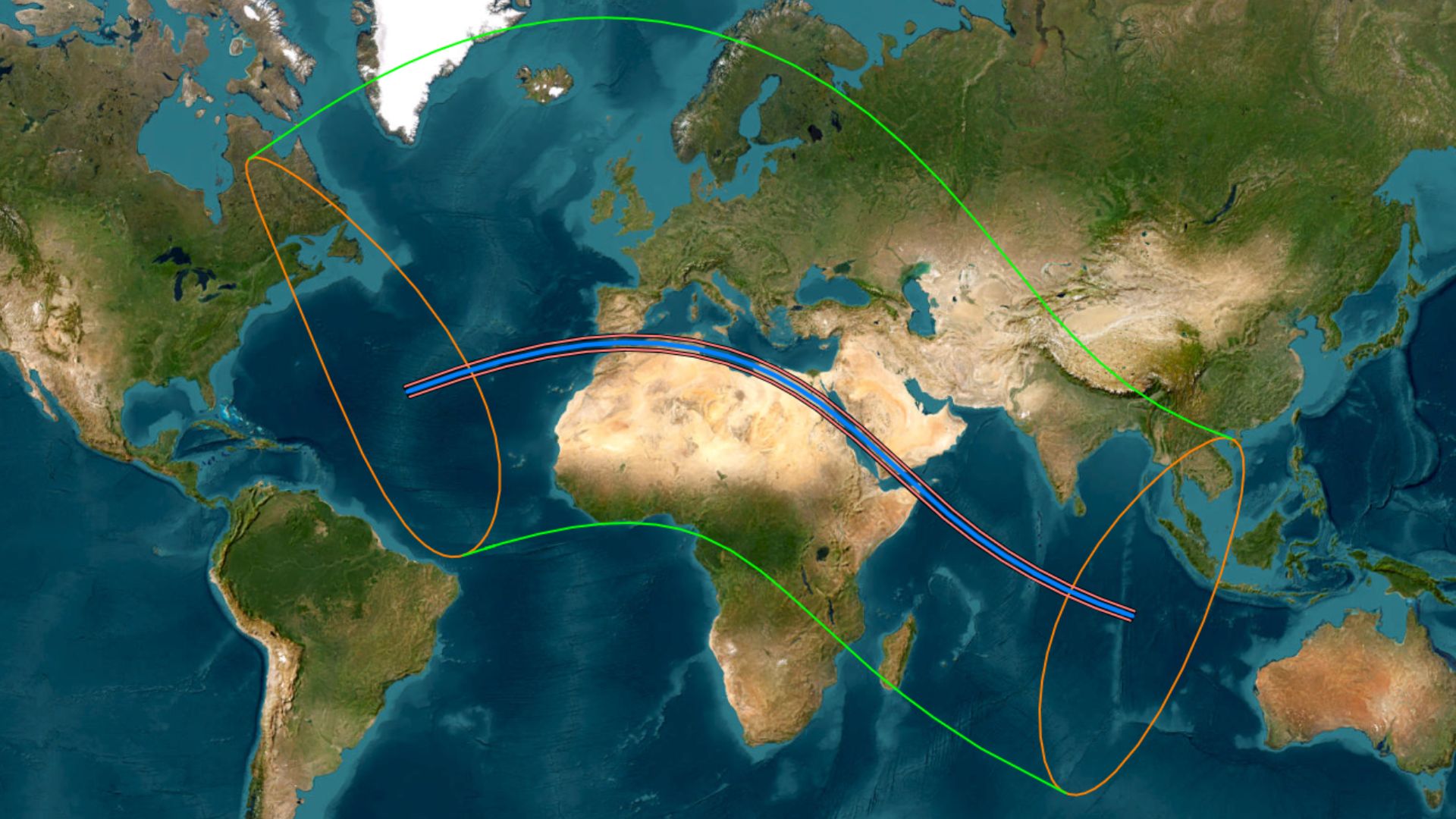 Maps showing the path of totality for the 2027 total solar eclipse. (Image credit: Created using MapHub.net. Source: Esri, Maxar, GeoEye, Earthstar Geographics, CNES/Airbus DS, USDA, USGS, AeroGRID, IGN, and the GIS User Community), path from Xavier M Jubier)
Why the Eclipse Will Last So Long
The exceptional length of this eclipse can be attributed to a few factors that align just right. On August 2, 2027, the Moon will be at its closest point to Earth, making it appear slightly larger than usual. At the same time, Earth will be at aphelion, its farthest point from the Sun, making the Sun appear smaller. This combination of proximity and alignment allows the Moon to cover the Sun for an unusually long period.
Another reason for the extended duration has to do with the path the eclipse will follow. The path of totality will pass near the equator, where the Moon’s shadow moves slower across the Earth’s surface. This slower motion will keep observers in darkness for a longer time, offering more than six minutes of totality.
The Science Behind the Eclipse
This eclipse isn’t just a spectacular visual event—it’s also an invaluable opportunity for scientists. The extended period of totality allows researchers to study the solar corona—the Sun’s outer atmosphere—in great detail. With more time under the Moon’s shadow, scientists can track solar flares, coronal mass ejections, and observe other phenomena that are difficult to capture during shorter eclipses.
For scientists studying solar physics, this eclipse will help calibrate instruments for upcoming space missions, like NASA’s Parker Solar Probe and ESA’s Solar Orbiter. These observations can help us better understand the Sun’s behavior and its impact on space weather, which can influence satellite communication, power grids, and even our climate.