
Colin Graham, head of multi asset strategies and co-head of sustainable multi asset solutions at Robeco, joins BNN Bloomberg to discuss the impact of AI investm
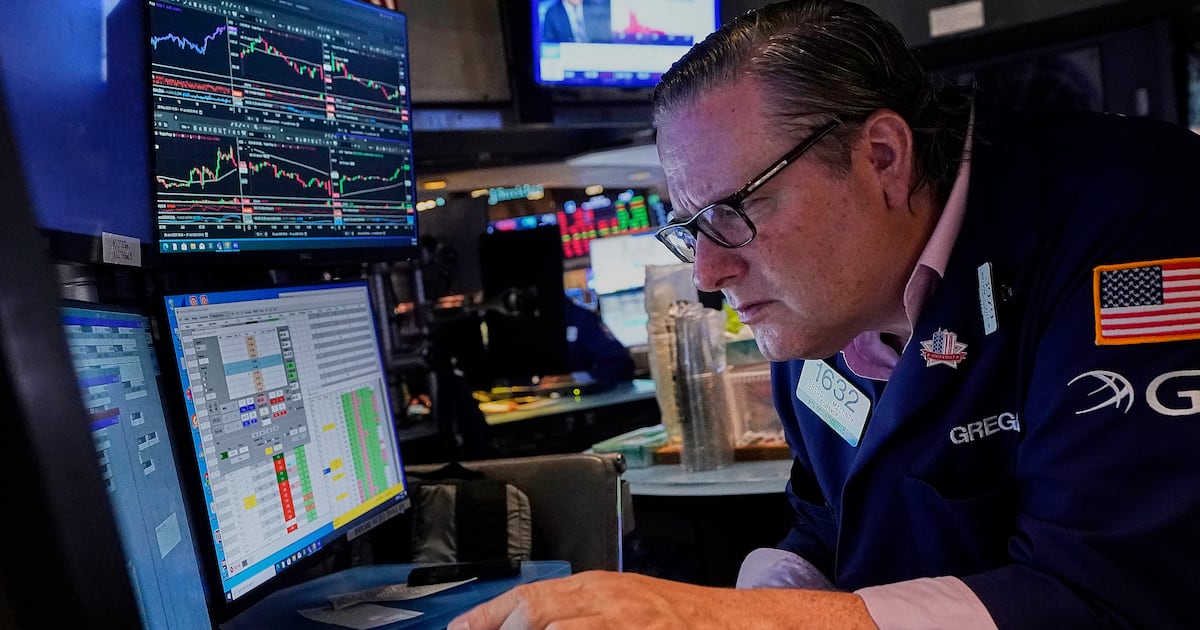
Markets extended their slide this week as investors awaited key earnings from Nvidia and the delayed U.S. jobs report. Uneven growth tied to the artificial-intelligence boom and concerns over economic overheating added to uncertainty for traders.
BNN Bloomberg spoke with Colin Graham, head of multi-asset strategies and co-head of sustainable multi-asset solutions at Robeco, who says AI-driven investment has been essential in preventing the U.S. economy from slipping into recession this year.
Key TakeawaysAI investment has been crucial in preventing the U.S. economy from falling into recession, underpinning earnings in the largest tech companies.The economy’s two-speed structure continues, with megacap tech driving growth while other sectors lag.Fiscal stimulus and potential tax cuts risk overheating the U.S. economy, tightening pressure on inflation and bond markets.Market reaction to Nvidia’s earnings is seen as a key signal for U.S. equity direction, interest rates and the U.S. dollar.Vietnam remains a standout emerging-market opportunity, supported by manufacturing growth and rising domestic demand despite trade-policy uncertainties. Colin Graham, head of multi asset strategies and co-head of sustainable multi asset solutions at Robeco Colin Graham, head of multi asset strategies and co-head of sustainable multi asset solutions at Robeco
Read the full transcript below:
ANDREW: The market selloff is continuing this week as investors anxiously await Nvidia’s earnings, and of course we have a delayed U.S. jobs report coming out later this week. So AI seems to be something of a cloud over the markets right now. This is interesting, though — our guest says the U.S. economy would be in a recession this year if it wasn’t for all that massive AI investment. We’re joined by Colin Graham, head of multi-asset strategies and co-head of sustainable multi-asset solutions at Robeco. Thank you very much indeed for joining us, Colin.
COLIN: Good morning. How are you doing?
ANDREW: Very good. That’s an interesting thesis — that AI investment has been so big it’s kept U.S. GDP positive?
COLIN: Yeah, I think this is the story over the last couple of years, where you’ve really seen this two-speed economy. If you look at the Nasdaq, it has done very well. If you look at the Russell 2000, it’s done okay, but not as well as the rest of the U.S. market. So you are seeing this two-speed economy. Some economists call it the K-shaped economy. But yeah, we see this bifurcation in the economy, where earnings would have been in recession last year if it hadn’t been for the Magnificent Seven.
ANDREW: I mean, is that okay — to have just one pillar of the economy doing well while the rest is lacklustre or even declining?
COLIN: It depends where you sit in the economy. If you’re an investor, you’re investing in the index — you’re not necessarily investing in the economy. From our perspective, these companies have delivered their earnings and have supported the valuation multiples they’ve been on. At the moment, we see this as a natural pullback in a bull market. However, once we see the Nvidia earnings tomorrow — and it’s more about the reaction to the numbers — that will give us more insight into the direction of the equity markets. But I think it will also give us an idea of the direction for U.S. interest rates and indeed the U.S. dollar.
ANDREW: Nvidia presumably will come out and beat the drum for AI — rah, rah — say the massive spending will go on. Do you think investors are becoming a bit sceptical, though?
COLIN: I think the market is telling you that. And you know, we can’t get a good sense of the volumes going through here, because where are investors — where is retail money likely to come in and say, “Oh yes, is it 180, is it 175, is 170 the level I’m willing to repurchase my Nvidia stock?” We don’t know. We can see the market gap down, as we saw in April, without anything necessarily going through the market. From that perspective, it’s very important to understand the market reaction to Nvidia and whether they think that.
On the other side, we’ve seen increased issuance in the debt market for these companies that don’t necessarily need to come because they have big cash holdings on their balance sheets. So again, this is another area we’re watching — why are they trying to get their weighted average cost of capital down? Is this some way of improving the balance sheet, making it more efficient? When we look at the underlying data, the promises around data centres and processing power — they haven’t given enough capex to deliver that. So we know there has to be some other flow coming back into the AI ecosystem, rather than just the announcements we’ve seen.
ANDREW: Let me ask you about British policy. Britain, like so many other countries, wants to be an AI superpower. Is it a national worry that this is going to be centred in China and America, and that Britain — even with its computing tradition — will be an also-ran?
COLIN: I think it’s all to do with the capital markets and the policies put in place. We can see this bipolar world — and if you look back at our five-year expected returns, our flagship publication last year and the year before, we talked about this bipolar world between the two spheres of influence, China and the U.S. The AI and technology side is definitely one of those bellwethers around how the two ecosystems are trying to diverge from the current model.
From that perspective, China and the U.S. are going to lead, but it also provides opportunities for other countries to get involved, because you can trade with both sides. So yes, it’s difficult for countries caught in between, but there is a path to prosperity.
ANDREW: Go down the middle — that’s interesting. Now, back to the U.S. economy. You reckon it’s running hot enough that if there’s stimulus from Trump’s government via the Big Beautiful Bill, it risks overheating activity — and of course that tends to bring interest rates back up?
COLIN: Yes, and I think this is where you’re seeing the major trade that all fixed-income managers have on at the moment — the curve steepener. This is where you expect long yields to go up and short yields to come down. That’s effectively where we are. And we think that if that happens, and interest rates come down with the tax cuts promised for next year, then this is going to really put a high-pressure economy in place in the U.S.
Usually when you see this, there are mechanisms that release the pressure. In previous cycles in the ’90s and 2000s, the U.S. imported deflation from China. But with current trade concerns, that channel won’t necessarily help relieve inflationary pressure. You’re also seeing a reduction in immigration, so wages are still growing at four per cent according to the Atlanta Fed — admittedly a couple of months old — but that’s still above inflation at three. From that perspective, the consumer looks okay if you have a job, which is why everyone is focused on the jobs numbers. It gives room for the Fed to cut further.
So yes, stimulus will go into the economy without the usual outlets to keep inflation lower. Our view — and we’ve just launched our one-year outlook — is that you are going to see inflationary pressures come back in the U.S.
ANDREW: You’re watching the Vietnamese economy. Vietnam has been getting spillover investment from China because it’s a lower-cost base. What draws you to Vietnam broadly?
COLIN: Vietnam, for our emerging-markets equity and bond investors, is a very good story. We’re in multi-asset global, top-down macro, so we leave that to them. But we look at it and think there is a really good story here — the continuation of outsourcing to lower-cost areas.
I don’t know if you’ve been to Vietnam, but I’ve been recently — and it’s night and day compared to where it was 20 years ago. So yes, there is growth and manufacturing, but there’s always this overhang: does U.S. trade policy change and say, “Well, actually, you’re part of the China ecosystem for exporting goods, therefore tariffs should also apply to Vietnam at a higher level?”
ANDREW: A big population — north of 100 million. And we just showed a VanEck Vietnam ETF. I know you’re not talking about that, but it illustrates how money has been going into Vietnamese stocks. Thank you very much, Colin — that was great.
COLIN: Thank you very much, Andy.
ANDREW: Colin Graham, head of multi-asset strategies and co-head of sustainable multi-asset solutions at Robeco.
—
This BNN Bloomberg summary and transcript of the Nov. 18, 2025 interview with Colin Graham are published with the assistance of AI. Original research, interview questions and added context was created by BNN Bloomberg journalists. An editor also reviewed this material before it was published to ensure its accuracy and adherence with BNN Bloomberg editorial policies and standards.