
Inside the Market’s roundup of some of today’s key analyst actions
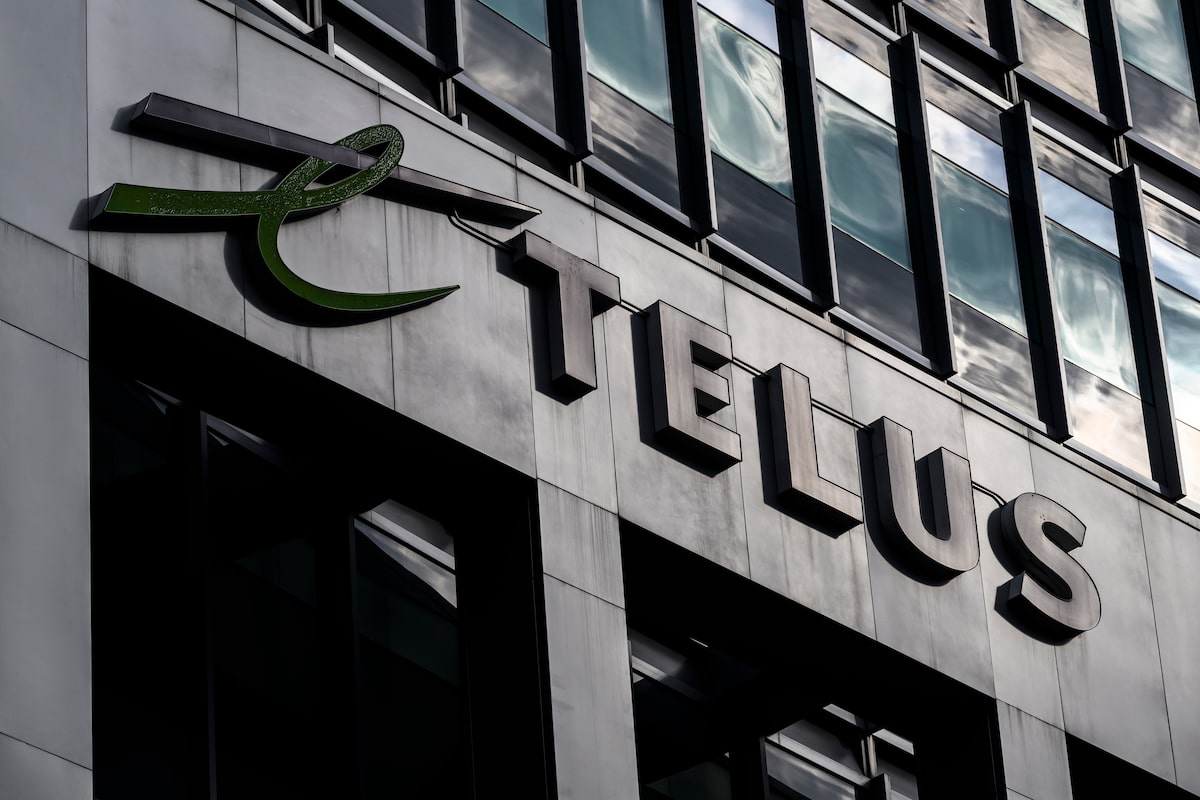
In response to a recent decline in share price, National Bank Financial analyst Adam Shine raised his rating for Telus Corp. (T-T) to “outperform” from “sector perform” previously, expecting the Vancouver-based telecommunications company to revisit its dividend growth policy before any cuts are made.
It shares fell over 5 per cent on Tuesday after JP Morgan analyst Sebastiano Petti downgraded Telus, expressing concern about “dividend growth that appears unsustainable.” That move following an article from the Globe and Mail’s John Heinzl which said “it’s clear that investors are increasingly concerned about the dividend’s long-term sustainability – or at least Telus’s ability to keep raising it.”
“In a note on April 15 discussing dividends, our Telus section had the title of ‘dividend growth policy majorly elevated but will payout stay high in most unnecessary way’,” said Mr. Shine. “Three weeks later the next policy range was disclosed as 3-8 per cent. Fast forward to this past weekend, where The Globe and Mail wrote an article titled “Putting Telus’s Outsized Dividend Under The Microscope”. This article was preceded and followed by a brokerage downgrading the stock and reducing its target by 10 per cent from US$21.
“We struggle to justify a target drop to as low as $19. We forecast a FCF payout pre-DRIP of 118 per cent in 2025, 107 per cent 2026, 104 per cent 2027 and 97 per cent 2028 with post-DRIP estimates of 77 per cent, 80 per cent, 83 per cent and 90 per cent, respectively. The 2-per-cent DRIP discount is to drop progressively before getting eliminated at the end of 2027. While this payout dynamic will remain in focus, we’d expect a change in the policy growth range before a cut to the dividend.”
Following changes to his valuation, Mr. Shine made his rating revision while trimming his target for Telus shares to $21 from $23. The average target on the Street is $22.70, according to LSEG data.
“We downgraded Telus to Sector Perform on Dec. 12, 2024 when it was just shy of $21,” he said. “It ended 2024 near $19.50 and then saw its biggest move of 2025 occur in the run-up to its 4Q24 reporting in mid-February and through into the 3-4 weeks that followed as the market embraced the new disclosure of getting leverage to 3.0 times in 2027 from 3.9 times in 2024. The stock hit its 52-week high of $23.29 on March 10. With the shares under $22, we published a note on Feb. 20 where we wondered ‘How Much Blue Sky Is Already Baked Into Stock’ which we thought was ahead of itself by at least 9 per cent, as we reflected on the large implied valuation gap to BCE and Rogers whose narratives would soon change.
=====
In a separate client note released late Tuesday, Mr. Adam Shine lowered his rating for Quebecor Inc. (QBR.B-T) to “sector perform” from “outperform” rating following “impressive” recent share price appreciation with it now approaching his target “that has been repeatedly raised.”
“We returned our rating on Quebecor to Outperform on Aug. 11 following an anticipated pullback in the stock heading into and after 2Q reporting,” he explained. “Since then, the stock is up more than 38 per cent (S&P/TSX up 8 per cent) driven by ongoing market share gains by the company in wireless, more discipline being exhibited by carriers in the mobile sector, a better balance being achieved by management between subscriber loading and margins and evolving supportive buyback activity.
“Along the way, we have steadily raised our target post-marketing (Sept. 16), with our 3Q preview (Oct. 17), after Quebecor delivered a 3Q beat (Nov. 6) and also after offering further insights on Telecom’s outperformance in 3Q (Nov. 11).”
Given those moves, Mr. Shine now thinks “a pause is warranted on further target increases,” which he said prompted the downgrade until “a better buying opportunity” following the price appreciation, which has now reached 68 per cent in 2025 (versus 21 per cent for the S&P/TSX).
His target for Quebecor shares remains $54, which exceeds the average target on the Street of $51.67.
=====
RBC Capital Markets analyst Kaan Peker thinks PMET Resources Inc. (PMET-T) “offers investors Tier-1 lithium resource scale, strategic OEM alignment, and leverage to the build- out of a North American battery supply chain.”
With its Shaakichiuwaanaan project in Northern Quebec now North America’s largest undeveloped hard-rock lithium resource, he sees the Montreal-based company as a “cornerstone for North America’s electrification” and “stands out as one of the few Western assets able to supply meaningful volumes into a region with constrained upstream supply.”
That led him to initiated coverage with an “outperform” rating on Wednesday.
“The recent Feasibility Study provides a conservative base case anchored on the CV5 deposit, while upcoming approvals, by-product, deposit integration, and funding clarity present multiple re-rating catalysts,” he said. “We recommend accumulating ahead of Resource updates in 1H26 and technical studies.”
Mr. Peker acknowledges his base case for PMET is “conservative, but the upside evident.”
“Our valuation includes only the CV5 Feasibility Study,” he noted. “It excludes CV13 integration, excludes the higher-grade Nova Zone, excludes tantalum/cesium by-products and logistics optimization. Each represents an uplift to project value and collectively supports 40-80-per-cent NAV upside. The true strategic value of PMET lies in the scale potential to support more than 1 Mtpa of concentrate over time.
“OEM alignment provides strategic value: Volkswagen’s equity stake via Powerco and long-term offtake agreement reduces commercial and financing uncertainty. PMET is one of the only North American developers already anchored to a Tier-1 OEM, providing visibility on demand, funding and possible downstream integration. This alignment is a differentiator at a time when the supply chain is reorganizing around IRA-compliant feed.”
The analyst set a target of $4.70 per share. The average is $7.34.
“North America feedstock supply [is] constrained, PMET fills the gap,” he said. “Conversion capacity in Québec, Ontario and the U.S. is anticipated to expand significant by 2030, but upstream supply is lagging. Without PMET, North America remains heavily reliant on imports. PMET’s scale, hydro- power access and proximity to Bécancour position it at the centre of the James Bay-Bécancour-Detroit corridor. This creates both a strategic floor under PMET’s relevance and a scarcity premium if supply tightens.”
=====
RBC Dominion Securities analyst Bart Dziarski said Power Corporation of Canada (POW-T) “continues to be a strong capital return story with a 3.6-per-cent dividend yield (the lowest since Q3/21) and continued share repurchases (10.0 million shares re-purchased year-to-date) while maintaining multiple levers of growth (i.e. Sagard).”
“POW shares have meaningfully re-rated this year, up 52 per cent primarily driven by i) a narrowing discount to NAV ii) GWO shares re-rating (up 32 per cent year-to-date) and iii) IGM shares announcing value-enhancing write-ups in Rockefeller and Wealthsimple,” he added in a client report titled POWering to new highs.
Following third-quarter results that exceeded his expectations, Mr. Dziarski reviewed his valuation framework for the diversified holding company, which owns 66.8 per cent of Great-West Life, Canada’s second-largest life insurer, as well as 62.1 per cent of asset manager IGM Financial, 74 per cent of Wealthsimple Financial as well as 14.1 per cent of European conglomerate Groupe Bruxelles Lambert SA (GBL).
“Per RBC analyst Darko Mihelic, GWO’s base EPS was above his estimate driven by higher insurance experience gains with all segments above expectations (except for Corporate),” he said. “IGM’s normalized EPS was above our forecast and consensus driven primarily by one-time seed gains from ChinaAMC. GBL’s contribution to earnings of negative $11-million was below our forecast of $30-million.
“Healthy year-to-date buyback activity continues post quarter. POW repurchased 3.0 million shares in Q3/25 for $173-million, bringing the year-to-date total to 10.0 million shares repurchased for $545-million (inclusive of an additional 2.6M shares purchased post-quarter for $163-million). On March 1, 2025, POW commenced a new NCIB, which allows POW to repurchase up to 20 million subordinate voting shares, or approximately 4 per cent of the float, until February 28, 2026. Through October 2025, POW has returned $2.1-billion to shareholders via dividends and buybacks, a record amount. We estimate POW has $700-million of excess cash that we expect will be partially deployed into buybacks.”
Maintaining his “sector perform” rating, the analyst raised his target to $68 from $60. The average is $71.88.
“POW’s current 13-per-cent discount to NAV is below our justified discount given i) simplified organizational structure over the last 5 years, ii) GWO, IGM and GBL re-positioning their businesses and sporting respectable growth outlooks, and iii) growing Alternatives platform providing upside optionality,” said Mr. Dziarski. “Since 2019, POW has been actively surfacing value with $3.6-billion of asset monetizations to simplify its equity story, re- deploying capital into seed investments within Alternatives, and returning capital to shareholders via NCIB and growing dividends. We expect further value-enhancing transactions over time. We no longer see valuation upside potential from a narrowing NAV discount. ”
Elsewhere, CIBC World Markets initiated coverage of Power Corp. with a “neutral” rating and $75 target.
=====
Ahead of the approaching earnings season for Canadian banks, CIBC World Markets analyst Paul Holden raised his target prices for stocks in the sector. His changes are:
Bank of Montreal (BMO-T, “outperformer”) to $192 (Street high) from $180. The average is $174.46.Bank of Nova Scotia (BNS-T, “neutral”) to $100 from $93. Average: $91.85.National Bank of Canada (NA-T, “neutral”) to $166 from $154. Average: $158.08.Royal Bank of Canada (RY-T, “neutral”) to $220 from $208. Average: $216.85.Toronto-Dominion Bank (TD-T, “outperformer”) to $122 from $112. Average: $116.54.
=====
In other analyst actions:
* CIBC World Markets initiated coverage of IGM Financial Inc. (IGM-T) with a “neutral” rating and $61 target. The average is $62.
* Bloom Burton’s David Martin moved his risk designation for Vancouver-based AbCellera Biologics Inc. (ABCL-Q) to “speculative” from “above average” previously, keeping a “buy” rating and US$9 target (versus the US$10 average), as it “focuses more on the higher risk/reward business of proprietary drug development.”
“We have taken a dive into AbCellera’s internal pipeline, as the company is shifting more focus to this part of its business,” he said. “Two antibody therapeutics currently make up the internal pipeline: 1) ABCL635 an antagonist of the neurokinin 3 receptor (NK3R), for treatment of vasomotor symptoms (VMS – primarily hot flashes, night sweats) associated with menopause, and 2) ABCL575 which binds to OX40 ligand (OX40L) on antigen presenting cells (APCs), in doing so, blocks major inflammatory signaling pathways.
“Both therapies have large potential markets: 12 million American women have moderate-to-severe VMS; 15 million Americans have been diagnosed with autoimmune diseases and it is estimated that another 35 million are affected.”
* JP Morgan’s Seth Seifman hiked his Bombardier Inc. (BBD.B-T) target to $215 from $170 with a “neutral” rating. The average on the Street is $216.75.
* Canaccord Genuity’s Katie Lachapelle moved her Lithium Royalty Corp. (LIRC-T) target to $9 from $8.60, keeping a “buy” rating. The average is $8.17.